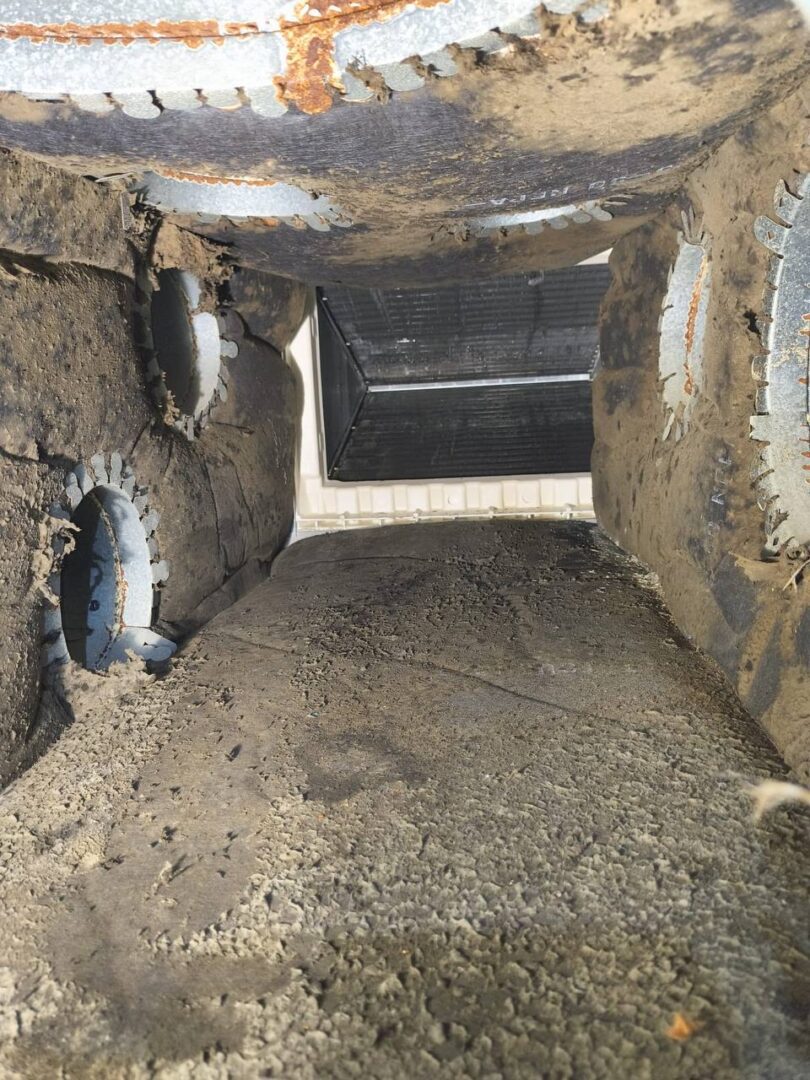
The most obvious signs of mold in air ducts are a persistent musty odor from your vents, visible dark or fuzzy growth around register covers, and allergy symptoms that improve when you leave home. Houston’s high humidity accelerates mold growth inside HVAC systems, making these warning signs especially common here. Look for these indicators: Related: How to Prevent Mold in Air Ducts in Houston: 5 Strategies for High-Humidity Climates
- Musty or earthy odor — A persistent damp, mildew-like smell that intensifies when the HVAC system runs
- Visible dark growth — Dark, speckled, or fuzzy patches visible around vent register covers or on the first few inches of interior duct surfaces
- Dark streaks on walls or ceilings — Airborne mold spores being deposited near vent openings as the system distributes air
- Allergy symptoms that improve away from home — Persistent sneezing, coughing, watery eyes, or throat irritation that subsides when you spend time outside the house
- Excessive dust with a mold-like odor — Dust accumulating on surfaces that carries a musty smell rather than just dry, odorless particle dust
- Condensation or moisture near HVAC components — Visible water droplets, rust, or dampness on or near the evaporator coil, duct connections, or air handler unit
Musty Odors When the System Runs
A persistent musty or earthy smell that appears or intensifies when your HVAC system cycles on is one of the most reliable indicators. This odor comes from microbial volatile organic compounds — chemical byproducts of active mold colonies — that travel through your ductwork into every room. If the smell intensifies specifically when the A/C turns on and fades when off, mold inside the HVAC system is likely the source.
Visible Dark Deposits Around Vents
Dark speckled or streaky deposits on vent covers, walls near registers, or baseboards below supply vents. If you clean them and they return within days — especially after the system runs — mold spores from inside the ductwork are the source.
Allergy Symptoms That Improve Away from Home
Household members who experience sneezing, itchy eyes, sinus congestion, or skin irritation that noticeably improve when away from the property may be reacting to airborne mold spores distributed through the HVAC system.
Visible Growth on Accessible Components
Remove a vent register and shine a flashlight inside. Look for dark, fuzzy, or speckled growth on interior duct surfaces. Check the air handler area — it is nearest to the primary moisture source and is the most common site for initial colonization.
How to Address It
Do not attempt DIY mold cleaning — disturbing colonies releases concentrated spores into your living spaces. Our NADCA-certified technicians address visible mold growth on all 8 HVAC components: return ducts, evaporator coils, blower fan, heating chamber, plenum box, supply ducts, register boxes, and grills.
[Book a Free Inspection](https://crm.ahchooindoorair.com/book)
AH-CHOO! Indoor Air Quality serves Houston, Austin, San Antonio, and South Louisiana. NADCA certified. Average job time: 7 hours. 8 components cleaned every service. 38 years of experience.
Related: Mold Remediation in Baton Rouge: Why Indoor Humidity Starts in Your Ducts
Related: Air Duct Cleaning Before Selling a House in Houston: A Pre-Sale Strategy That Works.
Related: Air Duct Cleaning for Pet Owners in Houston: Why Fur-Filled Air Ducts Need Professional Attention.
Related: What Home Inspectors Look For in HVAC Systems: A Buyer’s Guide to Air Quality in Real Estate.
Related: Air Duct Cleaning After Home Renovation in Houston: Why Post-Construction HVAC Cleaning Matters.
Related: Austin Cedar Fever and Your HVAC System: How Air Duct Cleaning Breaks the Allergy Cycle.
Related: How Air Duct Cleaning Improves HVAC Efficiency and Lower Energy Bills in Houston.
Need the full Houston game plan? Start with our Houston air duct cleaning page for the complete 7-hour, 8-component process. If mold is part of the problem, review our Houston mold remediation service. For the full residential scope, see our residential air duct cleaning process.
Related: Air Duct Cleaning for Allergy Sufferers in Houston: What Actually Reduces Indoor Symptoms.
Related: Hurricane Season Mold Prevention: Protecting Your Houston HVAC System Before the Storm.
Related: Post-Construction HVAC Cleaning in Austin: What New Buildowners Need to Know.
Related: Air Duct Cleaning Before Selling Your Houston Home: What the Inspection Report Actually Requires.
Related: Austin’s Rapid Growth and What It Means for Your Home’s HVAC System.
Related: Commercial Air Duct Cleaning in Austin: Why Property Managers Need a HVAC Maintenance Strategy.
Related: Does Air Duct Cleaning Actually Reduce Allergies? The Evidence-Based Answer.
Related: How Often Should Houston Homeowners Clean Their Air Ducts: The Definitive Schedule.
Related: Commercial HVAC Coil Cleaning in Houston: Why Your Building’s AC Efficiency Is Costing You Money.
Related: Houston vs. Austin: Comparing Air Duct Cleaning Needs Across Texas’s Two Largest Markets.
Related: How Professional Air Duct Cleaning Works: The Step-by-Step Process From Start to Finish.
Related: How to Choose an Air Duct Cleaning Company in Houston: What NADCA Certification Actually Means.
Related: HVAC Evaporator Coil Cleaning in Houston: Why the Coils Matter More Than the Ducts.
Related: Air Duct Cleaning in Baton Rouge and South Louisiana: What Humidity Does to Your HVAC System.
Related: Air Duct Cleaning in Sugar Land and Fort Bend County: Growing Suburbs Need HVAC Maintenance Too.
Related: The 8 HVAC Components Professional Air Duct Cleaning Actually Cleans (And Why Each One Matters).
Related: The Real Cost of Dirty Air Ducts in Houston: What Neglected HVAC Systems Actually Cost You.
Related: What Causes Mold in Air Ducts in Houston: The Scientific Breakdown.
Related AH-CHOO resources: schedule a free inspection.