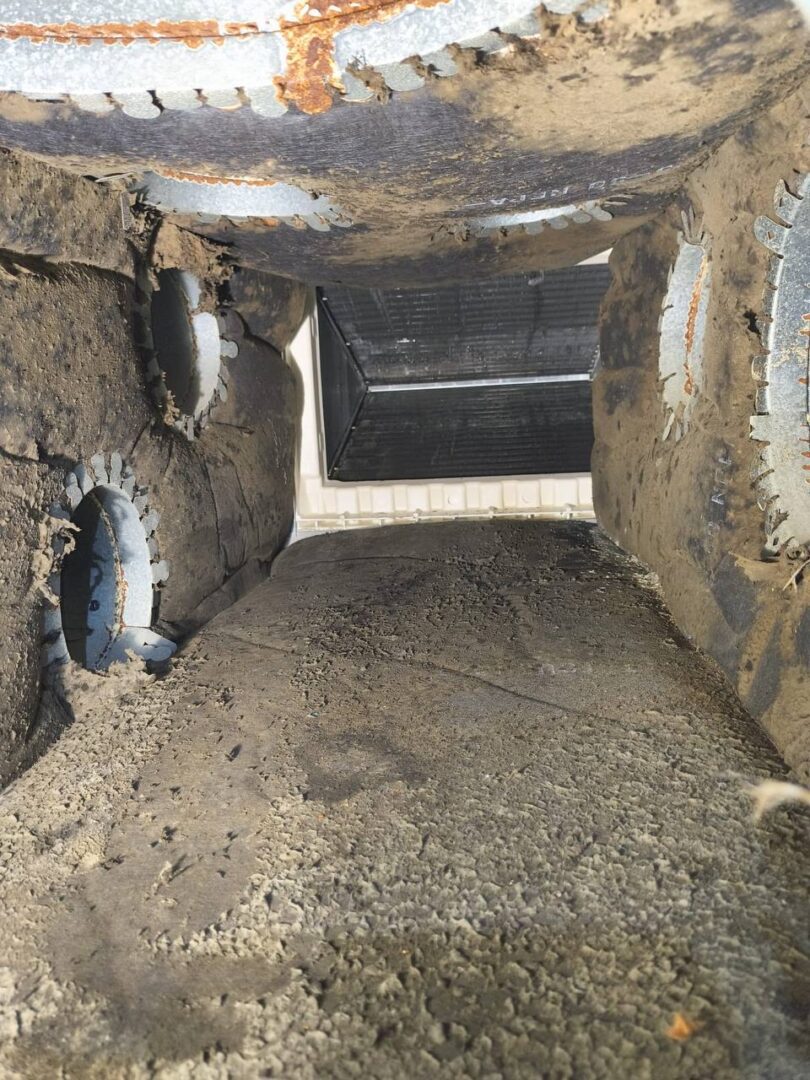
The question of whether air duct cleaning reduces allergies is one of the most commonly asked questions about HVAC maintenance, and the honest answer is nuanced. The research doesn’t support air duct cleaning as a universal allergy solution, but for specific scenarios common in Houston homes, the evidence for symptom improvement is strong. Here’s what the science actually says, and what it means for Houston homeowners.
What the Research Actually Shows
The EPA’s position on air duct cleaning and health benefits states that duct cleaning has not been shown to prevent health problems — and notes that studies examining the health effects of duct cleaning have been inconclusive. This position is technically accurate but frequently misinterpreted.
The EPA’s caution is based on the fact that most duct contamination studies were conducted in controlled settings with limited variables, and that duct contamination is only one factor in indoor air quality. For a home with severe duct contamination, removing that contamination would logically reduce one source of allergens — but isolating that variable from all other indoor air quality factors is genuinely difficult.
What the research does support:
- Biological contamination in HVAC systems contributes to indoor allergen loads — multiple studies document that dust, mold spores, and biological particles accumulate in ductwork and re-circulate when the system operates
- Professional cleaning reduces biological contamination in ductwork — NADCA studies using before/after sampling confirm significant reduction in dust, mold, and biological particles post-cleaning
- Removing contamination sources reduces indoor particulate levels — air quality studies confirm that source removal is more effective than filtration alone for reducing total airborne particle counts
Where the Science Is Clear: Specific Houston Scenarios
For certain Houston homeowners, the evidence for air duct cleaning reducing allergy symptoms is actually quite strong:
Severely contaminated ductwork in homes with documented HVAC-related allergen exposure: If your home has visible dust from vents, a persistent stale or musty odor when the AC runs, or documented high particulate counts in indoor air sampling — the reduction in allergen circulation after professional cleaning is predictable and measurable.
Post-flooding or water intrusion events: When HVAC systems are exposed to standing water or sustained high humidity, biological growth that develops inside ductwork becomes a continuous source of mold spores. Professional cleaning removes that source. For hurricane-affected Houston homeowners, this is the clearest case where cleaning directly addresses an allergy-aggravating condition.
Pet-allergen management in pet households: Pet allergens (dander, saliva proteins, urine residue from accidents) accumulate inside ductwork and circulate continuously through HVAC systems. In homes with pets where occupants have pet allergies, cleaning the ductwork reduces the reservoir of accumulated pet allergens. This doesn’t eliminate pet allergens from the home entirely, but it removes one significant source of continuous exposure.
What Doesn’t Change: Outdoor Allergens and Non-Duct Sources
The honest answer about air duct cleaning and allergies requires acknowledging what duct cleaning cannot do:
It cannot stop outdoor allergens from entering the home. Pollen, cedar, and grass pollen that enter through doors, windows, and normal air exchange are not addressed by duct cleaning.
It cannot address allergens in soft furnishings, bedding, and carpet. The majority of dust mite allergens, pet allergens, and biological allergens in a home are in soft furnishings and textiles — not in the ductwork. Cleaning ducts while ignoring these sources leaves the primary allergen reservoir untouched.
It cannot fix ventilation or humidity problems. If your home has inadequate ventilation, excessive humidity that promotes dust mite growth, or insufficient filtration — duct cleaning alone won’t resolve these underlying issues.
The Practical Framework for Houston Homeowners
Use this decision framework:
Duct cleaning is likely to help if:
- You’ve never had professional duct cleaning in over 3 years
- You can see or smell dust, debris, or biological growth from your vents
- You’ve had a water intrusion event or flooding
- You have pets and haven’t had ducts cleaned in over 2 years
- You notice symptoms that improve when away from home and return within hours of being back
- An HVAC inspection has documented visible contamination inside the ductwork
Duct cleaning is unlikely to be the primary solution if:
- Your primary allergen is outdoor pollen (duct cleaning doesn’t stop outdoor allergens from entering)
- Your home has significant dust mite or textile allergen issues
- You have inadequate whole-home filtration or ventilation problems
- Your ductwork is relatively clean and well-maintained
What You Should Actually Do: A Practical Allergy Reduction Approach
For Houston homeowners serious about reducing allergy symptoms through HVAC:
1. Get a NADCA-certified inspection first. A professional assessment documents whether your ductwork has significant contamination. If it does, cleaning addresses a documented source.
2. Upgrade your air filtration. A MERV 11-13 rated filter captures significantly more airborne allergens than standard filters. This is a affordable improvement that helps manage outdoor allergens that enter through normal air exchange.
3. Address humidity. Houston’s ambient humidity promotes dust mite colonization in bedding, carpets, and soft furnishings. Keeping indoor relative humidity below 50-55% reduces dust mite activity.
4. Clean ducts if the inspection documents significant contamination. Don’t clean ductwork as a preventive measure if an inspection shows they’re relatively clean — the benefit doesn’t justify the cost.
AH-CHOO! Indoor Air Quality provides NADCA-certified inspections and professional air duct cleaning. Free inspections available. Serving Houston, Austin, San Antonio, and South Louisiana.
[Schedule Your Houston Allergy-Related HVAC Inspection](https://crm.ahchooindoorair.com/book)