Meta Description: Baton Rouge mold remediation that ignores the ductwork will fail. Learn why humidity control starts with your HVAC system and what effective remediation really looks like.
—
“`json { "@context": "https://schema.org", "@graph": [ { "@type": "Article", "headline": "Mold Remediation in Baton Rouge: Why Indoor Humidity Starts in Your Ducts", "description": "Baton Rouge mold remediation that ignores the ductwork will fail. Learn why humidity control starts with your HVAC system and what effective remediation really looks like.", "author": { "@type": "Organization", "name": "AH-CHOO! Indoor Air Quality" }, "publisher": { "@type": "Organization", "name": "AH-CHOO! Indoor Air Quality", "url": "https://ahchooindoorair.com" }, "mainEntityOfPage": "https://ahchooindoorair.com/blog/mold-remediation-baton-rouge-humidity" }, { "@type": "FAQPage", "mainEntity": [ { "@type": "Question", "name": "Why is mold so common in Baton Rouge homes?", "acceptedAnswer": { "@type": "Answer", "text": "Baton Rouge's climate — subtropical, with average annual humidity near 78% and frequent heavy rainfall — creates near-ideal conditions for mold year-round. The combination of high outdoor humidity, warm temperatures, frequent moisture events, and HVAC systems running almost constantly means mold pressure is continuous and intense." } }, { "@type": "Question", "name": "How does ductwork cause indoor humidity problems?", "acceptedAnswer": { "@type": "Answer", "text": "Ductwork with leaks, deteriorated insulation, or connection failures allows humid outdoor or attic air to enter the conditioned air supply. This bypasses your HVAC system's dehumidification function and introduces moisture directly into every room of your home. Addressing duct integrity is a core part of indoor humidity control." } }, { "@type": "Question", "name": "What should a complete mold remediation in Baton Rouge include?", "acceptedAnswer": { "@type": "Answer", "text": "A complete mold remediation for a Baton Rouge home should include duct system inspection and cleaning, treatment of any mold-contaminated surfaces, identification and repair of moisture sources, recommendations for humidity control, and post-remediation verification. Skipping the duct assessment leaves the primary humidity delivery mechanism untreated." } }, { "@type": "Question", "name": "How long does mold remediation take in a Baton Rouge home?", "acceptedAnswer": { "@type": "Answer", "text": "Duct cleaning and mold remediation for a typical Baton Rouge residence takes approximately 7 hours for a thorough job. This includes inspection, containment setup, mechanical cleaning, antimicrobial treatment, and post-work assessment. Rushed jobs that take 2–3 hours do not complete the process adequately." } }, { "@type": "Question", "name": "Does Baton Rouge flooding make mold remediation more complicated?", "acceptedAnswer": { "@type": "Answer", "text": "Yes. Flooding events — which affect Baton Rouge regularly — introduce moisture into building assemblies, crawl spaces, and ductwork in ways that create accelerated mold growth. Post-flood mold remediation in Baton Rouge homes should always include a thorough duct assessment, because flooded ground levels often coincide with duct routing in these homes." } } ] } ] } “`
—
Baton Rouge sits between the Mississippi River and the Atchafalaya Basin in one of the most climatically challenging locations for home maintenance in the United States. With average annual humidity near 78%, temperatures that rarely dip to truly dry conditions, and a floodplain geography that produces regular moisture events, Baton Rouge homeowners live in a perpetual battle against moisture intrusion.
Mold is the most visible consequence of losing that battle. And in Baton Rouge homes, the most common place that battle is lost — invisibly, gradually, and with compounding consequences — is inside the ductwork.
After 38 years of serving Gulf Coast markets including Louisiana, our NADCA-certified team has a detailed picture of why Baton Rouge mold remediations fail when the duct system is overlooked — and what complete, effective remediation actually involves.
—
Baton Rouge's Humidity Problem Is Different in Degree
Every Gulf Coast city deals with humidity. But Baton Rouge has a particular combination of factors that intensifies the mold pressure on homes:
Inland heat without coastal breeze: Unlike coastal communities that benefit from sea breezes that occasionally reduce humidity, Baton Rouge's inland location means summer days combine extreme heat (regularly over 95°F) with full Gulf humidity load without any ameliorating breeze effect.
Mississippi River moisture contribution: The river and its surrounding wetlands contribute additional ambient moisture that elevates Baton Rouge's local humidity even in periods when Gulf influence is reduced.
Flat topography and drainage challenges: Baton Rouge's relatively flat terrain creates drainage challenges after rainfall events. Ground saturation and standing water in yards, crawl spaces, and low-lying areas maintain elevated soil moisture that migrates into building foundations and, eventually, into homes.
Frequent major rainfall: Baton Rouge receives approximately 60 inches of rain annually — significantly above the national average — with intense summer thunderstorm activity and periodic flooding events.
—
Why Your Ducts Are the Starting Point for Indoor Humidity
Most homeowners think of indoor humidity as primarily an outdoor air infiltration problem — solved by keeping windows closed and running the AC. The reality is more complex, and the duct system sits at the center of it.
Leaky Ducts as Humidity Injectors
In a typical Baton Rouge home, ductwork runs through attic spaces and in some cases through crawl spaces beneath pier-and-beam foundations. Both environments are extremely humid. When ducts have unsealed seams, failed connections, or deteriorated flexible sections, humid air from these environments is drawn directly into the duct interior.
A return duct pulling air from an attic with 90% relative humidity is pulling that humid air into your living space — bypassing every dehumidification function of your air conditioner. This is one of the primary mechanisms driving elevated indoor humidity in Baton Rouge homes even when the AC appears to be functioning.
Short-Cycling and Incomplete Dehumidification
Air conditioners dehumidify as a byproduct of cooling. This dehumidification function requires a certain minimum runtime per cycle to be effective. Systems that are oversized — which is common, as contractors frequently err toward larger equipment — cool spaces quickly, then shut off. These brief cycles don't provide adequate dehumidification, leaving humidity elevated even as temperatures feel comfortable.
In Baton Rouge's climate, this means many homes that feel "fine" are actually maintaining indoor humidity levels of 65–75% — well above the 60% threshold below which mold growth is significantly inhibited.
The Compounding Effect
Once mold establishes itself in ductwork because of these humidity conditions, it becomes a humidity amplifier. Mold growth and the biofilm associated with it can retain and release moisture into the airstream, raising local humidity at supply registers. The problem feeds itself.
—
What Mold Remediation Must Include to Work
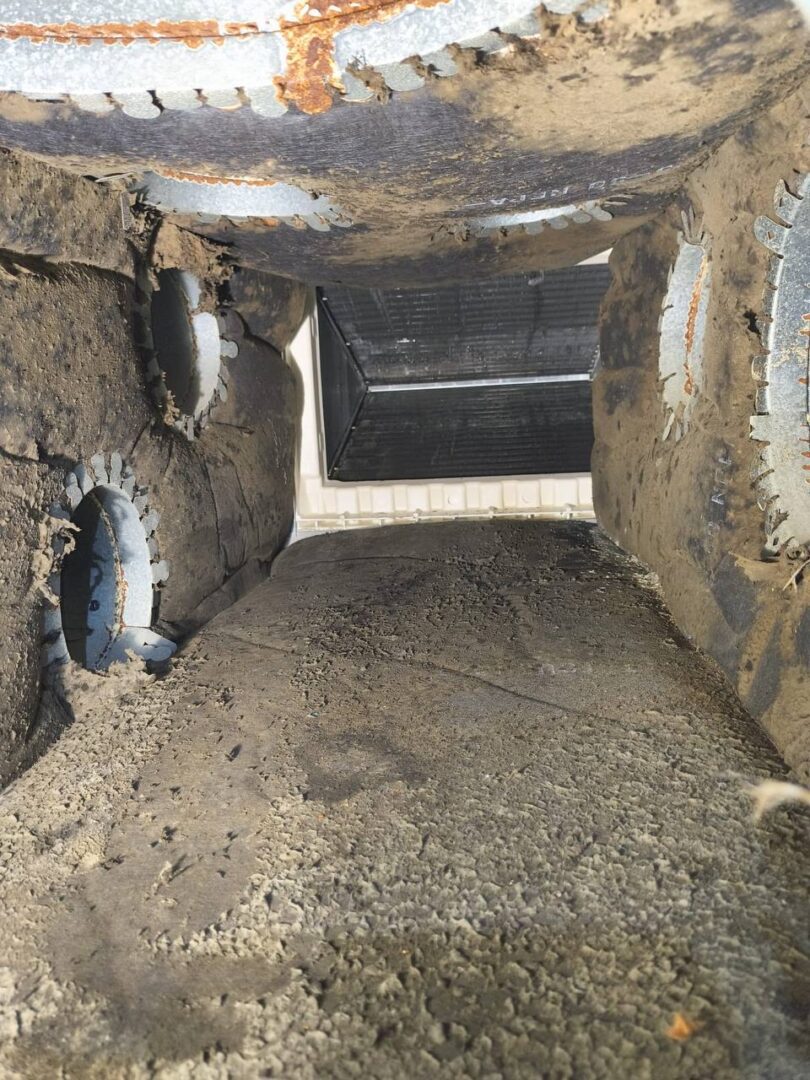
The most common reason mold remediations in Baton Rouge homes fail — meaning the mold returns — is that the duct system wasn't part of the scope. Surface mold is cleaned, walls are treated, and the remediation company moves on. The duct system continues circulating moisture-laden air and re-seeding treated surfaces with spores.
Effective [mold remediation](/mold-remediation) for a Baton Rouge home must address:
1. Full Duct System Inspection
Before any cleaning begins, the duct system should be fully assessed — with camera equipment for interior inspection where accessible — to understand the extent of mold growth and identify moisture infiltration points. This isn't optional; it defines the scope of what needs to be done.
2. NADCA-Standard Duct Cleaning
[Professional duct cleaning](/residential-duct-cleaning) using NADCA methodology — mechanical agitation plus HEPA vacuum extraction under negative air pressure — removes the organic debris, biofilm, and mold colonies from duct interior surfaces. This process takes approximately 7 hours for a thorough residential job. A 2-hour duct cleaning is not addressing the full extent of the system.
3. Moisture Source Identification and Remediation
Cleaning mold without addressing its moisture source is painting over a water stain without fixing the leak. Our inspection process identifies the specific moisture pathways contributing to the problem in each home: duct leaks, condensation points, drain pan issues, attic infiltration.
4. Surface Mold Remediation
With the duct system treated and moisture sources identified, surface mold on walls, ceilings, and other materials can be effectively addressed with confidence that the source of re-seeding has been removed.
5. Humidity Control Recommendations
Every remediation ends with specific recommendations for ongoing humidity control based on what was found. This might include duct sealing, dehumidification equipment, attic air barrier improvements, or HVAC maintenance items.
—
Post-Flood Mold in Baton Rouge: A Special Case
Baton Rouge's history includes significant flooding events — the catastrophic 2016 floods being the most recent major example but hardly the only one. Post-flood mold in Baton Rouge homes requires particular attention to ductwork because of how floodwater interacts with duct systems in Louisiana's common home types.
Pier-and-beam construction — prevalent in older Baton Rouge neighborhoods — routes much of the ductwork through the crawl space beneath the floor. When floodwater enters a crawl space, it directly contacts ductwork, saturates insulation, and introduces significant organic contamination. Even after the crawl space dries, duct insulation retains moisture for extended periods, creating sustained mold growth conditions.
For post-flood situations, the duct assessment isn't just recommended — it's essential. Running an HVAC system with flooded, contaminated ductwork spreads contamination throughout the entire home on every cycle.
—
Commercial Properties in Baton Rouge
Office buildings, institutional properties, and commercial facilities in Baton Rouge face the same climate-driven mold pressures as residential homes — typically with larger, more complex duct systems and more occupants whose health is affected by air quality. [Commercial duct cleaning](/commercial-duct-cleaning) and mold remediation for Baton Rouge commercial properties require specialized equipment and expertise appropriate to larger systems.
—
The Right Approach Starts With an Honest Assessment
Baton Rouge homeowners dealing with mold — whether newly discovered or frustratingly recurring — deserve a remediation approach that actually addresses the full problem. That means starting with the duct system, not skipping it.
Book your free inspection at crm.ahchooindoorair.com/book
Our NADCA-certified team will assess your ductwork, identify moisture sources specific to your home and neighborhood, and outline a complete remediation approach. 38 years of Gulf Coast experience includes extensive work in Louisiana markets — we understand what Baton Rouge homes face in a way that out-of-state contractors simply don't.
—
Frequently Asked Questions
Why is mold so common in Baton Rouge homes? Baton Rouge's climate — subtropical, with average annual humidity near 78% and frequent heavy rainfall — creates near-ideal conditions for mold year-round. The combination of high outdoor humidity, warm temperatures, frequent moisture events, and HVAC systems running almost constantly means mold pressure is continuous and intense.
How does ductwork cause indoor humidity problems? Ductwork with leaks, deteriorated insulation, or connection failures allows humid outdoor or attic air to enter the conditioned air supply. This bypasses your HVAC system's dehumidification function and introduces moisture directly into every room of your home. Addressing duct integrity is a core part of indoor humidity control.
What should a complete mold remediation in Baton Rouge include? A complete mold remediation for a Baton Rouge home should include duct system inspection and cleaning, treatment of any mold-contaminated surfaces, identification and repair of moisture sources, recommendations for humidity control, and post-remediation verification. Skipping the duct assessment leaves the primary humidity delivery mechanism untreated.
How long does mold remediation take in a Baton Rouge home? Duct cleaning and mold remediation for a typical Baton Rouge residence takes approximately 7 hours for a thorough job. This includes inspection, containment setup, mechanical cleaning, antimicrobial treatment, and post-work assessment. Rushed jobs that take 2–3 hours do not complete the process adequately.
Does Baton Rouge flooding make mold remediation more complicated? Yes. Flooding events — which affect Baton Rouge regularly — introduce moisture into building assemblies, crawl spaces, and ductwork in ways that create accelerated mold growth. Post-flood mold remediation in Baton Rouge homes should always include a thorough duct assessment, because flooded ground levels often coincide with duct routing in these homes.
Related AH-CHOO resources: South Louisiana air duct cleaning; schedule a free inspection.