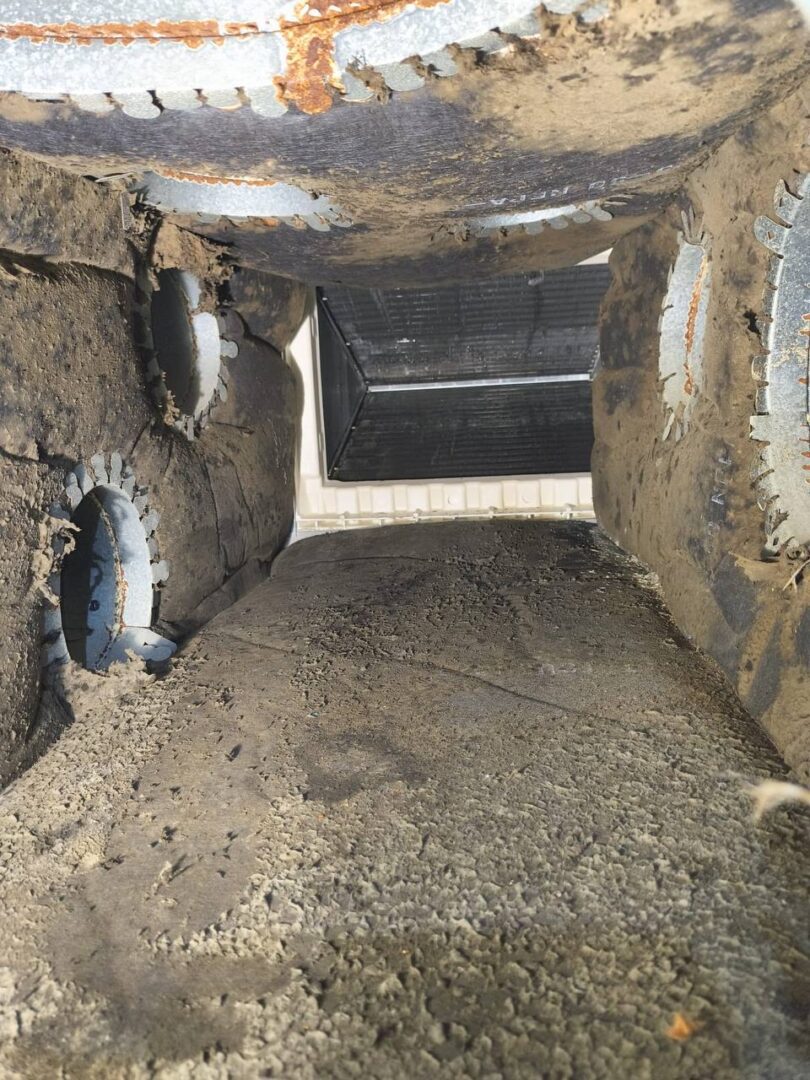
Commercial properties in Houston face HVAC efficiency challenges that most building managers don’t fully understand — and the evaporator coil is the most overlooked component in the system. When a commercial AC system loses efficiency, the cost doesn’t show up as a system failure. It shows up as quietly inflated electricity bills month after month, often for years before anyone connects the symptom to the root cause.
How Commercial Coil Fouling Differs From Residential
Commercial HVAC systems operate under fundamentally different parameters than residential units. A commercial system in Houston might run 12-16 hours per day during peak cooling season, compared to a residential system that typically runs 8-10 hours. The volume of air processed, the amount of moisture removed, and the load placed on the evaporator coil are proportionally higher.
Commercial coils also face different contamination sources:
- High occupant loads generate more dust, skin cells, and biological material per cubic foot of air
- Return air systems in commercial buildings often serve larger floor areas with more surfaces to collect particulate
- Some commercial environments — warehouses, light manufacturing, auto shops — have airborne particulate loads that residential environments don’t experience
- Kitchen exhaust and other specialty exhaust systems in mixed-use buildings can introduce grease-laden air that deposits on coil surfaces
The Efficiency Math for Commercial Properties
A commercial evaporator coil with moderate fouling — the kind that’s barely visible but has accumulated a layer of dust and biological material — typically loses 25-40% of its heat transfer capacity. The result:
- The system runs longer cycles to achieve the same cooling output
- Compressor wear increases because the system works harder for the same result
- Energy consumption per ton of cooling increases significantly
- Temperature stratification in the building increases as some zones cool adequately and others don’t
For a 10-ton commercial AC system operating at 85% efficiency instead of 100%, you’re consuming roughly 15-20% more electricity per month while providing 10-15% less cooling capacity. In Houston’s commercial electricity rates, that difference can translate to thousands of dollars per year on a medium-sized building’s HVAC bills.
Why Standard Commercial Maintenance Misses the Coil
Most commercial HVAC service contracts cover equipment-level maintenance: filters, refrigerant levels, compressor condition, and basic function tests. Coil cleaning is typically outside the scope of standard PM contracts, and when it is offered, the methods used vary significantly in effectiveness.
The difference between a thorough coil cleaning and a surface-level rinse is substantial:
- A thorough cleaning uses specialized chemical agents formulated to dissolve biological growth, mineral scale, and grease without damaging aluminum fins
- Low-pressure wash application ensures chemicals reach between coil fins without bending delicate aluminum
- Proper extraction captures dissolved contamination rather than allowing it to drip into the drain pan and potentially cause drain line clogs
- Biocide treatment after cleaning inhibits future biological growth
A surface-level rinse removes some visible dust but leaves biological films and scale deposits that continue to reduce efficiency.
Houston’s Climate Amplifies Commercial Coil Problems
Houston’s humidity means commercial coils are processing moisture-laden air nearly year-round. A commercial building in Phoenix faces similar temperature loads but significantly lower moisture processing requirements. In Houston, the coil must handle both temperature AND humidity management, which means the coil is doing more work per cooling cycle and fouling faster.
For commercial properties with high occupant loads — office buildings, medical facilities, restaurants, retail — the combination of high occupancy, long run hours, and Houston’s humidity means coil fouling is an ongoing process that requires more frequent attention than standard maintenance schedules assume.
The Documentation Advantage
Commercial property managers who implement regular professional coil cleaning gain two benefits beyond efficiency:
Energy benchmarking documentation: Many commercial energy benchmarking programs (ENERGY STAR Portfolio Manager, local ordinances) require documentation of HVAC system maintenance. Professional coil cleaning records with before/after efficiency data support energy benchmarking claims and can support ENERGY STAR certification applications.
Equipment lifecycle management: Commercial AC systems that operate with clean coils have longer component lifespans. The compressor, which is the most expensive component in a commercial AC system, experiences significantly less wear when the system isn’t compensating for coil efficiency losses.
AH-CHOO! Indoor Air Quality provides commercial HVAC cleaning services including evaporator coil cleaning for Houston-area commercial properties. NADCA certified. Serving office buildings, multi-family properties, medical facilities, restaurants, and industrial properties.
[Contact AH-CHOO! Commercial Services](https://crm.ahchooindoorair.com/book)
Related AH-CHOO resources: Houston air duct cleaning; commercial air duct cleaning; schedule a free inspection.