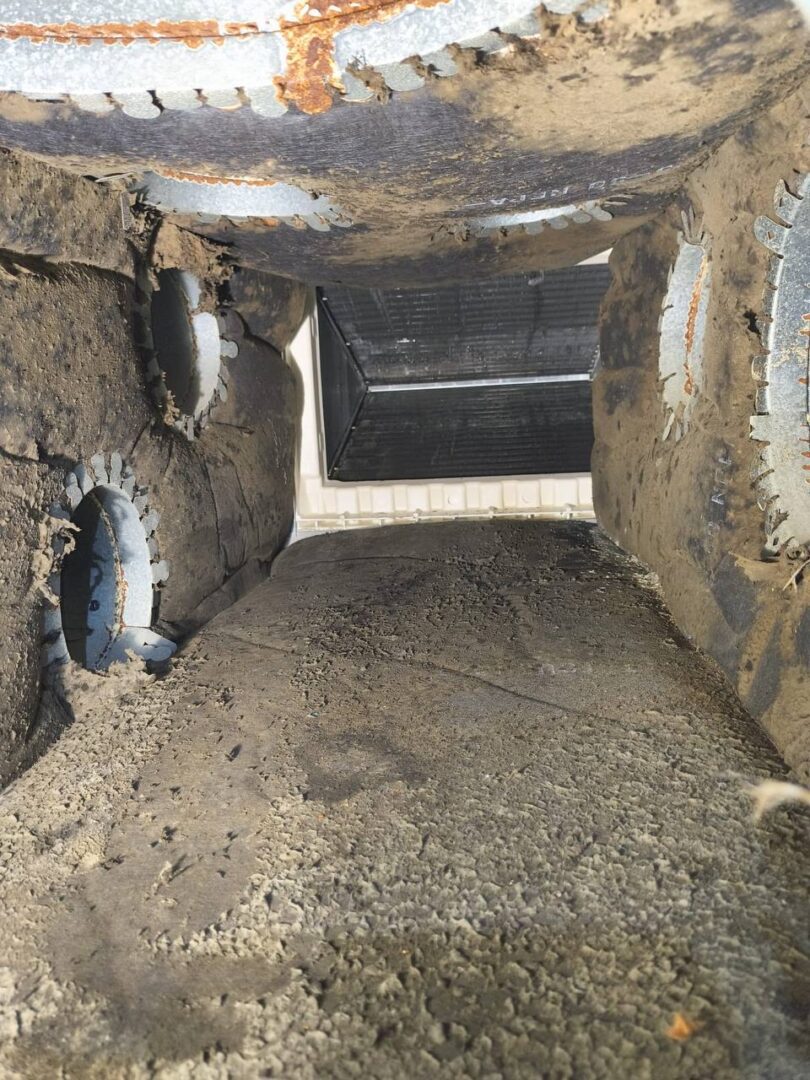
When most homeowners think about air duct cleaning, they imagine someone cleaning the ductwork — the silver tubes that carry air through the house. But the evaporator coil inside your air handler is arguably the most important component in your HVAC system, and it’s the component that standard duct cleaning most often neglects. If your coils are contaminated, your ducts could be spotless and your system would still be operating at a fraction of its potential.
What the Evaporator Coil Actually Does
The evaporator coil is where the cooling actually happens. Hot, humid air from your home’s return ducts passes over the coil, which contains cold refrigerant. The refrigerant absorbs heat from the air, and the moisture in the air condenses on the coil surface and drips into the drain pan below.
In Houston’s climate, your evaporator coil is processing enormous volumes of humid air every cooling season. A single AC system in Houston processes roughly 15-20 gallons of water per day during peak summer months — that’s condensate that the coil must manage while simultaneously transferring heat.
When the coil is clean, this heat transfer happens efficiently. When the coil is coated in dust, biological matter, and mineral deposits from Houston’s hard water, the efficiency drops significantly.
How Coils Get Contaminated
Airborne particulate: Every cubic foot of air your system processes carries microscopic particles — dust, pollen, smoke residue, and biological spores. As air passes over the coil, these particles stick to the wet coil surface. Over time, this creates a layer of accumulated material that insulates the coil fins and reduces heat transfer.
Biological growth: The combination of moisture, warmth, and organic material on a coil surface in Houston’s climate creates ideal conditions for biological growth. Mold, algae, and bacteria colonize coil surfaces, creating a slimy layer that further insulates the metal and reduces efficiency.
Mineral deposits: Houston has hard water. The condensate that drips from the coil carries dissolved minerals, which can accumulate on the coil surface as the water evaporates. These mineral deposits (scale) create an additional insulating barrier that’s particularly difficult to remove without proper chemical treatment.
Why Dirty Coils Cost You Money
The efficiency impact of a contaminated evaporator coil is immediate and measurable:
- A coil with 0.025 inches of dust accumulation loses 37% of its heat transfer capacity
- A coil with biological growth and scale can lose 50% or more of rated efficiency
- Your system compensates by running longer cycles, consuming more electricity
- The compressor works harder to achieve the same cooling output, shortening its lifespan
For the average Houston home, a severely contaminated coil can add 15-25% to your summer energy bills while simultaneously reducing cooling output.
Why Standard Duct Cleaning Often Misses the Coil
Many “duct cleaning” operations — including the 45-minute specials — don’t include coil cleaning as part of their standard service. Coil cleaning requires:
- Chemical treatment: Specialized coil cleaners that dissolve biological growth without damaging aluminum fins
- Low-pressure wash: High-pressure water would bend coil fins and push contamination deeper; low-pressure application with proper extraction is required
- Sanitizer application: After cleaning, a biocide treatment inhibits future biological growth
- Drain pan and drain line treatment: The condensate drain and pan must be cleaned and treated to prevent algae growth that can clog the drain
This is skilled work that requires additional equipment and training. Rock-bottom teaser service options usually means coil cleaning gets skipped because the crew does not have the time, equipment, or training to do it correctly.
The NADCA Standard for Coil Cleaning
NADCA’s assessment, cleaning, and verification standard specifically addresses the evaporator coil as a critical HVAC component. NADCA-certified technicians are trained in proper coil cleaning methodology, including chemical application, pressure control, and drain line treatment.
Professional coil cleaning as part of a full system cleaning typically adds 45-60 minutes to the job time. The chemical cleaning agents used are specifically formulated for HVAC coils and are rinsed with controlled low-pressure water to avoid damage.
Signs Your Evaporator Coil Needs Attention
- Your AC runs constantly but some rooms don’t cool effectively
- Summer energy bills are significantly higher than previous years with similar weather
- You notice a musty smell when the AC first turns on each season
- There’s visible dark discoloration on the coil visible through the air handler access panel
- The air handler compartment shows visible moisture or water staining
- Your system is over 5 years old and has never had professional coil cleaning
AH-CHOO! Indoor Air Quality cleans all 8 HVAC components including the evaporator coil, using NADCA-certified source removal methods. Serving Houston, Austin, San Antonio, and South Louisiana.
[Schedule Your Houston Coil Inspection](https://crm.ahchooindoorair.com/book)
Related AH-CHOO resources: Houston air duct cleaning; schedule a free inspection.