For more on Houston indoor air quality and HVAC care, see what spring pollen does to Houston indoor air.
For more on Houston indoor air quality and HVAC care, see whether duct cleaning is worth it during Houston spring.
Spring pollen air duct cleaning in Houston is one of the most important home maintenance steps you can take between March and May 2026. During this window, Houston experiences its most aggressive dual-pollen season — oak and grass releasing simultaneously — and without professional duct cleaning, your HVAC system recirculates those allergens through every room in your home for months.
Why Houston’s Spring Pollen Season Is Unlike Anywhere Else
Houston’s subtropical climate means allergy season never fully stops — but spring is when it reaches peak intensity. Oak trees begin releasing pollen in March. By April and into May, grass pollen joins the mix. The result is a double-pollen window where your entire HVAC system — supply ducts, return ducts, coils, and air handler — becomes a collection point for airborne allergens.
The Houston Health Department tracks daily pollen and mold counts year-round. During March and April, tree pollen (especially oak) and mold spore levels are consistently elevated. Once pollen enters your home through doors, windows, and your HVAC system’s air intake, it settles into your ductwork. From there, every time your AC or heat runs, it pulls air across that accumulated layer and pushes it back through your living spaces.
This is not a theoretical problem. It’s how Houston homes operate from March through June, and it’s why spring is the single most important season to address your indoor air quality.
How Pollen Gets Into Your Air Ducts — and Stays There
Your HVAC system is designed to pull air from your home, condition it, and return it. That return air carries everything floating in your indoor environment:
- Oak and grass pollen tracked in from shoes, clothes, and pets
- Pollen that entered through windows left open on mild spring days
- Mold spores encouraged by Houston’s persistent humidity
- Fine particulate matter from Houston’s elevated outdoor air pollution
- Dust, pet dander, and skin cells that mix with pollen into a multi-allergen layer
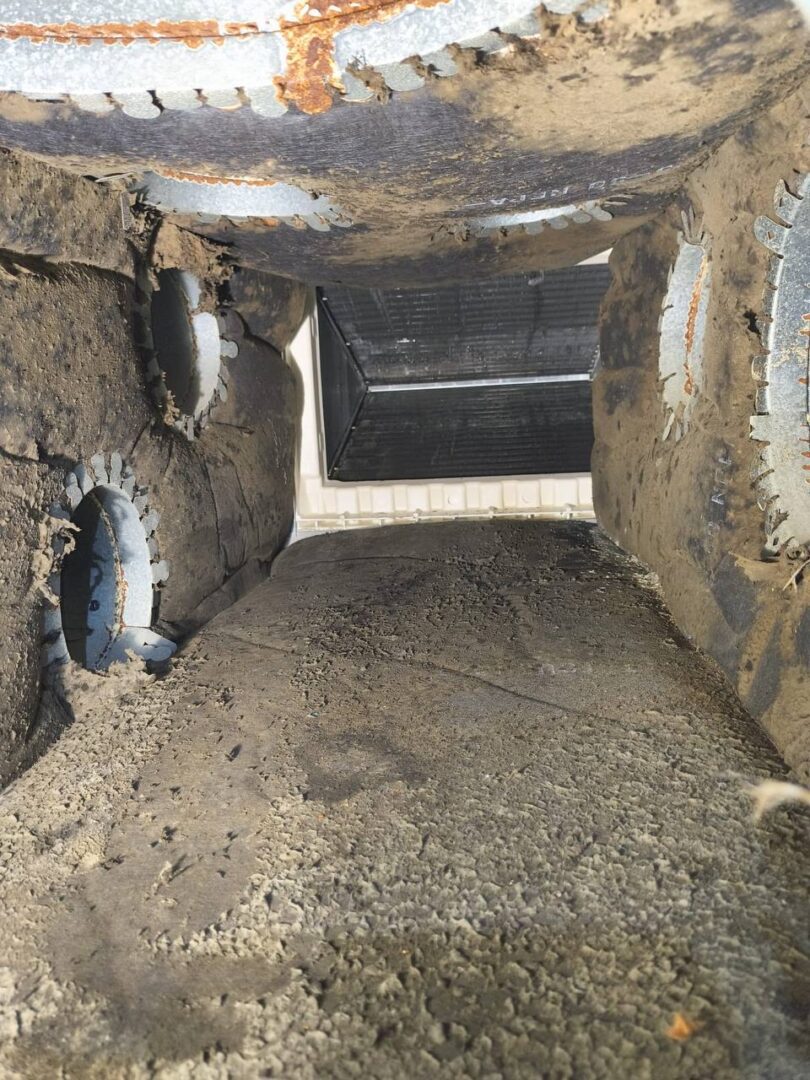
This debris doesn’t just pass through your filter. Pollen and fine particles adhere to duct walls, accumulate in low-velocity corners of ductwork, and coat supply registers. Standard filter changes remove some airborne particles — but they do nothing about what’s already caked inside the ductwork, coil, and air handler cabinet.
Over a season, that layer becomes substantial. By the time Houston grass season peaks in May and June, a home that hasn’t had a full system clean may be recirculating months of accumulated allergens with every HVAC cycle.
The Double-Pollen Window: Oak Season Meets Grass Season
Most of the country has one main pollen peak. Houston has two that overlap:
- Oak pollen (March–April): Houston is densely planted with live oaks and water oaks. These trees produce extremely fine, sticky pollen that travels easily and infiltrates any building envelope with openings.
- Grass pollen (April–June): Bermuda, Johnson, and Timothy grasses — common throughout Harris County and surrounding areas — begin releasing pollen as temperatures climb in April. By May, grass pollen is at its highest concentration.
The overlap period — roughly mid-April through early May — is when Houston’s allergy burden is at its absolute highest. For families with asthma, hay fever, or year-round nasal symptoms, this window is critical. Clean ductwork before and during this overlap means fewer allergens circulating indoors during the worst outdoor air period.
This is why indoor air quality professionals recommend scheduling a full system duct cleaning in late March or early April — before grass pollen fully arrives — so the system is clean as outdoor conditions worsen.
What a Full System Duct Clean Does During Allergy Season
A true NADCA-certified duct cleaning is not a quick vacuum of your registers. It is a complete system cleaning that addresses every component where allergens accumulate:
- Supply and return ductwork: Agitation tools loosen adhered pollen, dust, and debris. Negative pressure systems extract the dislodged material entirely from the duct system.
- Air handler cabinet: The interior of the air handler — including blower wheel — is cleaned of allergen-laden buildup.
- Evaporator coil: Houston’s humidity creates a damp environment at the coil that traps pollen and promotes mold growth. Coil cleaning removes this layer.
- Registers and grilles: Removed, cleaned, and reinstalled so debris doesn’t reenter at the point of airflow.
AH-CHOO! Indoor Air Quality dedicates an entire day to a single home’s system — a 7-hour full system clean — because a proper NADCA cleaning takes time. The alternative is a “blow-and-go” service that moves debris further into the system rather than removing it.
After 38 years in this industry, we’ve seen what March-to-June pollen accumulation looks like inside ductwork. It is significant, and it matters for every person breathing that air.
If you’ve been sneezing more indoors than outdoors this spring, your ducts may be the reason. We offer free inspections — schedule one and we’ll show you exactly what’s in your system before we clean a thing.
FAQ: Spring Pollen and Air Duct Cleaning in Houston
When is the best time to schedule spring duct cleaning in Houston?
Late March through mid-April is ideal — before grass pollen peaks and during the tail of oak season.
Does cleaning my air ducts actually help with allergies?
It removes the reservoir of accumulated pollen, mold spores, and fine particles that have built up inside your ductwork. This reduces what your HVAC system recirculates. Combined with good filtration, a clean duct system is a meaningful part of indoor allergy management for Houston homes.
How long does a professional duct cleaning take?
A NADCA-standard full system clean for a typical Houston home takes approximately 7 hours. Be wary of services advertising whole-house cleaning in under 2 hours.
Is one cleaning enough for the whole pollen season?
One thorough full system clean at the start of the season removes what has accumulated over winter and sets a clean baseline. Regular filter changes and a free inspection each season keep the system in good condition.
What makes AH-CHOO! different from other Houston duct cleaning companies?
We are NADCA certified, have been doing this for 38 years, and take one job per day. Every cleaning is a complete 7-hour system cleaning, not a per-vent quick-service visit.
Do you serve other Houston-area communities?
Yes. We serve the greater Houston metro area including The Woodlands, Katy, Sugar Land, Pearland, and surrounding communities. We’ve recently expanded to Austin. Contact us to confirm service availability.
AH-CHOO! Indoor Air Quality is NADCA certified with 38 years of experience serving Houston. We offer free inspections — no obligation. Schedule at ahchooindoorair.com/contact.
Related AH-CHOO resources: Houston air duct cleaning.