Meta Description: Pet dander spreads through your entire Houston home via duct systems. Learn how professional duct cleaning removes pet allergens that filters and vacuuming can’t reach.
“`json
{
“@context”: “https://schema.org”,
“@graph”: [
{
“@type”: “Article”,
“@id”: “https://ahchooindoorair.com/blog/pet-dander-air-ducts-removal”,
“headline”: “Pet Dander in Air Ducts: How Professional Cleaning Helps Houston Pet Owners”,
“description”: “Pet dander spreads through your entire Houston home via duct systems. Learn how professional duct cleaning removes pet allergens that filters and vacuuming can’t reach.”,
“url”: “https://ahchooindoorair.com/blog/pet-dander-air-ducts-removal”,
“datePublished”: “2026-03-26”,
“dateModified”: “2026-03-26”,
“author”: {
“@type”: “Organization”,
“name”: “AH-CHOO! Indoor Air Quality”,
“url”: “https://ahchooindoorair.com”
},
“publisher”: {
“@type”: “Organization”,
“name”: “AH-CHOO! Indoor Air Quality”,
“logo”: {
“@type”: “ImageObject”,
“url”: “https://ahchooindoorair.com/logo.png”
}
}
},
{
“@type”: “FAQPage”,
“mainEntity”: [
{
“@type”: “Question”,
“name”: “Does pet dander accumulate inside air ducts?”,
“acceptedAnswer”: {
“@type”: “Answer”,
“text”: “Yes, significantly. Pet dander particles are lightweight and easily become airborne, making them highly likely to enter return air ducts. Over time, dander accumulates in layers inside the duct system, embedded in dust and debris. This stored dander gets re-aerosolized continuously, spreading allergens to every room even where pets never go.”
}
},
{
“@type”: “Question”,
“name”: “Why do pet allergy symptoms affect rooms where pets aren’t allowed?”,
“acceptedAnswer”: {
“@type”: “Answer”,
“text”: “Your HVAC system doesn’t respect pet-free zones. Dander from areas where pets spend time gets pulled into return ducts and deposited throughout the duct system. Supply registers then distribute those allergens to every room the duct system serves — including rooms where pets are never permitted.”
}
},
{
“@type”: “Question”,
“name”: “How often should pet owners in Houston clean their ducts?”,
“acceptedAnswer”: {
“@type”: “Answer”,
“text”: “Pet owners in Houston should consider professional duct cleaning every 2-3 years rather than the standard 3-5 years. Multiple pets, heavy shedders, or allergy sufferers in the household may warrant more frequent cleaning. Houston’s long AC season accelerates dander accumulation compared to cooler climates.”
}
},
{
“@type”: “Question”,
“name”: “Does duct cleaning help if I’m allergic to my own pet?”,
“acceptedAnswer”: {
“@type”: “Answer”,
“text”: “Duct cleaning reduces the total allergen load in your home by removing the accumulated reservoir of dander inside the duct system. While it doesn’t eliminate ongoing dander production from a living pet, removing years of stored allergens can meaningfully reduce symptom severity for people living with pets they’re sensitive to.”
}
},
{
“@type”: “Question”,
“name”: “What’s the best HVAC filter for Houston pet owners?”,
“acceptedAnswer”: {
“@type”: “Answer”,
“text”: “MERV-11 or MERV-13 filters provide better dander capture than standard MERV-8 filters while still allowing adequate airflow in most residential systems. However, filters only address new dander entering the system — they don’t remove what’s already accumulated inside the ducts. Professional cleaning addresses the stored reservoir that filter changes cannot.”
}
}
]
}
]
}
“`
Houston is a pet-loving city. About 70% of U.S. households own a pet, and that number runs higher in the South, where year-round outdoor access makes pet ownership especially practical. But there’s a significant downside to sharing a tightly sealed, air-conditioned home with dogs and cats — and it lives inside your ductwork.
Pet dander is one of the most potent indoor allergens, one of the most persistent, and one of the most misunderstood. Here’s what Houston pet owners need to know about what’s happening inside their duct systems — and what actually helps.
What Pet Dander Actually Is
“Pet dander” is a catch-all term, but understanding what it actually consists of matters for understanding why it’s such a persistent problem.
The primary allergenic component isn’t pet fur — it’s the microscopic protein-laden particles shed from an animal’s skin, saliva, and urine. These proteins (Fel d 1 in cats, Can f 1 in dogs, among others) are the actual allergens that trigger immune responses. They’re attached to skin cells (the actual dander) and to fur fragments, but the particles themselves are incredibly small — many are in the 1-5 micron range.
That small size is what makes pet allergens so problematic. Particles in this range stay airborne for extended periods, get drawn into HVAC return ducts readily, pass through many filter grades, and penetrate deeply into respiratory tissue. They don’t behave like hair you can vacuum up — they behave like a fine aerosol that permeates everything.
How Dander Gets Into Your Duct System
The path from pet to duct system is direct and continuous.
Your pets shed dander-loaded skin cells and fur constantly. This material becomes airborne through grooming, movement, and simply being in the space. Airborne particles migrate toward your return air grilles — which are actively pulling air into the HVAC system.
Once in the duct system, some particles are captured by the filter. But smaller particles pass through standard filters, and particles that enter through return grilles can deposit on duct walls before even reaching the filter. Over time, the interior of the return duct system becomes coated with a dander-laden debris layer.
From there, the supply side distributes the problem. Particles re-aerosolized from duct surfaces travel through the entire supply network and exit from every register in the home — including rooms where pets are never allowed.
We’ve cleaned duct systems in Houston homes where the owners had a “cat-only” zone and a “pet-free” zone, and found comparable dander levels throughout the entire duct network. The distribution doesn’t respect household rules — it follows the airflow.
The Accumulation Problem
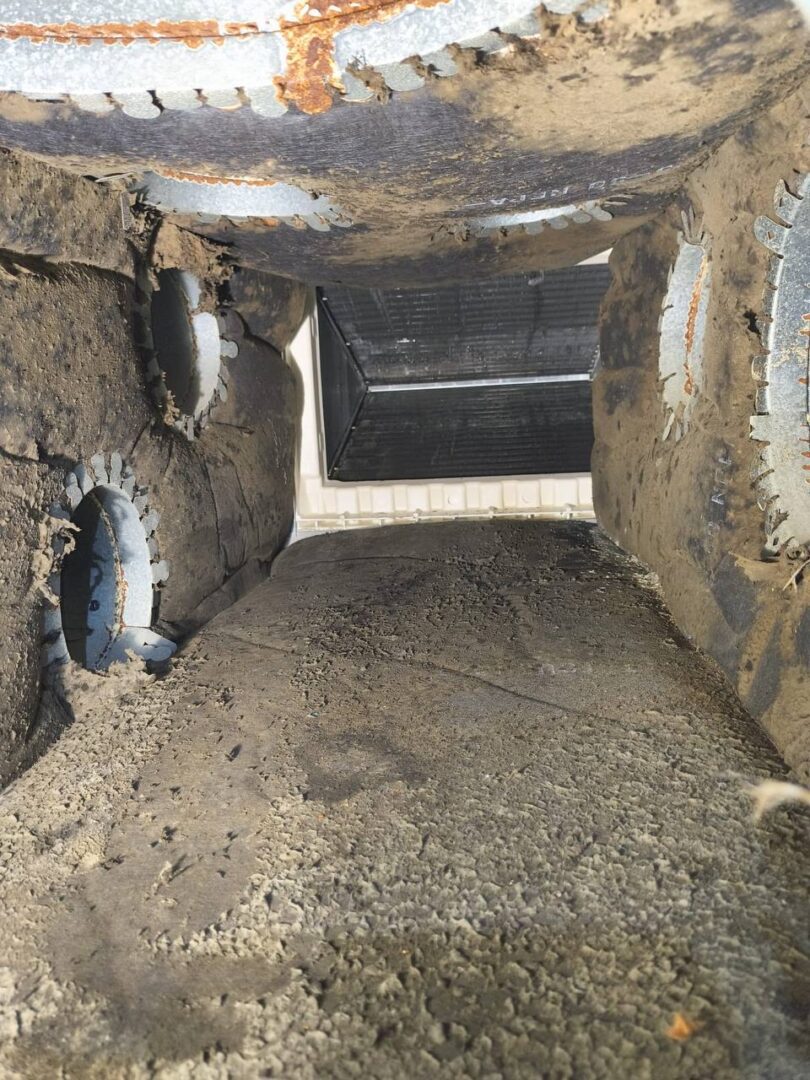
The duct system doesn’t just pass dander through — it stores it. This is the distinction most pet owners miss when they think about the problem.
In a duct system with standard operation and typical filter management, the interior surfaces gradually accumulate a mixed debris layer of dust, dander, pollen, and other particles. This layer is continually disturbed and partially re-aerosolized during system operation, but it also continues to grow.
A Houston home with two cats, running its AC for 10 months per year, and cleaning filters every 60-90 days will still accumulate significant dander deposits inside the duct system over a 3-5 year period. That accumulation represents a persistent allergen reservoir — one that doesn’t respond to filter changes, surface cleaning, or air purifiers.
One Bellaire home we serviced had three large dogs and hadn’t had duct cleaning in eight years. The debris we extracted from the duct system was visibly composed largely of pet hair and dander-laden material — the quantity was striking. The homeowners reported that one family member’s dog allergies had been worsening for years, which they’d attributed to increased sensitivity. The actual cause was an ever-growing allergen reservoir in the ducts.
Why “Pet-Free Rooms” Don’t Work Without Duct Cleaning
Many households dealing with pet allergies try to create pet-free zones — typically bedrooms or a family member’s room. This strategy has some merit in reducing direct contact with the pet, but it fails to account for the duct system.
If your home has centralized HVAC, every room shares the same air distribution network. The same duct system that delivers air to a room where the dog sleeps delivers air to the “pet-free” bedroom. Any dander deposited in the duct system during operation exits through every supply register.
The only way to make a room genuinely lower in pet allergens is to address the duct system itself — removing the stored reservoir and ensuring the supply air delivering to that room is not carrying elevated dander loads.
Houston’s Climate Makes It Worse
Two factors specific to Houston compound the pet dander problem:
Year-round AC operation. Most northern climates get seasonal breaks from HVAC operation, which allows duct accumulation to stabilize. Houston runs its AC for 10+ months per year, which means dander accumulates continuously with minimal natural break. More run-time means faster accumulation.
Humidity. Houston’s humidity means that particles in the duct system don’t stay dry. Moist debris tends to clump and adhere to surfaces more than dry debris. This can actually reduce short-term re-aerosolization rates, which sounds positive — but it means that more material builds up and stays built up until physically removed.
What Duct Cleaning Removes
[Residential duct cleaning](https://ahchooindoorair.com/residential-duct-cleaning) uses high-powered negative air pressure combined with mechanical agitation to physically extract the accumulated debris from throughout the duct system. For a home with pets, this includes:
- Dander-laden debris layers throughout the duct network
- Accumulated pet hair in return ducts and register boots
- The mixed debris layer on duct wall surfaces
- Material in the air handler, including the blower wheel
The process takes approximately 7 hours for a complete residential system. It addresses the stored reservoir that filter changes and surface cleaning cannot reach.
What duct cleaning doesn’t do: it doesn’t eliminate dander production from a living pet. Your animals continue producing dander after cleaning. But removing the accumulated reservoir — potentially representing years of buildup — meaningfully reduces the total allergen load your family is exposed to continuously.
Think of it as resetting the baseline. Once the stored reservoir is removed, your filter can more effectively manage the ongoing load. Surface cleaning more effectively reduces surface allergens. Air quality improves because the system is no longer actively redistributing years of stored material.
Managing Dander Going Forward
After professional cleaning, a maintenance strategy helps extend the benefit:
Upgrade your filter. MERV-11 or MERV-13 filters capture more dander than standard MERV-8. Check that your system can handle the increased resistance before upgrading.
Change filters more frequently. Pet households should change filters every 30-60 days rather than 60-90 days. The higher dander load fills filters faster.
Clean registers. Supply and return register grilles accumulate dander-laden debris and should be cleaned periodically with a damp cloth.
Repeat cleaning on a shorter cycle. Pet households benefit from professional cleaning every 2-3 years rather than the standard 3-5.
If any moisture issues exist in the duct system — condensation buildup, visible water staining, or musty odors — these should be addressed through [mold remediation](https://ahchooindoorair.com/mold-remediation) in conjunction with the cleaning. Damp debris supports biological growth that compounds the allergen problem beyond dander alone.
For households where multiple people have sensitivities, or where a child’s respiratory health is a concern, early intervention is worth prioritizing. The inspection is free and takes less time than a vet appointment.
[Book your free inspection at crm.ahchooindoorair.com/book](https://crm.ahchooindoorair.com/book)
Frequently Asked Questions
Does pet dander accumulate inside air ducts?
Yes, significantly. Pet dander particles are lightweight and easily become airborne, making them highly likely to enter return air ducts. Over time, dander accumulates in layers inside the duct system, embedded in dust and debris. This stored dander gets re-aerosolized continuously, spreading allergens to every room even where pets never go.
Why do pet allergy symptoms affect rooms where pets aren’t allowed?
Your HVAC system doesn’t respect pet-free zones. Dander from areas where pets spend time gets pulled into return ducts and deposited throughout the duct system. Supply registers then distribute those allergens to every room the duct system serves — including rooms where pets are never permitted.
How often should pet owners in Houston clean their ducts?
Pet owners in Houston should consider professional duct cleaning every 2-3 years rather than the standard 3-5 years. Multiple pets, heavy shedders, or allergy sufferers in the household may warrant more frequent cleaning. Houston’s long AC season accelerates dander accumulation compared to cooler climates.
Does duct cleaning help if I’m allergic to my own pet?
Duct cleaning reduces the total allergen load in your home by removing the accumulated reservoir of dander inside the duct system. While it doesn’t eliminate ongoing dander production from a living pet, removing years of stored allergens can meaningfully reduce symptom severity for people living with pets they’re sensitive to.
What’s the best HVAC filter for Houston pet owners?
MERV-11 or MERV-13 filters provide better dander capture than standard MERV-8 filters while still allowing adequate airflow in most residential systems. However, filters only address new dander entering the system — they don’t remove what’s already accumulated inside the ducts. Professional cleaning addresses the stored reservoir that filter changes cannot.
Learn more about schedule pet dander duct cleaning.