Meta Description: If your allergies flare up inside your own home, your ducts may be the cause. Houston’s humidity and long AC season create serious indoor allergen problems.
“`json
{
“@context”: “https://schema.org”,
“@graph”: [
{
“@type”: “Article”,
“@id”: “https://ahchooindoorair.com/blog/allergies-worse-indoors-houston”,
“headline”: “Why Your Allergies Are Worse Indoors: Houston’s Hidden Air Problem”,
“description”: “If your allergies flare up inside your own home, your ducts may be the cause. Houston’s humidity and long AC season create serious indoor allergen problems.”,
“url”: “https://ahchooindoorair.com/blog/allergies-worse-indoors-houston”,
“datePublished”: “2026-03-26”,
“dateModified”: “2026-03-26”,
“author”: {
“@type”: “Organization”,
“name”: “AH-CHOO! Indoor Air Quality”,
“url”: “https://ahchooindoorair.com”
},
“publisher”: {
“@type”: “Organization”,
“name”: “AH-CHOO! Indoor Air Quality”,
“logo”: {
“@type”: “ImageObject”,
“url”: “https://ahchooindoorair.com/logo.png”
}
}
},
{
“@type”: “FAQPage”,
“mainEntity”: [
{
“@type”: “Question”,
“name”: “Why are my allergies worse inside my Houston home than outside?”,
“acceptedAnswer”: {
“@type”: “Answer”,
“text”: “Indoor allergen concentrations can be 2-5 times higher than outdoor levels. In Houston, duct systems that run almost year-round collect and recirculate pollen, mold spores, pet dander, and dust mite allergens continuously. Your home’s air is being filtered through years of accumulated contamination.”
}
},
{
“@type”: “Question”,
“name”: “What indoor allergens are most common in Houston?”,
“acceptedAnswer”: {
“@type”: “Answer”,
“text”: “The most problematic indoor allergens in Houston are mold spores (amplified by humidity), dust mite allergens (thriving in warm, humid conditions), pet dander (redistributed through duct systems), and accumulated outdoor pollen that enters and builds up inside the home over time.”
}
},
{
“@type”: “Question”,
“name”: “Can duct cleaning reduce allergy symptoms?”,
“acceptedAnswer”: {
“@type”: “Answer”,
“text”: “Yes — when the duct system is a primary source of allergen distribution, professional cleaning can significantly reduce indoor allergen loads. The improvement is typically most pronounced for dust mite allergens and mold spores, which accumulate heavily in Houston’s humid duct environments.”
}
},
{
“@type”: “Question”,
“name”: “How do dust mites thrive in Houston HVAC systems?”,
“acceptedAnswer”: {
“@type”: “Answer”,
“text”: “Dust mites require humidity above 50% and temperatures between 65-80°F to thrive. Houston’s climate delivers both. Flex duct interiors — which are porous, fibrous, and often slightly humid from condensation — create an ideal dust mite habitat that standard filter replacements never address.”
}
},
{
“@type”: “Question”,
“name”: “How quickly does allergy relief occur after duct cleaning?”,
“acceptedAnswer”: {
“@type”: “Answer”,
“text”: “Many homeowners notice improvement within days of professional duct cleaning as the allergen load in circulating air drops. Full improvement typically occurs within 1-2 weeks as residual allergens settle and are removed through normal cleaning. Results are most dramatic when ducts were heavily contaminated before cleaning.”
}
}
]
}
]
}
“`
If you dread going home, if your eyes start watering the moment you walk through the door, if you sleep fine in hotel rooms but wake up congested in your own bed — you’re not imagining things. Your home may be making you sick.
It’s counterintuitive: indoors should be a refuge from pollen season, from outdoor pollution, from the things that trigger your allergies. But for millions of Houston homeowners, the inside of their home is the most allergen-dense environment they encounter all day. And the culprit is usually the same thing pushing all that air around: the duct system.
The Indoor Allergen Paradox
The EPA has documented for decades that indoor air is typically 2-5 times more polluted than outdoor air. In Houston, that ratio is often worse. Here’s why.
Every time you open a door or window in Houston, you invite in pollen, mold spores, and particulate matter. Those particles don’t just float in and float out — they settle on surfaces, get drawn into your HVAC return, and accumulate inside your duct system. Your home essentially functions as a collection trap for every allergen it encounters, and your duct system is the storage vessel.
Then, every time your AC kicks on — which in Houston is roughly every 10-15 minutes on a hot day — it re-aerosolizes those stored allergens and delivers them to every room in the house.
What you’re breathing inside your home is the collected allergen load of months or years of occupancy.
Houston’s Specific Allergen Problem
Houston consistently ranks among the worst cities in the nation for allergies. The reasons are well documented: a warm climate that extends pollen season nearly year-round, humidity that fuels mold growth, and a geography that gives us exposure to both coastal and inland allergen sources.
But what most Houston allergy sufferers don’t realize is that the worst of these allergens aren’t coming from outside — they’re coming from inside their own duct systems.
Mold Spores: Houston’s Dominant Indoor Allergen
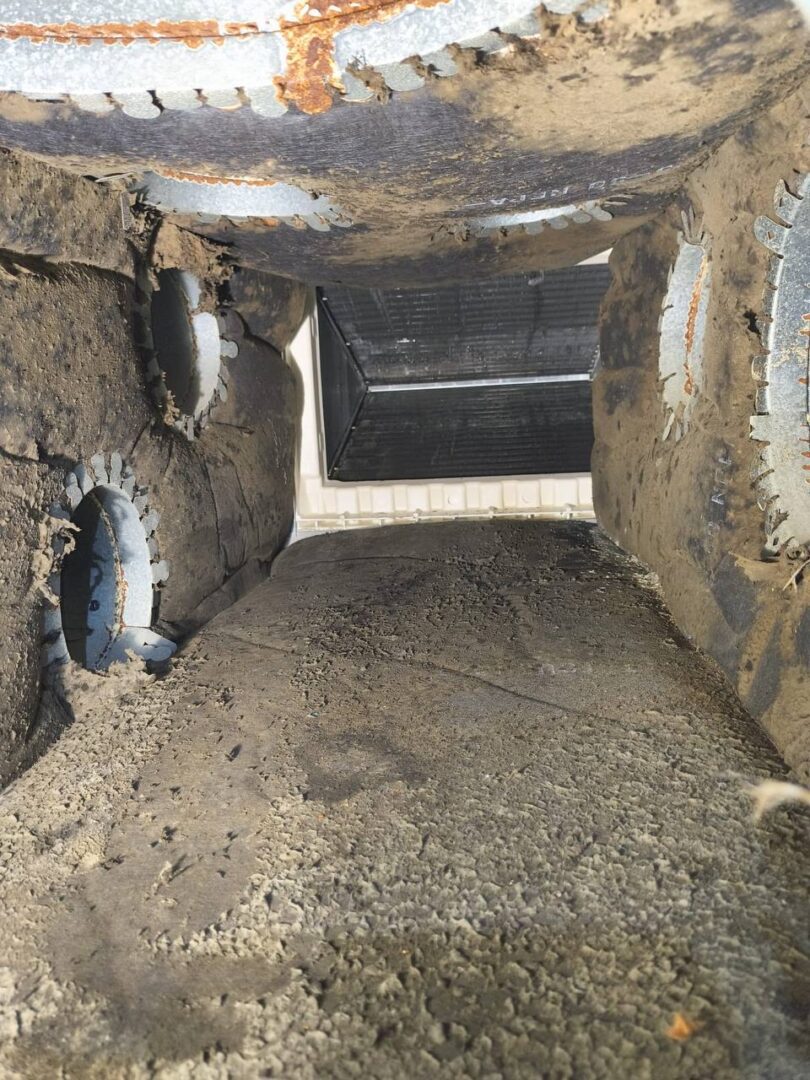
Houston’s average relative humidity hovers above 70%. Inside duct systems — particularly in flex duct sections in unconditioned attic spaces — conditions are frequently ideal for mold colonization. The flex duct liner material is fibrous and porous, retaining moisture even after the system cycles off.
Once mold establishes itself inside a duct section, it continuously sheds spores into the airstream. Unlike outdoor mold exposure, which varies with weather, duct-sourced mold exposure happens constantly, every time your system runs.
We’ve pulled flex duct sections during cleaning jobs that were visibly black on the interior — years of mold growth that the homeowner had no idea existed. One job in Pearland involved a 12-year-old flex duct system where every single run showed biological growth. The homeowner’s daughter had been treated for “seasonal allergies” for four years before they called us.
Dust Mite Allergens: The Invisible Trigger
Dust mites are microscopic arachnids that thrive in warm, humid environments. Houston’s climate is essentially their ideal habitat. They don’t live in your ducts — they prefer soft surfaces like bedding and upholstery — but their protein-laden fecal particles and body fragments are lightweight enough to become airborne and get drawn into your HVAC system.
Inside the duct system, those allergen particles accumulate in debris layers and get redistributed continuously. A bedroom that gets cleaned regularly may still have elevated dust mite allergen levels if the supply duct delivering air to it is contaminated.
Pollen: Not Just an Outdoor Problem
Houston’s cedar, oak, and ragweed pollen seasons are brutal. Pollen particles enter homes through doors, windows, clothing, and pets. Once inside, they settle into the return air ducts — which pull air from the lowest points in your living space, exactly where pollen settles.
Over time, pollen accumulates in duct debris layers and gets recirculated seasonally and continuously. Homeowners often notice that their “seasonal” allergies seem to last year-round at home — because the indoor reservoir of pollen doesn’t clear when the outdoor season ends.
Pet Dander: The Duct System Redistributes Everything
Pet dander is one of the most pervasive indoor allergens, and it doesn’t stay where the pet spends time. Dander particles are lightweight and airborne — they get pulled into return ducts and delivered via supply registers throughout the entire home. This means that even rooms where pets are never allowed can have significant dander concentrations.
[Residential duct cleaning](https://ahchooindoorair.com/residential-duct-cleaning) physically removes accumulated dander from throughout the duct system — something no filter change or air purifier can accomplish.
Why Filters Don’t Solve the Problem
The most common response to indoor allergy complaints is “just change your filter more often.” This advice misunderstands how duct contamination works.
Your HVAC filter is positioned at the return air intake. It captures particles *as they’re drawn into the system* from your living space. What it doesn’t do:
- Remove contamination already built up inside the duct walls
- Capture particles that enter through duct leaks or gaps upstream of the filter
- Address biological growth on duct surfaces
- Clear the air handler coil, which accumulates allergens significantly
Filter upgrades — moving to MERV-11 or MERV-13 filters — can help reduce what enters the system going forward. But they do nothing about the years of accumulation already inside.
The Seasonal Worsening Pattern
Many Houston homeowners notice a consistent pattern: allergy symptoms that worsen at the beginning of each AC season. This makes sense when you understand what’s happening in the duct system.
During Houston’s brief mild periods, the HVAC system runs less frequently. Debris that was partially aerosolized settles back into duct channels. When the system ramps back up for summer, all of that settled material gets disturbed and re-aerosolized at higher concentrations than during steady-state operation.
If your allergies spike every April or May, it may not just be the oak pollen outside — it may be the duct system waking up for another season of circulation.
When Mold Is the Problem, Not Just Allergens
Sometimes the issue goes beyond allergies into something more serious. Mold exposure at elevated concentrations can cause symptoms that look like allergies — sneezing, congestion, watery eyes — but also presents with fatigue, headaches, and respiratory irritation that doesn’t respond to standard allergy medication.
If mold is confirmed inside your duct system, cleaning alone isn’t the complete solution. [Mold remediation](https://ahchooindoorair.com/mold-remediation) addresses the contamination at its source, treating not just the visible growth but the underlying conditions that allowed it to establish.
For those who want to understand the full scope of their indoor air quality problem, our [residential duct cleaning](https://ahchooindoorair.com/residential-duct-cleaning) process includes a thorough inspection that identifies whether mold is a factor — so you’re not just treating symptoms but addressing causes.
What Happens After Duct Cleaning
The reduction in indoor allergen load after a professional duct cleaning is often dramatic, particularly in systems that haven’t been cleaned in many years.
Here’s what changes:
Airborne mold spore counts drop. The duct system is no longer actively shedding mold into the airstream with every cycle.
Dust and dander levels near registers normalize. Supply vents that were actively blowing contaminated debris begin delivering relatively clean air.
The symptom cycle breaks. Homeowners who’ve been medicating for “seasonal allergies” find that the constant low-grade exposure driving their symptoms has been removed.
The improvement isn’t instantaneous — residual particles take days to settle out and be removed through normal surface cleaning. But within one to two weeks, most patients notice a meaningful difference.
Take Action on Your Indoor Air Quality
If you’re experiencing chronic allergy symptoms that seem worse at home than anywhere else, your duct system deserves a professional look. The inspection is free. The information is valuable. And if cleaning is warranted, it’s a one-day process that can change the quality of air your family breathes every day.
[Book your free inspection at crm.ahchooindoorair.com/book](https://crm.ahchooindoorair.com/book)
Our NADCA-certified team has 38 years of experience identifying and addressing indoor allergen sources in Houston homes. We’ll give you an honest assessment — no obligation, no pressure.
Frequently Asked Questions
Why are my allergies worse inside my Houston home than outside?
Indoor allergen concentrations can be 2-5 times higher than outdoor levels. In Houston, duct systems that run almost year-round collect and recirculate pollen, mold spores, pet dander, and dust mite allergens continuously. Your home’s air is being filtered through years of accumulated contamination.
What indoor allergens are most common in Houston?
The most problematic indoor allergens in Houston are mold spores (amplified by humidity), dust mite allergens (thriving in warm, humid conditions), pet dander (redistributed through duct systems), and accumulated outdoor pollen that enters and builds up inside the home over time.
Can duct cleaning reduce allergy symptoms?
Yes — when the duct system is a primary source of allergen distribution, professional cleaning can significantly reduce indoor allergen loads. The improvement is typically most pronounced for dust mite allergens and mold spores, which accumulate heavily in Houston’s humid duct environments.
How do dust mites thrive in Houston HVAC systems?
Dust mites require humidity above 50% and temperatures between 65-80°F to thrive. Houston’s climate delivers both. Flex duct interiors — which are porous, fibrous, and often slightly humid from condensation — create an ideal dust mite habitat that standard filter replacements never address.
How quickly does allergy relief occur after duct cleaning?
Many homeowners notice improvement within days of professional duct cleaning as the allergen load in circulating air drops. Full improvement typically occurs within 1-2 weeks as residual allergens settle and are removed through normal cleaning. Results are most dramatic when ducts were heavily contaminated before cleaning.
Related: grass pollen and indoor allergies in Houston.
Related Service Areas
- Indoor Allergies in Houston — What You Can Do
- Asthma and Indoor Air Quality in Texas
- Baby Nursery Air Quality in Houston
- Elderly Indoor Air Quality in Houston
Related AH-CHOO resources: Houston air duct cleaning; schedule a free inspection.