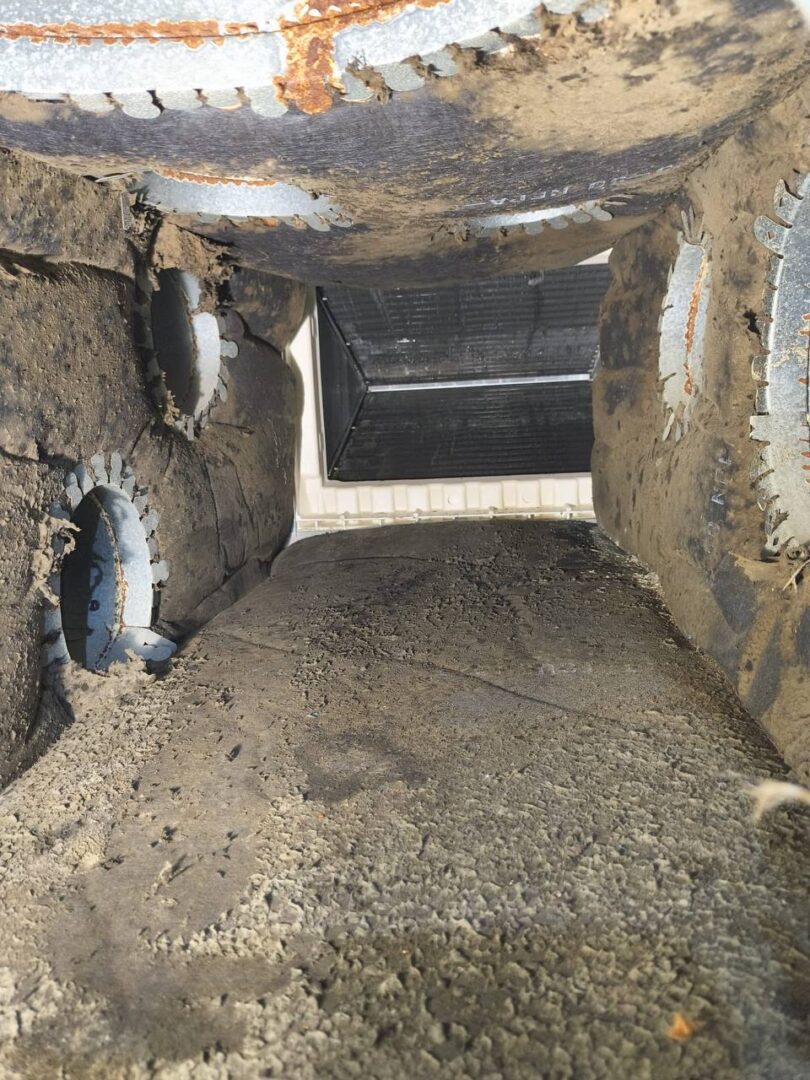
When a homeowner hears the phrase “air duct testing,” the mental image can range from a quick flashlight check to a full laboratory analysis. Neither is quite right. Professional air duct testing sits in a practical middle ground — it uses defined tools and methods to answer specific questions about ductwork conditions that a visual inspection alone may not resolve.
Short answer: Air duct testing is the systematic evaluation of accessible ductwork using measurement tools — video scopes, pressure gauges, airflow instruments, or surface sampling — to document conditions against a reference standard. Testing is typically a follow-on step after a qualified visual inspection identifies a question that measurement can help answer. It is not a universal requirement, a substitute for inspection, or a diagnosis of indoor health conditions.
How Testing Differs From Inspection
The distinction matters for homeowners trying to understand what they are being offered. A professional air duct inspection is primarily visual and qualitative. The technician opens accessible registers and panels, looks at supply and return paths, checks the air handler area, inspects filter condition, and notes visible debris, damage, moisture, or pest evidence. The report describes what was observed.
Testing adds measurement. Instead of noting “some debris visible,” a testing protocol might document the type, location, and approximate extent using a camera scope with recording capability. Instead of observing that airflow “seems weak,” an airflow test might measure velocity or pressure differentials at defined points. Surface sampling can identify whether visible material is construction dust, biological growth, or ordinary household particulate — though results require qualified interpretation and laboratory analysis may carry additional steps.
Testing does not replace inspection. A thorough visual review should come first because it identifies which questions measurement might help answer, which areas are accessible, and which limitations apply. Testing without inspection is like ordering lab work without a physical exam — you may get numbers, but you lack the context to interpret them.
Common Air Duct Testing Approaches
Not every test applies to every situation. A qualified provider should explain which method fits the observed conditions and what each can and cannot establish.
Video Camera Scope
A small camera on a flexible cable is inserted through register openings, access panels, or service ports. It provides a documented visual record of interior duct surfaces — debris accumulation, separated joints, damaged lining, obstructions, or moisture staining. The scope can reach sections not visible from a register opening, though bends, transitions, and insulation may limit access. Recorded footage allows a homeowner to see what the technician saw and compare conditions over time.
Airflow and Pressure Measurement
Instruments placed at supply registers or in the duct stream measure velocity, volume, or static pressure. Readings can be compared across rooms or against equipment specifications to identify significant imbalances, restrictions, or leakage indicators. This type of testing is most useful when a homeowner reports uneven room temperatures, a specific room that never reaches the set point, or a system that seems to run continuously without satisfying the thermostat.
Surface Sampling
A sterile swab, tape lift, or contact plate collects material from a duct surface. The sample may be sent to a laboratory for analysis — identifying whether the material is dust, mold, pollen, insulation fibers, or another substance. Surface sampling can provide useful evidence when visual inspection raises a specific question that identification would resolve. But it has important limitations: it captures only the sampled spot at that moment; a negative result from one location does not rule out material elsewhere; and laboratory results require professional interpretation against the home’s history and relevant reference conditions.
Particulate Assessment
Some protocols measure airborne particle counts or deposition rates inside or near the duct system. These assessments can document whether particle levels in a supply airstream differ meaningfully from return or ambient air. Results are most informative when compared before and after a defined event — such as after cleaning or after a renovation — rather than as a single snapshot. Without a reference baseline, a particle count tells you what is present at that moment, not whether it is unusual for that home, that season, or that equipment.
When Testing May Be Warranted
Testing is not a routine step for every home. It is most useful when a specific, answerable question emerges from the inspection or the home’s history. Reasonable scenarios include:
- A visual inspection finds material that cannot be confidently identified — is it construction dust, biological growth, or something else? Surface sampling may narrow the answer.
- A homeowner reports persistent symptoms or odors localized to one room or one supply register, and visual inspection has not explained the pattern. Targeted testing may add data.
- After a defined cleaning or remediation scope, testing can document whether accessible surfaces meet a cleanliness verification standard — provided the standard, method, and limitations are clearly defined beforehand.
- A documented HVAC performance question — significant airflow imbalance, unusual pressure readings, or equipment that cycles abnormally — may benefit from measurement before repair decisions are made.
- A home with a known history of water intrusion, pest activity, or renovation debris may warrant testing of specific accessible sections before determining whether cleaning or another professional service is appropriate.
In each case, the testing question should be narrow and answerable. “Is my ductwork clean?” is not a testing question. “Does the accessible return trunk show particulate accumulation above the reference threshold we defined?” is closer to a useful protocol.
What Testing Cannot Establish
Clear boundaries prevent misuse. Air duct testing:
- Is not a medical diagnosis and cannot establish a causal relationship between duct conditions and health symptoms.
- Is not a guarantee of indoor environmental quality — the home has many air pathways and occupant activities that testing of duct surfaces alone does not address.
- Cannot substitute for a licensed HVAC evaluation when equipment performance, refrigerant levels, combustion safety, or electrical components are in question.
- Cannot test every inch of ductwork — concealed sections behind finished walls and ceilings, insulated flex duct interiors, and inaccessible branch runs may remain outside any practical testing scope.
- Captures conditions at one moment in time. Seasonal changes, occupant activity, filter maintenance, and equipment cycling all affect what a subsequent test might show.
NADCA and Industry Context
The National Air Duct Cleaners Association (NADCA) publishes assessment and cleaning standards that reference cleanliness verification. NADCA’s approach emphasizes that testing complements qualified visual inspection — not replaces it. A provider following NADCA protocols should be able to explain which assessment standard applies, what reference condition is being compared against, and what equipment and methodology will be used.
For a broader understanding of how cleaning fits into the picture, see our air duct cleaning guide. If you are evaluating whether residential duct cleaning is the right step for your home, that decision should follow documented inspection findings, not a testing result in isolation.
Questions to Ask a Provider About Testing
Before agreeing to any air duct testing, a homeowner should receive clear answers to these questions:
- What specific question is this test designed to answer?
- What method will be used, and what are its limitations?
- What reference condition or threshold will the results be compared against?
- How will results be documented and explained?
- What happens if results are inconclusive or show a condition outside the expected range?
- Is the testing protocol independent of the cleaning or repair recommendation, or is it designed to justify a predetermined service?
- What parts of the system are accessible and what sections cannot be reached?
- How will the home and equipment be protected during the testing process?
A provider who cannot answer these questions clearly or who moves directly to a cleaning quote without first defining the testing question may not be following an inspection-led approach. For signs that your system may need professional attention, review our guide on how to tell if your ducts need attention.
The Inspection-First Approach
The sequence matters. Start with a qualified visual inspection. Let the inspection findings define whether a measurement question exists. If a specific question emerges — material identification, airflow verification, post-service documentation — then testing with a defined protocol can add value. If the inspection is conclusive on its own, testing may not add useful information beyond the inspection itself.
This approach keeps the homeowner in control. You are not being sold a testing package before anyone has looked at the system. You are being offered a stepwise process: look first, measure when the look raises a measurable question, then decide on next steps based on documented evidence.
For homeowners who have noticed persistent dust, unusual odors, airflow changes, or visible register debris, the first step is straightforward. Contact AH-CHOO Indoor Air to discuss an inspection. A qualified technician can review your system, document observations, and explain whether testing or another service would be appropriate for your situation.
Frequently Asked Questions
Is air duct testing the same as indoor air quality testing?
No. Indoor air quality testing typically samples the room air for a range of contaminants — mold spores, VOCs, particulates, carbon monoxide, or radon — throughout the living space. Air duct testing focuses specifically on conditions inside or immediately surrounding the ductwork. A duct test does not substitute for a whole-home IAQ assessment, and an IAQ test does not provide detailed duct surface information.
Do I need air duct testing before scheduling cleaning?
Not necessarily. A qualified visual inspection is usually the appropriate first step. If the inspection finds clear evidence — accumulated debris, visible mold growth, pest material, or construction residue — testing may not add information that changes the recommended scope. Testing is most useful when the inspection raises a question that measurement can help answer or when post-service verification is part of an agreed scope.
How long does air duct testing take?
The time depends on the home’s size, system layout, number of accessible registers, and which testing methods are used. A video scope review of main trunks and several branch runs may take under an hour. Adding surface sampling, airflow measurement at multiple registers, or laboratory coordination can extend the visit. A provider should give a clear time estimate once they understand the testing scope.
Can air duct testing confirm my ducts are clean?
Testing can document the condition of accessible, tested surfaces against a defined reference standard at the time of the test. It cannot certify that every inch of concealed, inaccessible ductwork meets a cleanliness threshold. A meaningful result describes what was tested, what method was used, what reference was applied, and what sections could not be reached. “Clean” is not a precise testing outcome; “accessible tested surfaces met the defined post-cleaning verification criteria” is closer to a useful report.
If you are in the San Antonio area, AH-CHOO! also provides NADCA-certified air duct cleaning in San Antonio with the same inspection-first standards and free evaluation.