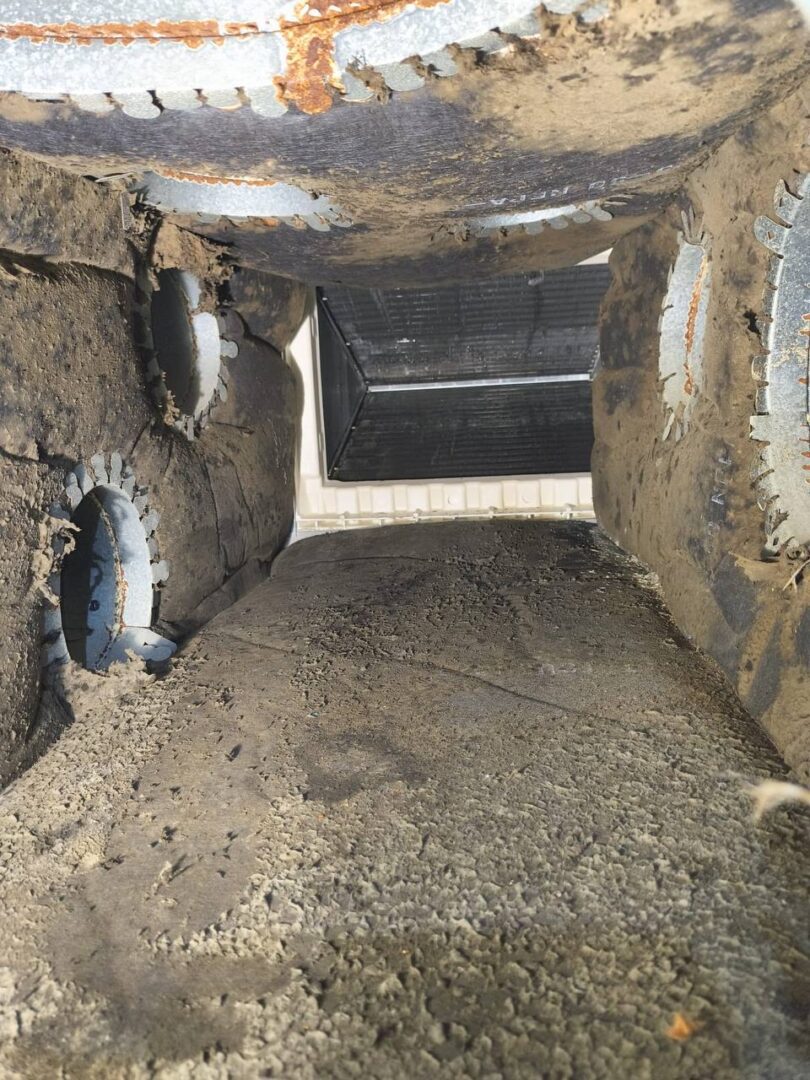
When homeowners hear the term “residential duct cleaning,” it often raises more questions than answers. Is it necessary? What does the process actually involve? How do you know whether your home needs it — and what separates a thorough, NADCA-standard cleaning from a superficial quick pass? This guide answers those questions with the detail homeowners deserve, drawing on 38 years of source-removal experience serving homes across Texas and Louisiana.
Residential air duct cleaning is the process of removing accumulated contaminants from a single-family home’s HVAC air distribution system using professional, NADCA-certified source-removal methodology. “Source removal” means physically extracting debris — not masking it with chemicals or blowing it around — using mechanical agitation and HEPA-filtered negative air pressure at the point of extraction. For homeowners, the benefit is straightforward: cleaner air traveling through cleaner ducts, with less recirculated dust and fewer particulates settling on surfaces throughout the home.
What Residential Air Duct Cleaning Actually Cleans
Many homeowners assume duct cleaning only addresses the long metal or flexible tubes running through the attic or between floors. A comprehensive residential duct cleaning — performed to NADCA standards — covers eight distinct components of the HVAC air distribution system:
- Supply ductwork: The ducts that deliver conditioned air from the air handler to each room’s supply register. These are under positive pressure and distribute the air you breathe throughout the home.
- Return ductwork: The ducts that pull room air back to the air handler for reconditioning. Returns are under negative pressure and tend to accumulate the heaviest debris because they draw in unfiltered air from living spaces.
- Supply and return registers/grilles: The visible metal or plastic covers in each room. These are the first contact point for dust and are often visibly coated with gray or brown accumulation.
- Air handler compartment: The metal cabinet that houses the blower motor, evaporator coil, and sometimes the heat exchanger. This is typically the most contaminated component because it is downstream of the filter and upstream of the supply ducts — meaning it sits in the dirtiest air path and distributes whatever it collects.
- Evaporator coil: The cold, damp coil that removes heat and humidity from air passing through. In humid climates, the evaporator coil is a condensation point where dust, mold spores, and microbial growth concentrate — a phenomenon especially common in Gulf Coast states.
- Blower wheel and motor assembly: The fan that moves air through the system. Dust buildup on blower blades reduces airflow efficiency and can throw blower wheel balance — leading to premature motor wear and increased energy consumption.
- Plenum boxes: The sheet metal transition boxes that connect the air handler to the main supply and return duct trunks. These are common collection points for construction debris, especially in newer homes.
- Drain pan and condensate line: While not a duct component per se, the drain pan sits under the evaporator coil and collects condensation. A professional inspection includes checking for standing water, microbial slime, and clogs — conditions that directly affect indoor air quality.
The NADCA Source-Removal Process: Step by Step
The gold standard for residential duct cleaning is the NADCA source-removal method. Here is what a professional residential duct cleaning looks like when performed to the standard:
Step 1 — Free Inspection and System Assessment
Every NADCA-quality residential duct cleaning begins with a free, no-obligation inspection. The specialist examines supply and return registers throughout the home, opens the air handler access panel to inspect the evaporator coil and blower assembly, and uses a borescope inspection camera to assess contamination levels inside the duct runs. The homeowner receives a clear, visible assessment — if the ducts are clean, an honest specialist says so. If they are not, the homeowner sees exactly what is present and where before any work begins.
Step 2 — System Containment and Negative Pressure Setup
Access holes are cut at strategic points in the supply and return ductwork. The entire duct system is placed under controlled negative pressure using a HEPA-filtered vacuum collection unit — either truck-mounted or portable — connected at the air handler or at a main trunk access point. This creates directional airflow toward the vacuum, ensuring that any contaminants dislodged during cleaning are captured at the source rather than released into living spaces. All supply registers in the home are temporarily sealed during this phase to maintain negative pressure integrity.
Step 3 — Mechanical Agitation and Debris Dislodgment
Compressed air whips, rotary brush systems, or pneumatic air skippers are inserted through each access point to mechanically dislodge adhered contaminants from duct surfaces. This step is the difference between source removal and a superficial cleaning. Dust, pollen, diesel particulate, and construction debris bond to duct surfaces over time through static charge and moisture cycles — simply pulling vacuum through the system without agitation leaves most of this adhered material in place. Mechanical agitation is non-negotiable for genuine source removal.
Step 4 — Component-Level Contact Cleaning
The air handler compartment, evaporator coil, blower wheel, and plenum are directly cleaned using HEPA-filtered contact vacuum equipment. These components require individual attention because they sit in the dirtiest air path and accumulate the finest particulates — including PM2.5, mold spores, and organic debris. A visibly clean blower wheel and evaporator coil are among the most important outcomes of a thorough residential duct cleaning, directly improving airflow and system efficiency.
Step 5 — Antimicrobial Treatment (Where Warranted)
For duct systems with confirmed microbial growth — visually verified during inspection and common in homes located in humid regions — an EPA-registered antimicrobial is applied to accessible duct surfaces after mechanical cleaning is complete. This step is not routine: it is performed only when the inspection confirms that microbial contamination is present. The antimicrobial is applied directly to duct surfaces, not fogged indiscriminately through the system.
Step 6 — System Reassembly, Sealing, and Final Verification
All access points are sealed with airtight, code-compliant caps or patch panels. The specialist restores power to the HVAC system, verifies proper airflow at every register, and conducts a final walkthrough with the homeowner — including before-and-after inspection camera images showing the cleaned duct interior. The job is complete only when the system is fully reassembled, operating correctly, and the homeowner confirms satisfaction.
Signs Your Home Needs Residential Duct Cleaning
Ductwork is out of sight, so it is often out of mind — until a sign becomes visible at the registers or noticeable in the indoor air. Homeowners should consider scheduling a free inspection if any of these conditions are present:
- No inspection in 3+ years. NADCA recommends inspection every 2 to 3 years. If it has been longer — or if you have owned the home for several years without ever looking inside the ducts — there is likely accumulation you cannot see from the registers alone.
- Visible dust or debris blowing from supply registers. When the HVAC blower starts, do you see puffs of gray particulate emerging from the vents? That material is coming from inside the duct system, not from the room.
- Musty or stale odors from vents when the system runs. A persistent earthy or moldy smell — especially after rain or during humid summer mornings — frequently indicates microbial growth in the ductwork or air handler. This is one of the most common calls that HVAC and duct cleaning companies receive.
- Unexplained dust accumulation on furniture and floors. If surfaces develop a visible dust layer within days of cleaning despite regularly changed filters, the HVAC duct system is likely the distribution source — recirculating contaminated air throughout the home.
- Recent renovation or construction inside the home. Drywall sanding, flooring installation, and general remodeling generate enormous amounts of fine particulate that settle in ductwork and continue circulating long after the renovation crew leaves.
- New home construction settling dust. Even homes in established neighborhoods receive airborne PM10 from nearby construction activity. New home duct systems are especially vulnerable — builders frequently run the HVAC during construction, pulling drywall dust, sawdust, and insulation fibers directly into the ductwork before the homeowners ever move in.
- Rising energy bills without a corresponding change in usage. A dust-loaded evaporator coil and restricted airflow from dirty ductwork force the HVAC system to work harder to move the same volume of air. When energy costs increase and usage patterns have not changed, duct contamination should be on the diagnostic checklist.
- After a water event or pest intrusion. Roof leaks, plumbing failures, flooding, or pest/rodent activity in attic ductwork all introduce contaminants that require professional source removal — not just surface cleaning of the affected room.
Residential vs. Commercial Duct Cleaning: What’s Different?
Homeowners sometimes wonder whether residential and commercial duct cleaning are essentially the same service applied at different scales. They are not. The differences matter, especially when selecting a provider:
- System scale and configuration. Residential systems typically involve 1- to 5-ton air handlers with flexible or rigid ductwork running through attics, crawl spaces, or between floors. Commercial systems involve rooftop units (RTUs), large air handlers, VAV boxes, and extensive duct networks that can span multiple floors and zones — often requiring different access techniques, lift equipment, and after-hours scheduling.
- Access requirements. Residential duct cleaning is performed inside an occupied home, requiring containment protocols that protect furniture, flooring, and daily living spaces. Commercial work often takes place in mechanical rooms, above suspended ceilings, or on rooftops — with different (though equally strict) containment and safety standards.
- Regulatory frameworks. Commercial kitchen exhaust cleaning, hospital HVAC cleaning, and industrial facility ductwork are governed by specific codes (NFPA 96 for kitchens, ASHRAE standards for healthcare) that do not apply to residential systems. Residential duct cleaning follows NADCA’s ACR Standard — the definitive standard for residential HVAC system cleaning.
- Time commitment. A thorough residential NADCA cleaning on a typical single-family home takes 4 to 8 hours — essentially a full workday. Commercial projects can span multiple days depending on system complexity and square footage. Providers who promise to complete a residential cleaning in under 2 hours are almost certainly not performing source removal to standard.
Does Every Home Need Duct Cleaning?
No — and any honest provider will say so. The answer depends entirely on what a professional inspection reveals. NADCA recommends inspection every 2 to 3 years, not automatic cleaning on a fixed schedule. Some homes with excellent filtration, low occupancy, minimal local air pollution, and recent HVAC upgrades may show very little duct accumulation even after several years. Other homes — particularly in humid climates, homes with pets, homes near construction, or homes where the HVAC has been run without adequate filtration — can show significant accumulation within a single year.
The free inspection is the single most important step in residential duct cleaning. It replaces guesswork with evidence. A NADCA-certified specialist can show the homeowner exactly what is inside the ducts using a borescope camera, assess whether cleaning is warranted, and provide a clear recommendation. In homes where the ducts are clean, the inspection itself is the outcome — the homeowner gets peace of mind at no cost.
What to Look for in a Residential Duct Cleaning Provider
Not all residential duct cleaning services follow the same standard. Homeowners should evaluate providers on these criteria:
- NADCA certification. The ASCS (Air Systems Cleaning Specialist) certification is the credential standard. It confirms the specialist is trained in source-removal methodology, system design, contamination identification, and safety protocols. Verify certification directly through NADCA’s member directory rather than relying on a provider’s website claim alone.
- Free inspection policy. A reputable provider offers a free, no-obligation inspection before quoting any work. If a company quotes a price over the phone based on square footage or number of vents without ever looking inside the duct system, that is a red flag.
- Source-removal methodology. Ask explicitly: “Do you use source-removal cleaning with mechanical agitation and HEPA-filtered negative air?” A provider who cannot answer this question directly — or who describes a process that sounds like vacuuming registers from inside the room — is not performing NADCA-standard source removal.
- One-job-per-day commitment. Companies that book multiple residential cleanings per day are cutting time somewhere — either in the inspection, the agitation step, the component-level cleaning, or the final verification. A thorough residential source-removal job takes most of a day. A provider who schedules only one residential job per day is prioritizing thoroughness over volume.
- Before-and-after documentation. A professional provider should be willing and able to show the homeowner what the duct interior looked like before cleaning and what it looks like after — using inspection camera images, not just verbal assurance.
Frequently Asked Questions About Residential Duct Cleaning
How often should residential air ducts be cleaned?
NADCA recommends inspection every 2 to 3 years, not automatic cleaning on a fixed interval. The cleaning frequency depends on what the inspection reveals. In humid climates like the Gulf Coast — where sustained moisture promotes microbial growth, pollen seasons are heavy, and construction dust is pervasive — homes may need cleaning more frequently than homes in dry, stable climates. The inspection determines the actual need.
Can I clean my air ducts myself?
Homeowners can vacuum visible supply registers and change HVAC filters regularly, but these are surface-level measures that do not reach the interior duct runs, air handler components, evaporator coil, or blower assembly — where the majority of contamination accumulates. Consumer-grade shop vacuums lack the HEPA filtration and negative-air capability required for genuine source removal. Attempting to agitate duct interiors without professional containment risks releasing accumulated contaminants into living spaces. NADCA-certified source-removal equipment and training exist specifically because residential duct systems cannot be effectively cleaned with consumer tools.
Does duct cleaning help with allergies?
Removing accumulated pollen, dust, pet dander, and microbial growth from the HVAC air distribution system reduces the total particulate load circulating through the home. While duct cleaning is not a medical treatment for allergies, reducing recirculated airborne irritants is a logical step for households where allergen-sensitive occupants experience symptoms. The effect is most noticeable when duct cleaning is combined with high-MERV filtration rated for the specific HVAC system and regular filter changes — a comprehensive approach that addresses both the source (contaminated ducts) and the ongoing input (air passing through a quality filter).
Will residential duct cleaning reduce my energy bills?
A clean evaporator coil transfers heat more efficiently. A clean blower wheel moves air with less resistance. Clean ductwork reduces static pressure in the system. Together, these improvements reduce the workload on the HVAC compressor and blower motor — which can translate to lower energy consumption. The magnitude of savings depends on how heavily contaminated the system was before cleaning. A severely loaded coil and blower will show a more noticeable efficiency improvement than a lightly dusty system. The free inspection is the best way to assess how much contamination is present and whether cleaning is likely to produce a measurable efficiency gain.
Is residential duct cleaning messy?
When performed to NADCA standards with proper containment and HEPA-filtered negative air, residential duct cleaning should not create mess in the home. The negative-pressure setup captures dislodged contaminants at the extraction point. Drop cloths protect flooring around access points. The specialist seals all access holes with airtight caps after cleaning is complete. A professional provider leaves the home exactly as they found it — with cleaner air traveling through cleaner ducts.
Next step: If it has been more than 3 years since a professional last inspected your home’s ductwork — or if you have never had an inspection — schedule a free, no-obligation assessment. A NADCA-certified indoor air specialist can show you exactly what is inside your ducts and whether cleaning is warranted. Contact AH-CHOO to book your free inspection today. Serving Houston, Austin, San Antonio, and South Louisiana.