If you live in Lafayette, you know Louisiana’s Cajun Country heart has a rhythm all its own — from the bayous winding through the parish to the aroma of crawfish étouffée drifting through the air during festival season. But have you thought about what’s actually in the air circulating through your home’s ductwork?
Lafayette sits at the center of Acadiana, where bayou humidity, agricultural activity, and a long subtropical warm season create distinct indoor air quality challenges. While outdoor air quality gets plenty of attention, the air moving through your HVAC system directly affects your home’s cleanliness, your comfort, and even the performance of your heating and cooling equipment.
This guide explains how Lafayette’s unique environment — bayou climate, agricultural setting, oil and gas industry presence, and historic building stock — creates specific indoor air quality considerations that homeowners across Lafayette Parish, Broussard, Youngsville, Scott, and Carencro should understand.
Why Lafayette Homes Face Distinct Indoor Air Quality Challenges
Lafayette’s geography and climate combine to amplify several indoor air quality factors that set it apart from other Louisiana markets:
- Bayou Vermilion humidity: Being situated along the Bayou Vermilion and surrounded by the broader Atchafalaya Basin means ambient humidity levels that regularly exceed 75% for more than half the year. This persistent moisture infiltrates homes through natural ventilation, window seals, and ductwork — particularly in homes with uninsulated attic ducts or slab foundations.
- Extended warm season: Lafayette’s subtropical climate means air conditioning runs from March through November — a nine-month cooling season that cycles massive volumes of air through ductwork, accumulating dust, dander, and microbial material over time.
- Agricultural and industrial setting: As the heart of Acadiana, Lafayette is surrounded by rice fields, crawfish farms, and sugarcane operations. Seasonal agricultural burning and field flooding create distinctive outdoor particulate profiles that make their way indoors. Additionally, Lafayette’s role as a hub for the Gulf of Mexico oil and gas industry means commuter-borne workplace particulates enter home environments.
- Historic and mixed building stock: Lafayette’s housing ranges from historic Acadian cottages (some over 100 years old) in the Freetown-Port Rico and Saint Streets districts to mid-century ranch homes in the Broadmoor area to new subdivisions in Youngsville and south Lafayette. Older homes often have aging ductwork or no ductwork at all (window units with no central system), while newer construction may have flex-duct installed during the building boom that degrades within a decade.
- Swamp and marshland proximity: The nearby Atchafalaya Basin — the largest swamp in the United States — contributes higher ambient mold spore counts that enter homes through windows, doors, and ventilation systems.
Common Indoor Air Pollutants in Lafayette Homes
Several pollutants are particularly prevalent in Lafayette-area homes due to the local climate and environment:
- Mold spores: The combination of high humidity and warm temperatures creates ideal conditions for mold growth in ductwork, particularly in attic ducts where condensation forms during cooling season. Bathrooms, laundry rooms, and kitchens with inadequate ventilation compound the issue.
- Dust mites: Lafayette’s humidity levels far exceed the 50% threshold where dust mite populations thrive. These microscopic allergens are one of the most common indoor triggers for respiratory discomfort.
- Pollen: Louisiana’s long growing season means tree pollen (oak, pecan, pine), grass pollen, and ragweed are present from February through November — a nine-month allergy season that keeps particulate levels elevated.
- Agricultural particulate: Rice harvesting, sugarcane burning, and crawfish pond operations generate dust and particulate matter that can infiltrate homes, particularly in areas near agricultural operations.
- Cooking residues: Cajun and Creole cooking — with its emphasis on frying, roux-making, and slow-cooking — generates grease aerosols and cooking odors that recirculate through ductwork and settle on system components.
- Pet dander and hair: Lafayette’s family-friendly, suburban character means a high pet ownership rate. Pet dander accumulates in duct systems and recirculates every time the HVAC runs.
How Your Air Ducts Affect Lafayette Indoor Air Quality
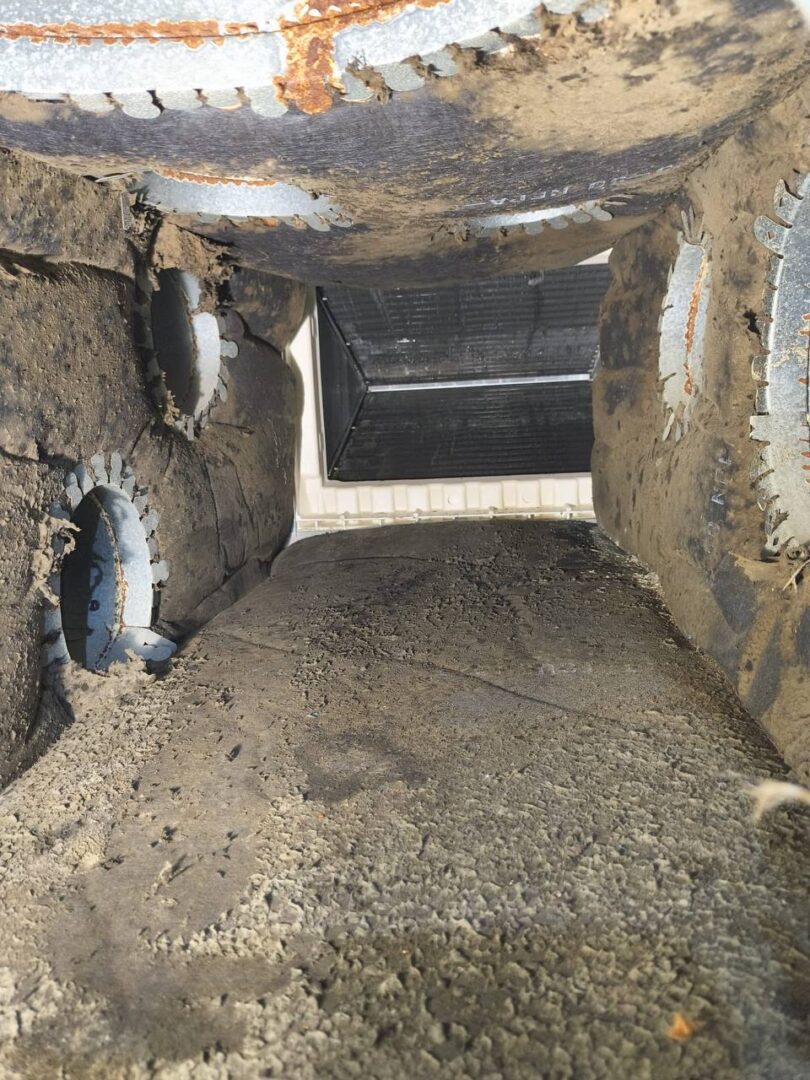
Your ductwork is the respiratory system of your home. Every time your air conditioner or heater runs, it pulls air from every room through the return ducts, conditions it, and pushes it back through supply ducts. When the duct system is contaminated, it becomes a distribution network for pollutants rather than a delivery system for clean, conditioned air.
In Lafayette homes, several duct-related factors commonly affect indoor air quality:
- Condensation in attic ducts: Lafayette’s attic temperatures can exceed 130°F during summer. When cool conditioned air meets hot attic air through uninsulated or poorly insulated ductwork, condensation forms inside the ducts. This moisture supports mold and bacterial growth that then gets distributed throughout the home.
- Slab-foundation duct deterioration: Many Lafayette-area homes built before 2000 have ductwork embedded in concrete slab foundations. Over decades, these ducts can collapse, tear, or become pest highways — allowing unconditioned crawlspace air (and whatever lives in it) to enter the conditioned airstream.
- Pest intrusion: Louisiana’s warm climate means active pest populations year-round. Rodents, cockroaches, and insects leave droppings, dander, and nesting material in ductwork that degrades indoor air quality.
- Filter bypass: When HVAC filters don’t fit properly or are the wrong MERV rating, particulate bypasses the filter entirely and accumulates in the duct system, coating interior surfaces over time.
Signs Your Lafayette Home May Have Duct-Related IAQ Problems
How can you tell if your home’s ductwork is affecting your indoor air quality? Watch for these signs:
- Excessive dust settling on surfaces within hours of cleaning — a sign that your ductwork is recirculating particulate matter rather than delivering clean air.
- Musty or stale odors when the HVAC system runs, particularly when it first cycles on after being off — this often indicates mold or microbial growth inside the ductwork.
- Uneven cooling between rooms or floors — a sign of duct leakage, disconnection, or blockage that also allows unconditioned air to enter the system.
- Visible dust or debris coming from supply registers — when you can see particles blowing out of vents, your duct system is actively distributing particulate matter.
- Family members experiencing increased discomfort at home that improves when away for extended periods — while we do not make medical claims, patterns of in-home discomfort are worth discussing with your HVAC professional and healthcare provider.
- Higher than normal energy bills — dirty or leaking ducts force your HVAC system to work harder, consuming more energy to maintain temperature.
Professional Duct Cleaning for Better Lafayette Indoor Air Quality
When duct cleaning is needed, the method matters. NADCA (National Air Duct Cleaners Association) sets the standard for professional duct cleaning — and that standard is source removal, not surface treatment.
A proper NADCA-certified duct cleaning includes:
- Full system inspection: Visual inspection of all ductwork, registers, grilles, and the HVAC equipment itself before any cleaning begins.
- Source removal cleaning: Mechanical agitation combined with continuous HEPA vacuuming to dislodge and capture contaminants rather than just pushing them further into the system.
- All eight HVAC components: Professional cleaning covers not just the ductwork but the blower motor, evaporator coil, drain pan, air handler cabinet, heat exchanger, condenser coil, return air plenum, and supply registers.
- Antimicrobial treatment where appropriate: When microbial growth is present, an EPA-registered antimicrobial can be applied to treated surfaces to help prevent regrowth — this follows, not replaces, proper source-removal cleaning.
AH-CHOO Indoor Air Quality Specialists serves Lafayette and the broader Acadiana region with NADCA-certified duct cleaning, inspection, and mold remediation services. Every job starts with a free inspection — no pressure, no obligation — to assess your home’s specific needs before any work begins.
Schedule your free Lafayette inspection to learn how professional duct cleaning can support better indoor air quality in your home.
Frequently Asked Questions About Indoor Air Quality in Lafayette
Does air duct cleaning improve indoor air quality in Lafayette?
Yes — when performed properly using NADCA-certified source-removal methods. Professional duct cleaning removes accumulated dust, mold spores, pet dander, and other particulate from the entire HVAC system, allowing it to deliver cleaner air throughout your home. Source removal (agitation + HEPA vacuum) is significantly more effective than DIY vent cover cleaning.
How often should Lafayette homeowners have their air ducts cleaned?
NADCA recommends inspection every two years and cleaning when visible contamination, mold growth, pest infestation, or excessive dust accumulation is present. Lafayette homeowners may benefit from more frequent inspection due to the area’s high humidity, extended cooling season, and agricultural particulate environment.
What causes poor indoor air quality in Lafayette homes?
The primary factors are Lafayette’s high ambient humidity (which supports mold and dust mite populations), extended warm season (nine months of AC use circulating air through ductwork), agricultural and industrial particulate sources, and the condition of the home’s ductwork — particularly in older homes with aging or slab-embedded ducts.
Is Lafayette indoor air quality affected by agricultural activity?
Yes. Lafayette Parish and the surrounding Acadiana region have significant rice, crawfish, and sugarcane operations. Seasonal agricultural burning, field preparation, and harvesting generate particulate matter that can infiltrate homes through natural ventilation and affect the overall particulate load in indoor air.
Can air duct cleaning help with Lafayette humidity-related mold concerns?
Duct cleaning addresses the existing mold contamination within the duct system by physically removing the growth. However, for long-term prevention, addressing the underlying moisture source — whether through duct insulation improvements, attic ventilation upgrades, or humidity management — is equally important. Professional duct cleaning and moisture management work together.
Does AH-CHOO serve all Lafayette area neighborhoods?
Yes. AH-CHOO serves Lafayette, Broussard, Youngsville, Scott, Carencro, Duson, and the broader Lafayette Parish area. Our team covers all of Acadiana, and every job receives our full one-job-per-day, 7-hour NADCA-certified cleaning process regardless of location.
AH-CHOO Indoor Air Quality Specialists is a NADCA-certified air duct cleaning and mold remediation company serving Louisiana and Texas. This article is for informational purposes and does not constitute medical advice. Consult a healthcare provider for specific health concerns related to indoor air quality.
Related Service Areas
- Indoor Air Quality in New Orleans, LA
- Indoor Air Quality in Baton Rouge, LA
- Indoor Air Quality in Mandeville, LA
- Mold in Air Ducts — Baton Rouge, LA
Related AH-CHOO resources: South Louisiana air duct cleaning.