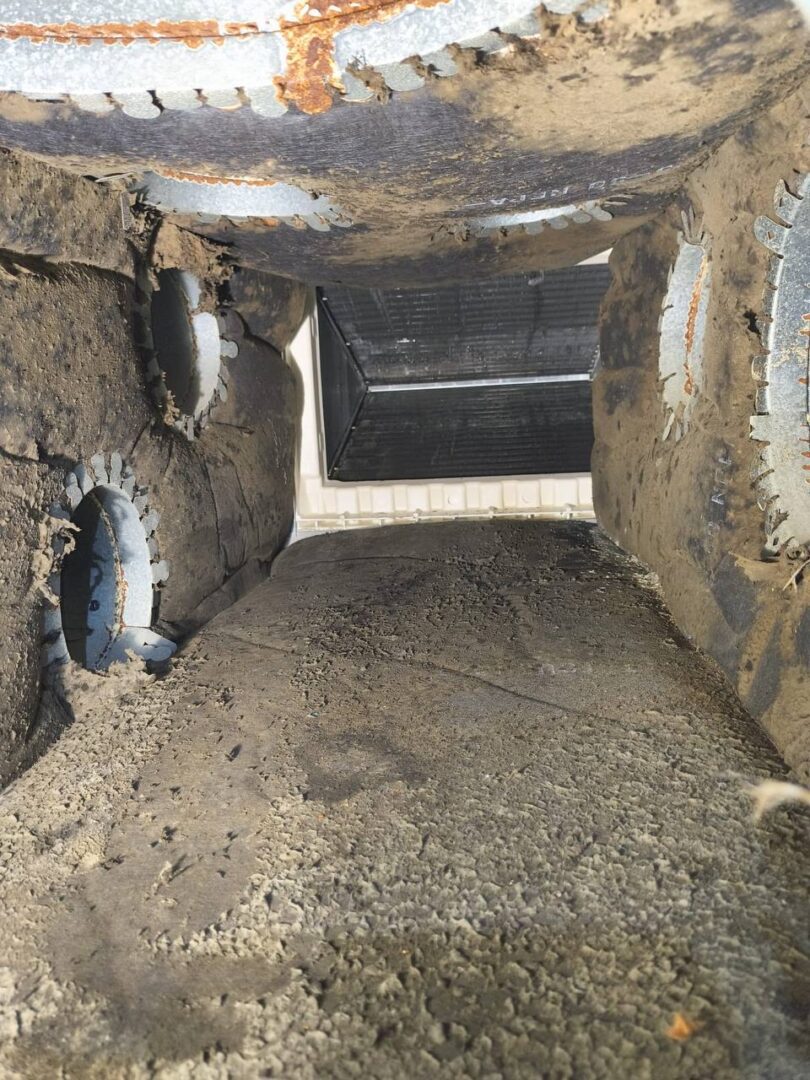
Of all the ways mold establishes itself in Gulf Coast homes, condensation inside air ducts may be the least understood — and the most persistent. It doesn't announce itself with a visible water stain or a musty odor in a single room. It develops slowly, in the darkness of attic ductwork, invisible and unchecked, turning the organic debris inside your ducts into a mold colony by degrees.
By the time you smell it, the colony is already established.
The physics of condensation in ductwork are well understood, but rarely explained to homeowners. After 38 years of inspecting Gulf Coast homes — where condensation-driven mold in ductwork is one of the most common issues we encounter — our NADCA-certified team can explain exactly what's happening, where it's worst, and what actually fixes it.
The Physics of Condensation in Ductwork
Condensation occurs when warm, moisture-laden air contacts a surface cold enough to drop it below the dew point — the temperature at which the air can no longer hold its moisture in vapor form. In a Gulf Coast home, this process happens inside ductwork in a specific and predictable way.
Your supply air conditioner cools air to approximately 55°F–60°F before distributing it through ductwork. That cold air creates a cold surface on the interior walls of supply ducts. Meanwhile, the attic surrounding those ducts can be 140°F or hotter in summer, with relative humidity exceeding 90%.
When this hot, humid attic air infiltrates the duct interior — through gaps in duct connections, failed insulation, or damaged flex duct — it contacts the cold duct surface and deposits moisture. That moisture sits on duct surfaces, mixes with accumulated organic debris, and creates conditions where mold begins to establish within days.
Even without direct air infiltration, a duct whose insulation has thinned, compressed, or been compromised may develop condensation on its outer surface — which can then wick through to interior surfaces over time.
Where Condensation Problems Are Worst in Gulf Coast Homes
Attic Supply Runs
The most common and severe condensation problems are in supply duct runs through attic spaces. Gulf Coast attics represent one of the harshest environments in residential construction — extreme heat, high humidity, and virtually no natural remediation. Flex duct in these spaces is particularly vulnerable because:
- Flex duct is supported at intervals, creating sag points where moisture collects
- Flex duct connections at boots and takeoffs are prone to separation and gaps
- Flex duct insulation compresses over time, reducing effective R-value and creating cold spots
Transition Fittings and Takeoffs
Rigid duct connections — transitions between plenum, trunk lines, and branch runs — are points where insulation is often thinnest or absent. These are predictable condensation locations because the duct metal is directly exposed to attic conditions at the fitting perimeter.
Low Points in Flex Duct
Sags in flex duct create low points where condensation droplets run and pool. Over a Houston or Baton Rouge summer, these low points can accumulate significant water — enough to create localized standing water inside a flex duct run. This water soaks into adjacent insulation, creates debris slurry inside the duct, and provides a sustained mold growth environment.
Return Duct in Humid Spaces
Return ductwork that routes through crawl spaces in pier-and-beam homes is exposed to the consistently humid environment beneath the floor. While return ducts typically carry room-temperature air rather than cold supply air, crawl space return ducts in Gulf Coast homes can still develop condensation and mold issues, particularly when the crawl space is inadequately ventilated or has standing water issues.
The Role of Duct Leakage
Duct air leakage is a major amplifier of condensation risk. Supply duct leaks in attic spaces release cold conditioned air into the hot attic environment, creating concentrated condensation zones around the leak point. The cold air stream contacting the hot attic environment produces dramatic condensation that saturates insulation around the leak and creates visible moisture damage in some cases.
Beyond the condensation risk, supply leaks reduce system efficiency and can cause negative pressure in the conditioned space that draws humid outside air into the home through wall penetrations and other openings.
Sealing duct leaks with mastic sealant — not tape, which degrades — is one of the highest-impact corrective measures for Gulf Coast homes dealing with condensation and humidity issues.
The Mold Consequence
Once condensation creates persistent moisture on duct interior surfaces, mold development follows a predictable timeline:
- 24–48 hours: Initial spore germination on wet organic surfaces in warm conditions
- 1–2 weeks: Visible colony formation in high-humidity, high-temperature conditions
- Months: Colony expansion through available food source (accumulated debris) and release of spores into airstream
By the time a homeowner notices musty odors from vents — typically the first external signal of duct mold — the colony has usually been established for weeks to months. The contamination is distributed throughout the accessible duct surfaces near the condensation source.
Fixing Condensation Without Fixing the Mold Is Not Enough
A common mistake in addressing this problem: homeowners repair the condensation source — improving insulation, sealing leaks — but don't follow up with professional duct cleaning. Correcting the condensation source stops the ongoing moisture input. It does not remove the mold colony already established on duct surfaces.
An intact mold colony without ongoing moisture will eventually become dormant as its local environment dries, but it does not self-remediate. It retains the capacity to become active again if moisture returns — which in Gulf Coast homes, it inevitably does.
Professional duct cleaning after addressing the condensation source is the complete fix:
1. Seal duct leaks and improve insulation to stop condensation
2. Conduct NADCA-standard cleaning to remove established mold and contaminated debris
3. Apply antimicrobial treatment to cleaned surfaces
4. Implement humidity monitoring to verify the system is operating correctly
Our NADCA-certified team spends approximately 7 hours on a thorough residential cleaning — because complete access to a typical Gulf Coast duct system requires that kind of time commitment.
When Remediation Rather Than Cleaning Is the Right Call
For homes where condensation has been ongoing for an extended period — particularly if the ductwork inspection reveals substantial visible mold growth — mold remediation protocols beyond standard cleaning are warranted. This includes more extensive containment, potential replacement of severely contaminated flex duct sections, and post-remediation verification testing.
Our inspection process determines which situation applies in each home. We don't upgrade scope automatically — we assess and recommend based on what's actually present.
The Gulf Coast Homeowner's Checklist for Condensation Prevention
Based on 38 years of Gulf Coast duct inspections, these are the measures that most effectively prevent condensation-driven mold:
- Verify duct insulation meets minimum R-8 in attic spaces; replace compressed or damaged insulation
- Inspect and seal all duct connections at takeoffs, boots, and transitions with mastic sealant
- Support flex duct adequately to prevent sags (maximum 4-foot intervals in most applications)
- Maintain indoor relative humidity below 60% — measure with a hygrometer
- Schedule annual duct inspections to identify condensation points before mold establishes
- Check attic ventilation — proper attic ventilation reduces attic temperatures and humidity, reducing the thermal stress on duct insulation
Start With an Inspection
Condensation in ductwork is largely invisible until it's produced mold — by which point you're already dealing with an air quality problem. The time to catch it is before the mold appears.
Book your free inspection at crm.ahchooindoorair.com/book
Our NADCA-certified team will inspect your duct system for condensation points, moisture damage, and early mold growth — and give you a clear plan for addressing what they find. 38 years in Gulf Coast markets means we know exactly where to look.
Frequently Asked Questions
Why does condensation form inside air ducts?
Condensation forms inside ducts when cold conditioned air inside the duct comes into contact with warm, humid air that has infiltrated from outside the duct — typically through gaps, failed insulation, or leaky connections in hot attic spaces. The temperature differential causes moisture to condense on duct interior surfaces, creating a persistent wet environment that supports mold growth.
How can I tell if condensation is causing mold in my ducts?
Signs of condensation-driven mold include musty odors when the system runs, visible moisture or dripping at duct connections or register openings, dark staining around vents, and in some cases, water damage on ceiling surfaces below duct runs. A professional inspection with camera equipment can identify condensation points and mold growth inside the system.
Is condensation in air ducts normal?
Brief surface condensation during startup after a system has been off for an extended period can occur, but persistent or recurring condensation inside ductwork is not normal and indicates a problem — typically inadequate insulation, duct leaks, or humidity levels that exceed the system's capacity to manage. It should be investigated and corrected.
What is the best insulation for air ducts to prevent condensation?
In Gulf Coast climate zones, supply ductwork should be insulated to at least R-8 — higher in accessible attic spaces with extreme heat loads. Proper vapor barrier management is also critical: the vapor barrier on insulated ductwork must be uncompromised to prevent humid attic air from reaching the cool duct surface and condensing.
Can fixing condensation problems in my ducts prevent mold without cleaning?
Fixing the condensation source stops the ongoing moisture input that supports mold growth, but it doesn't remove mold that has already established on duct surfaces. In most cases where condensation has been a persistent problem, professional duct cleaning and mold remediation is needed in addition to correcting the condensation source.
Related Reading
Condensation problems often overlap with blower wheel contamination, especially when dust and moisture stay in the system for long periods.