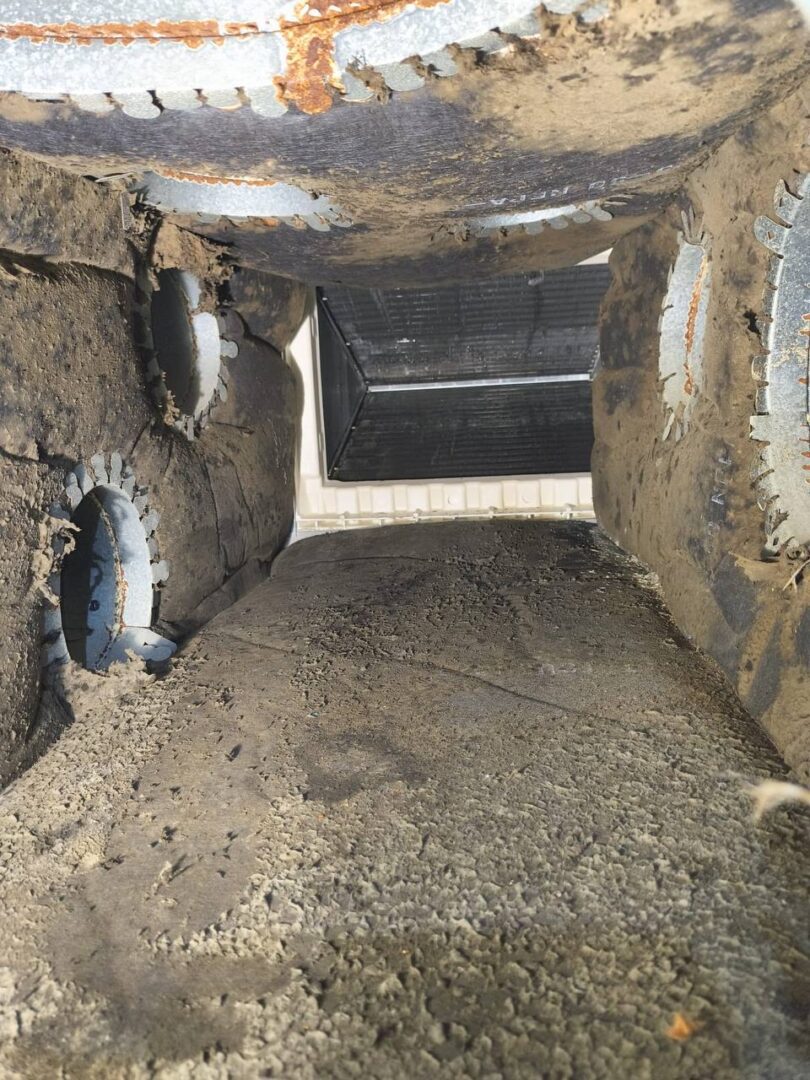
If you live in the Austin metro area — whether downtown, Cedar Park, or Round Rock — and you’ve discovered mold in your air ducts, you’re facing a decision that goes beyond routine duct cleaning. Mold in HVAC systems requires a different approach: mold remediation, not just cleaning.
But what exactly is mold remediation? How is it different from standard air duct cleaning? And when do Austin-area homeowners need one versus the other? This guide walks through everything you need to know about professional mold remediation for Central Texas homes.
What Is Mold Remediation vs. Duct Cleaning?
Many homeowners use “mold remediation” and “air duct cleaning” interchangeably, but they are fundamentally different services:
- Air duct cleaning removes dust, debris, and loose contaminants from your ductwork using agitation and negative air pressure. It addresses accumulation, not biological growth embedded in surfaces.
- Mold remediation is a controlled process designed to identify, contain, and physically remove mold growth from HVAC components and duct surfaces. It follows EPA and NADCA guidelines for microbial contamination and includes post-remediation verification.
Think of it this way: duct cleaning is routine maintenance for normal accumulation, while mold remediation is a targeted intervention for a specific biological contamination issue. The methods, equipment, and safety protocols are different.
Why Austin Metro Homes Are Susceptible to Duct Mold
The Austin metropolitan area — including Cedar Park, Round Rock, Pflugerville, and Georgetown — has several environmental factors that make duct mold more common than in drier regions:
- Humidity and dew points. Central Texas experiences high humidity, especially during spring and fall. When warm, moist air meets cool duct surfaces, condensation forms inside the ductwork — the primary moisture source for mold growth.
- Limestone and clay soils. Austin’s geology creates foundation moisture issues. Slab-on-grade foundations common in newer Cedar Park and Round Rock construction can wick moisture into crawl spaces and duct chases.
- Extended cooling season. HVAC systems in the Austin area run 7–8 months per year. The constant temperature differential between cold duct surfaces and warm attic air creates persistent condensation risk.
- Rapid new construction. Subdivisions in Kyle, Buda, Hutto, and Georgetown often have construction moisture trapped in ductwork that was installed before the home fully dried — a hidden mold trigger.
- Flash flood history. Areas near the Colorado River, Onion Creek, and Williamson County flood plains have experienced water intrusion events that introduce moisture into HVAC systems.
Signs You Need Mold Remediation — Not Just Duct Cleaning
How do you know when your situation has moved beyond routine cleaning and requires remediation? Here are the specific indicators for Austin-area homeowners:
- Visible mold growth inside ductwork. If an inspection reveals black, green, or white growth on duct surfaces, insulation lining, or the air handler compartment, remediation is needed — cleaning alone won’t remove adhered microbial colonies.
- Musty odors that persist after cleaning. A lingering musty smell when the HVAC runs, even after standard duct cleaning, strongly suggests mold growth deeper in the system that wasn’t addressed by basic agitation-and-vacuum methods.
- Health symptoms that correlate with HVAC operation. If household members experience congestion, headaches, or respiratory irritation specifically when the system runs and feel better when away from home, microbial contamination in the ductwork may be involved.
- History of water damage near HVAC equipment. Attic leaks, slab moisture, or A/C condensate overflow that affected the air handler or ductwork requires remediation to address any resulting microbial growth.
- Visible moisture or condensation on duct surfaces. Dripping ducts, standing water in drain pans, or condensation on supply registers indicate the moisture problem is active — and mold is likely present.
The Mold Remediation Process: Step by Step
Professional mold remediation for HVAC systems follows a documented protocol based on NADCA and IICRC standards. Here is the process used by qualified remediation specialists serving the Austin metro area:
Step 1: Inspection and Assessment
A certified technician performs a visual inspection of all accessible ductwork components — supply and return plenums, trunk lines, branch runs, register boots, the air handler cabinet, evaporator coil, and condensate pan. The inspection documents the type, extent, and location of any visible microbial growth and identifies the moisture source that must be resolved before remediation can be effective.
Step 2: Containment Setup
Before any remediation work begins, the affected area and the HVAC system are placed under negative air pressure using HEPA-filtered vacuum equipment. Containment barriers isolate the work zone from the rest of the home. This prevents mold spores from becoming airborne and migrating to other rooms during the remediation process — a critical safety step that standard duct cleaning does not include.
Step 3: Source Removal
Using mechanical agitation (contact vacuuming, rotating brushes, or air whips), the remediation technician physically removes mold colonies from duct surfaces. For porous surfaces like duct liner or insulation that cannot be adequately cleaned, removal and replacement of the affected material may be necessary. All debris is captured by HEPA vacuum equipment under continuous negative pressure.
Step 4: Antimicrobial Treatment (When Appropriate)
After physical removal, EPA-registered antimicrobial products may be applied to non-porous duct surfaces to inhibit future microbial growth. This step is not always needed and is never a substitute for physical removal — the mold must be removed first. Treatment selection depends on duct material, contamination level, and the specific microbial species identified during assessment.
Step 5: Post-Remediation Verification
A final inspection confirms that visible mold has been removed and the HVAC system is clean. Some remediation services offer post-remediation air sampling or surface testing to verify that spore counts have returned to normal levels. The technician documents the completed work with before-and-after photos and provides a written summary for the homeowner’s records.
Step 6: Moisture Source Resolution
This is the most important step for preventing recurrence. Remediation addresses the existing mold, but if the underlying moisture problem — whether from high attic humidity, slab moisture, duct leakage, or condensate drainage — is not resolved, mold will return. Your technician should help identify the moisture source and recommend corrective measures, which may include duct sealing, insulation upgrades, or HVAC system adjustments.
Mold Remediation for Cedar Park and Round Rock Homes
The Austin suburbs have their own specific considerations when it comes to duct mold:
Cedar Park
Cedar Park’s rapid growth means many homes were built in clusters between 2000 and 2020, often by different builders with varying ductwork quality standards. Homes near the Balcones Fault Zone may experience shifting foundations that can damage ductwork, creating entry points for moist air. Cedar Park’s proximity to Lake Travis also means higher ambient humidity compared to central Austin neighborhoods.
Round Rock
Round Rock’s location along the Edwards Aquifer recharge zone and its position in the Blackland Prairie region creates specific moisture dynamics. Many Round Rock homes have slab foundations with ducts running through attic spaces, where summer temperatures exceeding 130°F create extreme condensation potential. Homes near Brushy Creek or the Williamson County floodplains have additional moisture exposure risks.
When to Call a Professional for Mold Remediation in Austin
If you notice any of the signs listed above — musty odors, visible growth in ducts, health symptoms linked to HVAC operation, or a history of moisture problems — the right first step is a professional duct inspection. An inspection will tell you whether you need standard cleaning or full remediation.
For Austin-area homeowners, professional mold remediation is recommended when:
- Inspection confirms visible mold growth inside ductwork or on HVAC components
- Musty odors persist after a standard NADCA-certified duct cleaning
- There is a documented history of water damage, flooding, or persistent condensation
- Household members have health sensitivities that correlate with HVAC operation
- The home is located in a high-humidity area near Lake Travis, the Colorado River, or Brushy Creek
Why NADCA Standards Matter for Mold Remediation
The National Air Duct Cleaners Association (NADCA) publishes the industry standard for HVAC inspection, cleaning, and remediation. NADCA-certified companies follow the ACR (Assessment, Cleaning, Restoration) standard, which provides a consistent framework for addressing microbial contamination in duct systems.
When you choose a NADCA-certified company like AH-CHOO for mold remediation in Austin, Cedar Park, or Round Rock, you get:
- Technicians trained in microbial remediation protocols
- HEPA-filtered containment and negative air pressure equipment
- Documented before-and-after inspection records
- Compliance with EPA and industry best practices
- A clear distinction between routine cleaning and remediation — you never pay for more than you need
Frequently Asked Questions About Austin Mold Remediation
Can I do mold remediation myself? DIY mold remediation for ductwork is not recommended. Without proper containment, HEPA filtration, and negative air pressure, you risk spreading mold spores throughout your home. Ductwork is difficult to access and clean thoroughly with consumer equipment.
Does homeowners insurance cover mold remediation? Some Texas homeowners policies cover mold remediation if the mold was caused by a covered peril (e.g., a burst pipe or storm damage). Policies typically exclude maintenance-related mold or mold from long-term humidity. Check with your provider.
How long does mold remediation take? For a typical Austin-area home, professional mold remediation of the HVAC system takes 4–8 hours, depending on the extent of contamination, accessibility of ductwork, and whether insulation replacement is needed.
Will mold come back after remediation? Mold can return if the underlying moisture source is not addressed. Professional remediation includes identifying the moisture source and recommending corrective measures to prevent recurrence.
How do I know if I need remediation vs. regular cleaning? The only way to know for certain is a professional inspection. A NADCA-certified technician can assess your ductwork and determine whether the contamination is surface-level accumulation (cleaning) or biological growth requiring remediation.
Is mold remediation covered by the same NADCA certification as duct cleaning? Yes. NADCA’s ACR standard covers both cleaning and remediation. A NADCA-certified company is trained to distinguish between the two and apply the appropriate protocol.
Related AH-CHOO resources: Austin duct cleaning services · Cedar Park air duct cleaning · Round Rock duct cleaning · Austin air duct cleaning guide
Related AH-CHOO resources: schedule a free inspection.