Meta Description: Round Rock homeowners: learn how I-35 traffic, Tech Corridor construction, and Brushy Creek humidity affect indoor air quality and what you can do about it.
Why Indoor Air Quality Matters in Round Rock, TX
Round Rock isn’t just another Austin suburb — it’s the epicenter of the I-35 Tech Corridor, home to Dell Technologies’ global headquarters, and one of the fastest-growing cities in America. With a population approaching 130,000 and counting, Round Rock sits at a unique environmental crossroads that directly impacts the air you breathe inside your home.
The city’s position along Interstate 35 exposes tens of thousands of homes to elevated levels of fine particulate matter — the PM2.5 that diesel trucks, commercial vehicles, and rush-hour traffic generate around the clock. At the same time, Brushy Creek runs through the heart of Round Rock, creating a riparian corridor that drives humidity levels higher than surrounding Hill Country communities and supports elevated mold spore counts. Add the relentless construction dust from the Dell-Apple-Samsung expansion zone, and Round Rock homeowners face a combination of indoor air quality challenges that most suburban residents never encounter.
Understanding your indoor air quality isn’t just about comfort — it’s about protecting your family’s health, preserving your HVAC system’s efficiency, and addressing the specific environmental factors that make Round Rock homes different from any other Austin suburb.
Common Round Rock Indoor Air Pollutants
Round Rock’s geography, economy, and explosive growth create a distinct set of indoor air pollutants that accumulate in HVAC ductwork and recirculate through living spaces. Here’s what Round Rock homeowners need to know about the most common contaminants:
Construction Dust from the Tech Corridor Expansion
With Dell Technologies, Apple’s expanding Austin campus, and Samsung’s massive semiconductor facility all within a short drive — plus new master-planned communities like Kaura and East Village breaking ground — Round Rock lives in a near-constant state of construction. Commercial grading, residential land development, and building activity within five miles of most neighborhoods generate fine silica dust, concrete particulate, and drywall debris that easily penetrates homes and settles into ductwork.
I-35 Traffic Particulates (PM2.5)
Major sections of Round Rock border I-35, one of the busiest freight corridors in North America. Diesel exhaust produces ultrafine particles that measure less than 2.5 microns — small enough to bypass the body’s natural respiratory defenses. These particulates enter homes through HVAC fresh-air intakes, open windows, and even building envelope leakage, accumulating in ductwork where standard HVAC filters cannot capture them.
Brushy Creek Humidity and Mold Spores
Brushy Creek creates a distinct microclimate within Round Rock. Homes near the Brushy Creek Regional Trail, Creekwood, and neighborhoods east of I-35 experience consistent elevated humidity — often 10 to 15 percent higher than surrounding areas. That persistent moisture inside ductwork creates ideal conditions for mold spore colonization. Even homes without visible mold can harbor spore concentrations that trigger respiratory issues in sensitive individuals.
Hill Country Limestone Dust
The Edwards Plateau’s alkaline limestone geology means every new subdivision, road widening, and commercial development in Williamson County releases fine calcium carbonate dust into the air. This chalky particulate is heavier than organic dust and accumulates in supply ducts and register boots, gradually restricting airflow and degrading system efficiency.
Cedar and Seasonal Allergens
Round Rock sits squarely in the juniper-heavy eastern Hill Country, experiencing significant “cedar fever” pollen counts from December through February. Oak, grass, and ragweed pollens add seasonal allergen loads throughout spring and fall. Pollen grains that enter HVAC systems become trapped in ductwork, recirculating long after outdoor counts have dropped.
How Air Duct Cleaning Improves Indoor Air Quality in Round Rock
Professional NADCA-certified air duct cleaning addresses the specific contaminant profile that Round Rock homes accumulate. Unlike basic vacuum-only approaches, the NADCA-certified process used in Round Rock employs source removal — physically extracting contaminants at their point of accumulation rather than simply loosening them into the air stream.
Source Removal of Construction Dust
Negative air pressure equipment combined with HEPA-filtered vacuum systems extracts accumulated construction debris — silica dust, drywall particulate, and concrete residue — from the entire duct system. This is especially important for Round Rock homes within three miles of active Tech Corridor development, where construction dust accumulation occurs two to three times faster than in stable neighborhoods.
Traffic Particulate Elimination
I-35 diesel particulates that have settled into ductwork over months and years are mechanically agitated and extracted. The process prevents these ultrafine particles from continuing to recirculate through living spaces every time the HVAC system cycles on. Homes within a half-mile of I-35 benefit most significantly from this removal.
Mold Spore Removal for Brushy Creek-Area Homes
For homes near Brushy Creek and its tributaries, duct cleaning includes source removal of moisture-trapping debris that supports mold colonies. Mechanical brushing dislodges spore clusters from duct surfaces, and HEPA filtration captures them before they can become airborne. Combined with proper mold management practices for Round Rock homes, this provides meaningful relief for residents experiencing unexplained respiratory symptoms.
Round Rock’s Tech Corridor Growth and Your Indoor Air
The transformation of Round Rock from a quiet Williamson County town into a global technology hub has reshaped the local environment in ways most homeowners don’t connect to their indoor air quality. Every new office campus, every new apartment complex, and every new subdivision expansion along the SH-45 and University Boulevard corridors generates airborne particulate that eventually finds its way into residential HVAC systems.
Consider the construction timeline: Dell’s Round Rock campus has undergone multiple expansions since opening. Apple’s growing Austin presence brings thousands of new workers — and thousands of new homes under construction to house them. Samsung’s Taylor semiconductor plant, just 20 miles east, drives supply-chain development throughout the corridor. The result is an interconnected construction ecosystem that rarely pauses.
For Round Rock homeowners, this means ductwork accumulates contaminants faster than the national average — and faster than the standard three to five year NADCA cleaning interval may address. Homes in established neighborhoods like Round Rock West, Forest Creek, and Teravista that were built between the 1980s and early 2000s face the additional challenge of aging ductwork that may have years of accumulated particulate from multiple construction cycles.
When to Schedule Air Duct Cleaning in Round Rock
Every home is different, but Round Rock homeowners should watch for these specific indicators that your indoor air quality may be compromised by duct contamination:
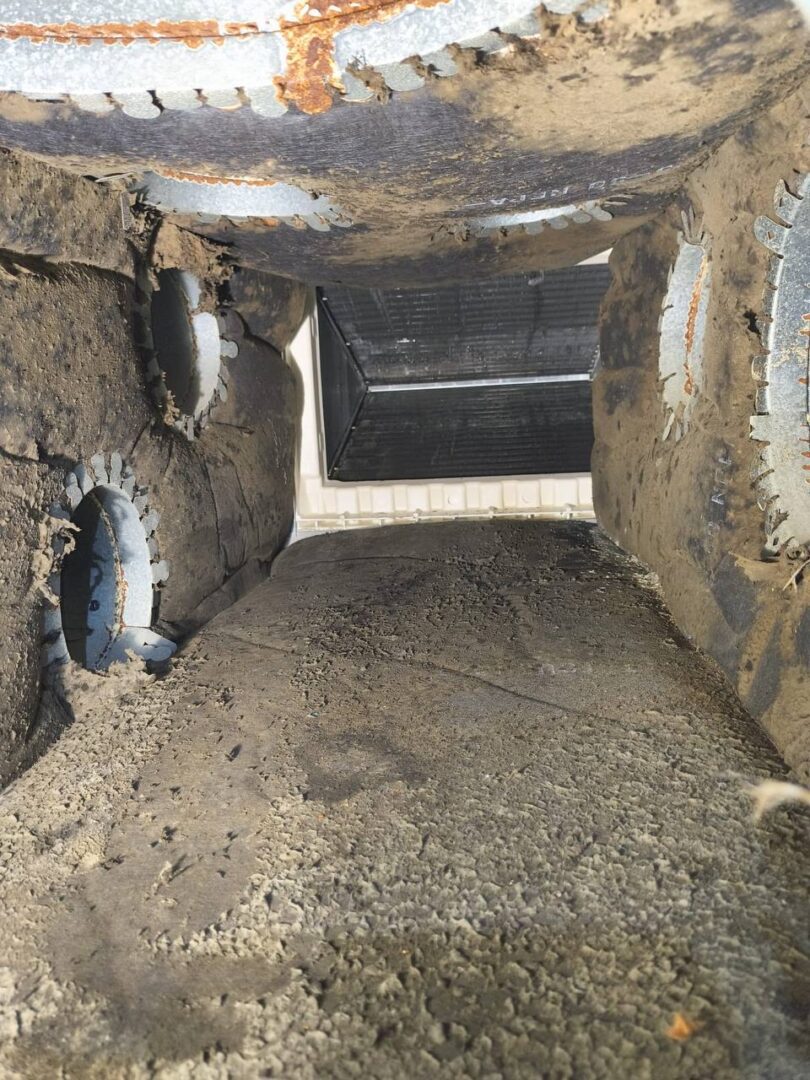
- Visible dust from supply registers — If you wipe down a register and dust reappears within days, your ducts are likely distributing accumulated debris
- Musty or stale odors when the HVAC runs — Particularly common in Brushy Creek-area homes where humidity supports microbial growth
- Increased allergy or respiratory symptoms at home — Symptoms that improve when you leave the house suggest an indoor source
- Recent construction nearby — If you live within three miles of an active Tech Corridor development site, post-construction cleaning is worth scheduling
- It’s been more than 3 years since your last cleaning — Standard NADCA recommendation; Round Rock’s environmental factors may justify shorter intervals
- Uneven airflow or reduced system performance — Limestone dust accumulation in supply boots restricts airflow and signals duct contamination
A professional air duct inspection in Round Rock uses camera scoping to evaluate buildup levels before recommending cleaning. This evidence-based approach ensures you address actual contamination rather than scheduling on an arbitrary calendar. For a more detailed overview of Round Rock’s specific considerations, see the complete Round Rock air duct cleaning guide.
Frequently Asked Questions About Indoor Air Quality in Round Rock TX
The specific environmental factors affecting Round Rock homes raise questions that generic IAQ guides don’t address. Here are the answers most relevant to homeowners in the Tech Corridor, Brushy Creek corridor, and surrounding neighborhoods:
How does Round Rock’s I-35 location affect indoor air quality?
Homes near the I-35 corridor experience elevated PM2.5 levels from diesel truck traffic, commercial vehicle emissions, and rush-hour congestion. Fine particulates enter through HVAC return air intakes and accumulate in ductwork. Regular NADCA-certified air duct cleaning removes these accumulated traffic-related particulates from the system. Homes within a half-mile of I-35 see the most significant accumulation rates, especially those with HVAC intakes facing the highway corridor.
Does air duct cleaning help with Brushy Creek humidity and mold issues?
Yes. Homes near Brushy Creek experience elevated humidity and mold spore counts due to the riparian corridor microclimate. NADCA-certified cleaning with HEPA vacuum and negative air pressure removes mold spores and moisture-trapping debris from ductwork. Source removal prevents recirculation of spore colonies back into living spaces. Combined with proper humidity management (maintaining indoor humidity below 60 percent), duct cleaning is a key component of managing Brushy Creek-area mold concerns.
How does Tech Corridor construction affect Round Rock home IAQ?
Ongoing commercial and residential construction from Dell, Apple, and Samsung expansions generates continuous construction dust within five miles of most Round Rock neighborhoods. This fine particulate matter settles in HVAC ductwork, degrading air quality. Post-construction duct cleaning is strongly recommended for homes within three miles of active development. Homeowners in established neighborhoods like Round Rock West and Forest Creek — surrounded by newer development — should consider more frequent maintenance cycles.
How often should Round Rock homeowners clean their air ducts?
NADCA recommends every three to five years as a baseline. Round Rock homeowners near active construction zones, the Brushy Creek corridor, or I-35 should consider a two to three year interval. Homes with pets, recent renovations, or residents with allergies or respiratory conditions benefit from shorter intervals. The best approach is a professional inspection to determine contamination levels specific to your home’s location and conditions.
AH-CHOO! Indoor Air Quality provides expert air duct cleaning and related services to Round Rock and surrounding Williamson County communities. Our team understands the specific environmental factors affecting homes in the Tech Corridor, Brushy Creek area, and throughout Round Rock.
Related Service Areas
- Indoor Air Quality in Pflugerville, TX
- Indoor Air Quality in Georgetown, TX
- Indoor Air Quality in New Braunfels, TX
- Mold in Air Ducts — Cedar Park, TX
Related AH-CHOO resources: Austin air duct cleaning; schedule a free inspection.