Meta Description: Pflugerville homeowners: learn how farmland-to-suburb transition, Lake Pflugerville humidity, and SH-130 truck traffic affect indoor air quality and what you can do about it.
Why Indoor Air Quality Matters in Pflugerville, TX
Pflugerville isn’t just another Austin suburb — it’s the fastest-growing city in the Austin metro by percentage, with a population approaching 80,000 that has more than doubled since 2010. But what makes Pflugerville truly unique for indoor air quality is its dramatic transformation from agricultural heartland to suburban boomtown, creating an environmental profile unlike any other Texas community.
The city sits at the intersection of Texas farming heritage and explosive suburban growth. Until the 2000s, much of what is now Pflugerville was active farmland — cotton fields, corn, and grazing land. As subdivisions replaced crop rows, decades of agricultural tilling left behind a legacy of fine clay and silt topsoil that becomes airborne as fine alkaline dust during every new grading and construction phase. Add the humidity corridor stretching from Lake Pflugerville through Gilleland Creek, the steady diesel PM2.5 from SH-130 truck traffic, and the continuous infill construction across established neighborhoods, and Pflugerville homeowners face a convergence of indoor air quality challenges that most suburban residents never encounter.
Understanding your indoor air quality isn’t just about comfort — it’s about protecting your family’s health, preserving your HVAC system’s efficiency, and addressing the specific environmental factors that make Pflugerville homes different from any other Austin suburb.
Common Pflugerville Indoor Air Pollutants
Pflugerville’s agricultural heritage, rapid growth, and geographic position create a distinct set of indoor air pollutants that accumulate in HVAC ductwork and recirculate through living spaces. Here’s what Pflugerville homeowners need to know about the most common contaminants:
Clay and Silt Topsoil Dust from Former Farmland
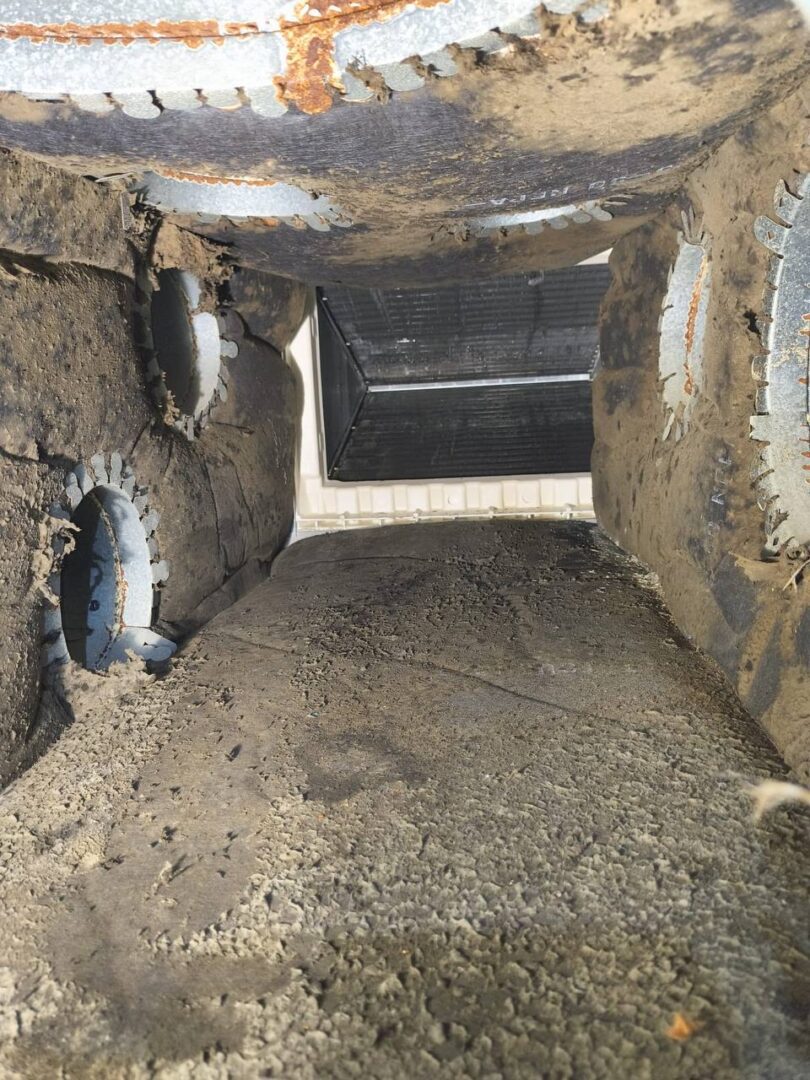
Pflugerville was farmland for generations before the housing boom. Decades of tilling broke down the region’s native clay-loam soil into fine, alkaline particulates that remain in the topsoil to this day. When new subdivisions break ground — and Pflugerville has dozens of active developments — this legacy agricultural dust becomes airborne, settling into homes and HVAC ductwork. Unlike construction drywall dust, this clay silt is finer, more alkaline, and more pervasive, coating duct interiors with a chalky residue that standard HVAC filters cannot capture.
Construction Debris from Rapid Infill Development
Pflugerville’s explosive growth means nearly every neighborhood — from new master-planned communities in the northeast to established subdivisions in the southwest — is within a mile of active construction. Every new foundation pour, every drywall installation, and every roof replacement generates fine silica dust, concrete particulate, wood fragments, and insulation fibers that penetrate homes and settle into ductwork. Even established neighborhoods like Windermere and Heatherwood face construction dust from surrounding infill development.
SH-130 Diesel Particulates (PM2.5)
SH-130 runs along Pflugerville’s eastern edge, serving as a heavily traveled I-35 bypass for truck traffic. Diesel exhaust produces ultrafine particulates — PM2.5 measuring less than 2.5 microns — that bypass the body’s natural respiratory defenses. These particles enter homes through HVAC fresh-air intakes and building envelope leakage, accumulating in ductwork. Homes within a half-mile of the SH-130 corridor, particularly in the Falcon Pointe and Blackhawk areas, experience the highest accumulation rates.
Lake Pflugerville Humidity and Mold Spores
Lake Pflugerville and Gilleland Creek create a distinct humidity microclimate across much of central and northern Pflugerville. Homes near the lake, in the Twin Creeks corridor, and along Gilleland Creek experience 10 to 15 percent higher humidity than areas further south. This persistent moisture inside ductwork creates ideal conditions for mold spore colonization. The elevated humidity also drives longer AC runtime, increasing condensation within duct systems and compounding the problem.
Seasonal Pollen and Allergens
Pflugerville sits on the eastern edge of the Texas Hill Country, receiving less limestone dust than Georgetown or Round Rock but more exposure to ragweed, grass, and oak pollen. Preserved greenbelt parcels and undeveloped lots — common in Pflugerville’s rapid-growth landscape — host significant ragweed populations. Pollen grains that enter HVAC systems become trapped in ductwork, recirculating long after outdoor counts have dropped.
How Air Duct Cleaning Improves Indoor Air Quality in Pflugerville
Professional NADCA-certified air duct cleaning addresses the specific contaminant profile that Pflugerville homes accumulate. Unlike basic vacuum-only approaches, the NADCA-certified process used in Pflugerville employs source removal — physically extracting contaminants at their point of accumulation rather than simply loosening them into the air stream.
Source Removal of Agricultural Clay and Silt Dust
Negative air pressure equipment combined with HEPA-filtered vacuum systems extracts the fine alkaline clay dust that is unique to Pflugerville’s farmland legacy. This is especially important for homes built on former agricultural parcels, where clay silt can be deeply embedded in duct interiors. The mechanical agitation process dislodges decades of accumulated particulate from supply and return ducts, register boots, and the air handler compartment.
Construction Debris Extraction for New and Infill Homes
For Pflugerville’s rapidly growing neighborhoods, duct cleaning includes removal of drywall dust, insulation fibers, and concrete particulate from the HVAC system. New construction homes benefit from post-build cleaning to clear residual construction materials. Established neighborhoods facing infill development benefit from periodic cleaning to manage ongoing construction dust intrusion.
Diesel PM2.5 Removal for SH-130 Corridor Homes
SH-130 diesel particulates that have settled into ductwork are mechanically agitated and extracted using HEPA filtration. For homes in Falcon Pointe, Blackhawk, and other areas along the SH-130 corridor, this process removes the ultrafine traffic particulates that standard filtration cannot capture from the air stream during normal HVAC operation.
Mold Spore Removal for Lake Pflugerville-Area Homes
For homes near Lake Pflugerville and Gilleland Creek, duct cleaning includes source removal of moisture-trapping debris that supports mold colonies. Combined with proper mold management practices for Pflugerville homes, this provides meaningful relief for residents experiencing persistent musty odors or unexplained allergy symptoms.
Pflugerville’s Growth and Your Home’s Air
The transformation of Pflugerville from a farming community into one of Texas’s fastest-growing cities has reshaped the local environment in ways most homeowners don’t connect to their indoor air quality. Every new master-planned community — Falcon Pointe, Blackhawk, Twin Creeks — and every infill development in established neighborhoods like Windermere and Heatherwood generates airborne particulate that eventually finds its way into residential HVAC systems.
Consider the pace: Pflugerville’s population grew by over 60 percent between 2010 and 2020, and the growth shows no signs of slowing. New subdivisions in the northeast quadrant, commercial development along SH-130 and Pecan Street, and continuous infill building across the city’s original core mean the construction cycle is perpetual. For homeowners, this means ductwork accumulates contaminants faster than the national average — and faster than the standard three to five year NADCA cleaning interval may address.
Homes in established neighborhoods face the additional challenge of aging ductwork that may have accumulated years of agricultural legacy dust from the pre-development era, layered with construction debris from the ongoing infill cycle. A professional air duct inspection in Pflugerville can determine the specific contaminant profile in your home’s ductwork and recommend the appropriate cleaning interval.
When to Schedule Air Duct Cleaning in Pflugerville
Every home is different, but Pflugerville homeowners should watch for these specific indicators that your indoor air quality may be compromised by duct contamination:
- Visible dust from supply registers — If you wipe down a register and dust reappears within days, your ducts are likely distributing accumulated debris
- Musty or stale odors when the HVAC runs — Particularly common in Lake Pflugerville-area homes where the humidity corridor supports microbial growth
- Increased allergy or respiratory symptoms at home — Symptoms that improve when you leave the house suggest an indoor source
- Recent construction nearby — If you live within a mile of an active development site, post-construction cleaning is worth scheduling
- Proximity to SH-130 — Homes within a half-mile of the toll road corridor accumulate diesel PM2.5 faster than other areas
- It’s been more than 3 years since your last cleaning — Standard NADCA recommendation; Pflugerville’s environmental factors may justify shorter intervals
- Your home was built on former farmland — Legacy agricultural clay dust may be embedded in older ductwork from the pre-development era
A professional air duct inspection in Pflugerville uses camera scoping to evaluate buildup levels before recommending cleaning. This evidence-based approach ensures you address actual contamination rather than scheduling on an arbitrary calendar. For a more detailed overview of Pflugerville’s specific considerations, see the complete Pflugerville air duct cleaning guide and explore how your home’s HVAC system differs from duct cleaning needs.
Frequently Asked Questions About Indoor Air Quality in Pflugerville TX
The specific environmental factors affecting Pflugerville homes raise questions that generic IAQ guides don’t address. Here are the answers most relevant to homeowners near Lake Pflugerville, the SH-130 corridor, and the city’s rapidly developing neighborhoods:
Does Pflugerville’s farmland history affect indoor air quality?
Yes. Pflugerville was primarily agricultural land until the 2000s, and many subdivisions were built on former farmland. Decades of tilling created fine alkaline clay and silt topsoil that becomes airborne dust during grading and construction. This clay dust is finer and more pervasive than typical construction debris, settling into HVAC ductwork and recirculating through living spaces. NADCA-certified air duct cleaning with HEPA vacuum extraction is effective at removing this legacy agricultural dust from duct systems. Homes built on former agricultural parcels benefit most from an initial cleaning within the first year of occupancy.
How does Lake Pflugerville proximity affect home IAQ?
Homes near Lake Pflugerville and Gilleland Creek experience elevated humidity levels that create ideal conditions for mold spore colonization inside ductwork. Master-planned communities like Twin Creeks, Falcon Pointe, and Blackhawk sit in this humidity corridor. The elevated humidity also drives longer AC runtime, increasing condensation within duct systems and compounding the potential for microbial growth. Professional air duct cleaning removes moisture-trapping debris and mold spores from duct surfaces, while proper indoor humidity management — maintaining indoor humidity below 60 percent — helps prevent recurrence.
Does SH-130 truck traffic affect my home’s air even with closed windows?
Yes. SH-130 carries heavy diesel truck traffic as an I-35 bypass, and PM2.5 particulates from diesel exhaust infiltrate homes through HVAC fresh-air intakes and building envelope leakage even with windows closed. These ultrafine particulates — measuring less than 2.5 microns — bypass the body’s natural respiratory defenses and accumulate in ductwork over time. Homes within a half-mile of the SH-130 corridor, particularly in the Falcon Pointe and Blackhawk areas, show the highest accumulation rates. Regular NADCA-certified duct cleaning removes these traffic-related particulates from the HVAC system, and source removal is the only effective method since standard HVAC filters cannot capture particles of this size once they’ve settled into ductwork.
How often should Pflugerville homeowners clean their air ducts?
NADCA recommends every three to five years as a baseline. Pflugerville homeowners near the SH-130 corridor, Lake Pflugerville, or neighborhoods undergoing active infill development should consider a two to three year interval. Homes in newer subdivisions built on former agricultural land may benefit from an initial cleaning within the first year of occupancy to remove legacy construction and agricultural dust. The best approach is a professional inspection to determine contamination levels specific to your home’s location and conditions.
AH-CHOO! Indoor Air Quality provides expert air duct cleaning and related services to Pflugerville and surrounding Travis County communities. Our team understands the specific environmental factors affecting homes in the Lake Pflugerville area, SH-130 corridor, and throughout the city’s rapidly growing neighborhoods.
Related Service Areas
- Indoor Air Quality in Round Rock, TX
- Indoor Air Quality in Georgetown, TX
- Indoor Air Quality in New Braunfels, TX
- Mold in Air Ducts — Cedar Park, TX
Related AH-CHOO resources: Austin air duct cleaning; schedule a free inspection.