Meta Description: Houston's indoor air quality ranks among the worst in the nation. Learn how outdoor pollution affects your home's air and what you can do about it with NADCA-certified duct cleaning.
Indoor Air Quality in Houston, TX — Health Effects and What You Can Do
Houston has a well-documented air quality problem. The American Lung Association consistently gives Harris County an “F” for ozone pollution, and the city ranks among the top 10 most polluted cities in the United States for year-round particle pollution. But what does that mean for the air inside your home?
How Houston's Outdoor Air Quality Affects Your Indoor Air
Here's what many Houston homeowners don't realize: the air inside your home can be 2-5 times more polluted than the air outside, according to EPA studies. In Houston, several factors make this worse:
- Industrial emissions: The Houston Ship Channel and surrounding petrochemical facilities release fine particulate matter (PM2.5) that infiltrates homes through windows, doors, and HVAC intake vents.
- Vehicle pollution: Houston's sprawling highway system (I-10, I-45, 610, Beltway 8, Grand Parkway) means vehicle emissions are a constant source of outdoor pollution that finds its way indoors.
- Pollen and allergens: Houston's long growing season (February-November) means oak, cedar, grass, and ragweed pollen circulate for 9+ months per year, entering homes through open windows and HVAC systems.
- Humidity and mold: Houston's average 75%+ relative humidity creates ideal conditions for mold growth inside ductwork and HVAC systems.
- Ozone: Houston's ozone action days are becoming more frequent, and ozone can enter homes and react with indoor chemicals to form additional pollutants.
Health Effects of Poor Indoor Air Quality in Houston
Research has linked Houston's poor air quality to several health concerns:
- Respiratory issues: Increased asthma attacks, bronchitis, and COPD exacerbations, particularly in children and elderly residents
- Allergic reactions: Sneezing, watery eyes, nasal congestion, and sinus infections triggered by indoor allergens circulating through dirty ductwork
- Fatigue and headaches: Poor indoor air quality can cause “sick building syndrome” symptoms including headaches, fatigue, and difficulty concentrating
- Sleep disruption: Nasal congestion and breathing difficulties from indoor pollutants can interfere with sleep quality
- Long-term cardiovascular effects: Studies have linked long-term exposure to PM2.5 with increased risk of heart disease and stroke
What You Can Do About Indoor Air Quality in Houston
The good news is there are practical steps you can take to improve your home's indoor air quality, even in Houston's challenging environment:
- Schedule regular HVAC maintenance: Have your HVAC system inspected and serviced at least twice per year — before summer cooling season and before winter heating season
- Change air filters monthly: In Houston's dusty, humid climate, standard 90-day filters should be replaced monthly during peak AC season (April-October)
- Get your air ducts professionally cleaned: NADCA-certified duct cleaning removes accumulated dust, mold spores, and debris that recirculate through your home every time the HVAC runs
- Use a high-quality air purifier: HEPA air purifiers in bedrooms and main living areas can reduce particulate levels between duct cleanings
- Monitor indoor humidity: Keep indoor relative humidity below 60% (ideally 40-50%) using your HVAC system's humidity control or a dedicated dehumidifier
- Seal your ductwork: Leaky ducts draw in attic dust, garage fumes, and crawlspace contaminants. Professional duct sealing prevents this infiltration.
The Role of Air Duct Cleaning in Houston IAQ
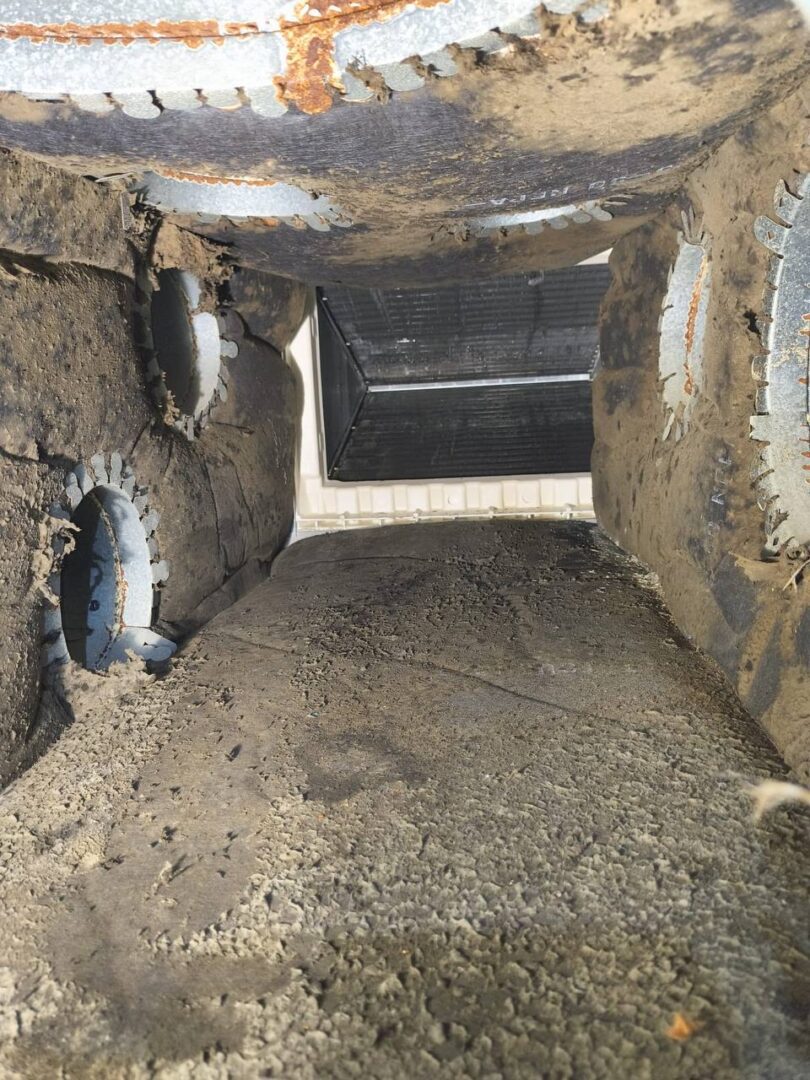
Your HVAC system is your home's lungs. The ductwork distributes heated and cooled air throughout your home — and when ducts are dirty, they distribute pollutants with every cycle. In Houston, where HVAC systems run 9-10 months per year, the accumulation of dust, mold spores, pollen, and particulate matter in ductwork is more rapid than in milder climates.
A NADCA-certified air duct cleaning uses source-removal methods — negative air pressure and mechanical agitation — to physically remove contaminants from your duct system. This is different from “air duct cleaning” services that simply vacuum from registers, which misses the bulk of contamination deep in the ductwork.
When to Consider Professional Duct Cleaning in Houston
Consider scheduling a NADCA-certified duct cleaning if:
- You can see visible dust or debris coming from vent registers
- Your home has persistent musty odors that return shortly after cleaning
- Family members experience allergy symptoms that improve when away from home
- It's been more than 3 years since your ducts were last professionally cleaned
- You've recently completed home renovations or construction
- You have pets that shed dander and fur into the HVAC system
- You're moving into a new-to-you home in Houston
Ready to improve your Houston home's indoor air quality? Contact AH-CHOO! Indoor Air Quality Specialists for a free consultation and inspection. We're NADCA-certified and serve all Houston neighborhoods including the Heights, Sugar Land, Katy, The Woodlands, Spring, Pearland, and beyond.
Related Service Areas
- Indoor Air Quality in Katy, TX
- Indoor Air Quality in Pearland, TX
- Indoor Air Quality in Spring, TX
- Indoor Air Quality in Sugar Land, TX
Related AH-CHOO resources: Houston air duct cleaning.