If you live in Spring, Texas — the fast-growing North Houston community straddling the Harris and Montgomery county line — you already know the air feels different here than in downtown Houston or even The Woodlands. The combination of wooded greenbelts, major highway construction, a massive corporate campus, and active master-planned community development creates a unique set of indoor air quality challenges that Spring homeowners need to understand.
This guide covers the specific IAQ factors affecting Spring TX homes and explains what you can do about them — from understanding local pollutant sources to knowing when professional duct cleaning makes a real difference.
What Makes Spring TX Indoor Air Quality Different from Inner Houston
Spring sits about 25 miles north of downtown Houston, but its IAQ profile is dramatically different for several reasons:
- ExxonMobil campus PM2.5 exposure: The ExxonMobil Houston Campus at I-45 and the Hardy Toll Road is one of the largest corporate campuses in the US, housing approximately 10,000 employees. The daily commuter traffic and campus operations generate diesel PM2.5 that settles in nearby neighborhoods during rush hours.
- I-45 / Hardy construction corridor: Spring sits at the nexus of I-45 (the primary Houston-Dallas artery) and the Hardy Toll Road. Ongoing TxDOT widening projects under the North Houston Highway Improvement Project produce sustained construction dust — concrete cutting particulates, grading debris, and heavy equipment diesel exhaust — that blankets nearby residential areas.
- Greenbelt humidity from Spring Creek and Cypress Creek: Unlike Katy’s prairie landscape or Sugar Land’s coastal plain, Spring is defined by heavily wooded creek watersheds. These waterways maintain constant moisture, keeping outdoor relative humidity elevated even when other parts of Houston begin to dry out. Homes backing to greenbelt trails experience the highest indoor humidity levels.
- Wooded suburban microclimate: Spring’s terrain is heavily wooded post-oak savanna with dense tree canopy (oak, pine, sweetgum). This canopy traps ground-level moisture, reduces airflow around homes, and produces heavy seasonal pollen loads. The wooded environment also supports wildlife — squirrels, raccoons, and rodents — that can breach attic vents and introduce debris into ductwork.
- Master-planned community construction: Major MPCs like Spring Trails, Benders Landing, Harper’s Preserve, and communities near Lake Conroe are actively adding thousands of homes. Construction dust from framing, drywall sanding, and finishing work infiltrates the HVAC systems of neighboring established homes.
Common Spring TX Indoor Air Pollutants
Spring homeowners deal with a broader range of indoor pollutants than many other Houston suburbs. Here’s what’s most common:
- Construction dust (PM10 and PM2.5): Both from TxDOT’s I-45 widening project and active MPC development, fine construction particulates infiltrate homes through door seals, windows, and HVAC intake vents.
- Diesel PM2.5: The I-45/Hardy Toll Road commute corridor generates fine diesel particulates that peak during morning and evening rush hours. Homes within a half-mile of these thoroughfares see higher indoor PM2.5 levels.
- Mold spores: Spring Creek and Cypress Creek greenbelts create consistently humid microclimates. Mold spore counts are elevated in homes near these waterways, especially during summer months.
- Oak and pine pollen: Heavy tree coverage means Spring sees prolonged pollen seasons — oak pollen in March-April, pine pollen in April-May, and grass pollen through summer.
- Greenbelt rodent intrusion debris: Wooded lots attract rodents seeking shelter. Once inside attic spaces, rodents leave droppings, nesting material, and urine that contaminate ductwork and degrade IAQ.
- Floodplain legacy mold: The Spring Creek watershed was heavily affected by Memorial Day 2015, Tax Day 2016, and Hurricane Harvey (2017) floods. Homes in flood-prone areas that were remediated may still have compromised ductwork or residual mold in inaccessible cavities.
How the ExxonMobil Campus and I-45 Affect Spring’s Air
The ExxonMobil Houston Campus at 22777 Springwoods Village Parkway is a major economic anchor for Spring, but its presence also affects local air quality patterns:
- Rush hour PM2.5 spikes: The campus generates approximately 10,000 daily commuters, most of whom arrive via I-45 and the Hardy Toll Road. During peak commuting windows (7-9 AM and 4-6 PM), diesel PM2.5 concentrations near these corridors increase measurably.
- Indoor infiltration: Homes with standard fiberglass HVAC filters (MERV 4-6) allow these fine particulates to pass through and recirculate indoors. Dark residue on HVAC registers near exterior walls is a common sign of this infiltration.
- What Spring homeowners notice: Increased dust accumulation on surfaces within 24-48 hours of dusting, dark soiling around supply registers, and worsening allergy symptoms during commute hours are all signs that outdoor PM2.5 is entering the home.
Upgrading to a MERV 8 or MERV 11 filter and ensuring proper door and window sealing can reduce indoor PM2.5 infiltration by 30-50 percent.
Seasonal IAQ Concerns in Spring TX
Spring’s IAQ challenges shift with the seasons, and each brings a different primary concern:
- Spring (March-May): Oak and pine pollen peak during these months, coinciding with the start of I-45 construction season. Homes near wooded areas and construction zones face a double burden of biological and mechanical particulates.
- Summer (June-September): Greenbelt humidity drives mold spore proliferation. Homes with ductwork in unconditioned attics are especially vulnerable to condensation and microbial growth during Houston’s prolonged heat and humidity.
- Fall (October-November): Leaf mold from the heavy tree canopy adds to seasonal spore loads. Wildfire smoke transport from western US fires can also affect outdoor air quality during dry fall periods.
- Winter (December-February): Sealed homes trap indoor pollutants — cooking emissions, pet dander, dust mites, and off-gassing from furniture and building materials — because ventilation is minimized. IAQ often degrades most during winter months despite lower outdoor pollen.
When Spring Homeowners Should Consider Duct Cleaning for Better IAQ
Not every home in Spring needs duct cleaning, but certain situations make it a high-value investment for improving indoor air quality:
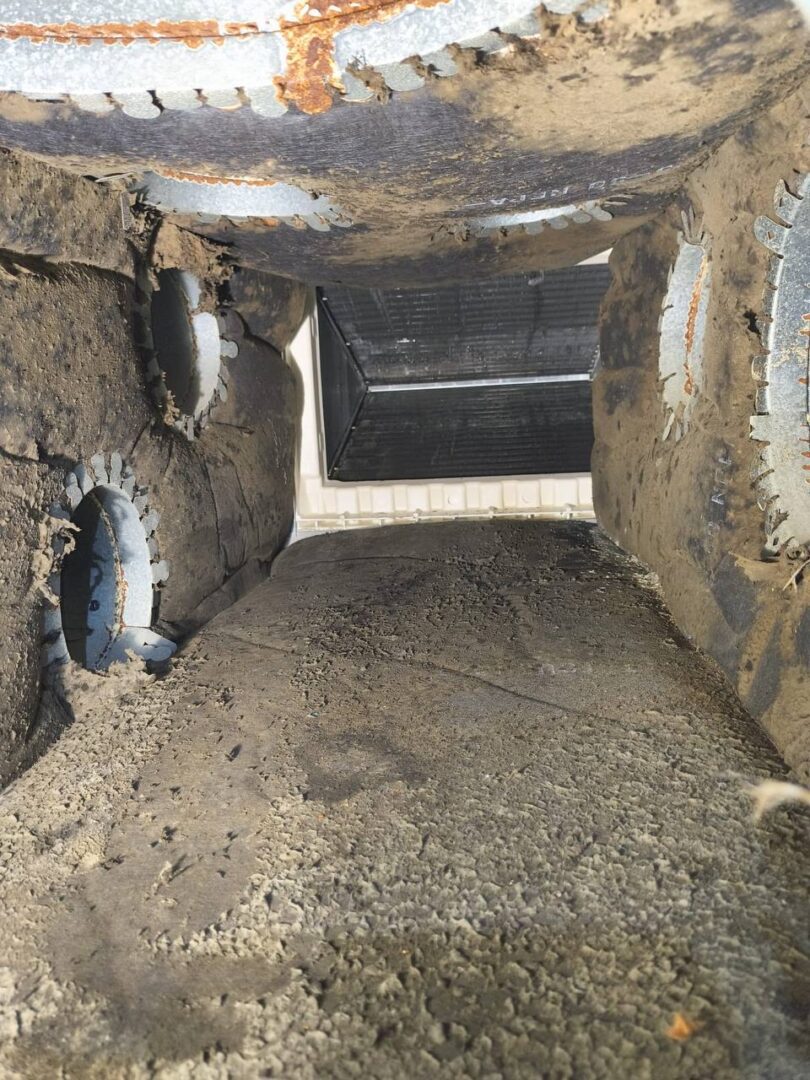
- Homes near I-45 or the Hardy Toll Road with dark register dust: If you notice dark, oily dust accumulating on supply registers within days of cleaning, diesel PM2.5 infiltration is likely settling in your ductwork.
- Homes in active MPC construction zones: If builders are actively developing near your neighborhood, fine construction dust can accumulate in ducts and recirculate for months or years after construction completes.
- Homes backing to Spring Creek or Cypress Creek greenbelts: Elevated humidity near these waterways creates conditions for microbial growth in ductwork. A professional inspection can identify whether biofilm or mold is present.
- Homes with flood history (2015-2017): If your home was in the floodplain during the Memorial Day 2015, Tax Day 2016, or Harvey floods, residual contamination may persist in duct insulation or concealed duct sections.
- Following the NADCA-recommended 3-5 year cleaning cycle: Even without specific symptoms, the NADCA standard recommends professional duct cleaning every 3-5 years to prevent gradual accumulation of debris and microbial growth.
Before scheduling any cleaning service, always request a thorough video inspection of your ductwork. A reputable NADCA-certified company like AH-CHOO in Spring TX will provide a detailed assessment before recommending any service.
FAQs About Indoor Air Quality in Spring TX
Q: How does Spring’s proximity to the ExxonMobil campus affect indoor air quality?
A: The ExxonMobil Houston Campus generates significant commuter traffic on I-45 and the Hardy Toll Road. During peak commute hours, diesel PM2.5 concentrations rise near these corridors. Homes with standard HVAC filters (MERV 4-6) allow these fine particulates to infiltrate and recirculate indoors, potentially worsening allergy and respiratory symptoms.
Q: Does the I-45 construction project affect Spring’s air quality?
A: Yes. TxDOT’s North Houston Highway Improvement Project involves extensive concrete cutting, grading, and heavy equipment operation that generates PM10 and PM2.5 construction dust. Homes near the I-45 corridor in Spring are most affected, especially during dry, windy conditions.
Q: How does living near Spring Creek affect indoor humidity?
A: Homes backing to Spring Creek or Cypress Creek greenbelts experience higher outdoor humidity due to the proximity of surface water and dense tree canopy. This elevated outdoor humidity translates to higher indoor relative humidity, which can create conditions conducive to mold growth in ductwork and HVAC components.
Q: How often should Spring homeowners clean their air ducts?
A: The NADCA standard recommends professional air duct cleaning every 3-5 years for typical homes. However, Spring homes near construction zones, major highways, or creek greenbelts may benefit from more frequent inspections — every 2-3 years — to check for accelerated debris accumulation or microbial growth.
Q: Does AH-CHOO serve the Spring TX area?
A: Yes. AH-CHOO provides professional air duct cleaning and IAQ services throughout Spring TX, including the Spring Trails, Benders Landing, Harper’s Preserve, and Lake Conroe areas. All services are performed by NADCA-certified technicians using HEPA-filtered source removal equipment.
Disclaimer: AH-CHOO Indoor Air Quality provides professional duct cleaning and HVAC sanitation services. We do not perform independent air quality testing. This guide is for educational purposes and does not constitute medical advice. If you have specific health concerns, please consult a healthcare provider.
Related Service Areas
- Indoor Air Quality in Katy, TX
- Indoor Air Quality in Pearland, TX
- Indoor Air Quality in Sugar Land, TX
- Indoor Air Quality in The Woodlands, TX
Related AH-CHOO resources: Houston air duct cleaning; schedule a free inspection.