Meta Description: Texas asthma sufferers often have triggers hiding in their HVAC system. Learn how contaminated ducts worsen asthma and what NADCA-certified cleaning does to help.
“`json
{
“@context”: “https://schema.org”,
“@graph”: [
{
“@type”: “Article”,
“@id”: “https://ahchooindoorair.com/blog/asthma-indoor-air-quality-texas”,
“headline”: “Asthma and Indoor Air Quality in Texas: What Your HVAC Is Doing Wrong”,
“description”: “Texas asthma sufferers often have triggers hiding in their HVAC system. Learn how contaminated ducts worsen asthma and what NADCA-certified cleaning does to help.”,
“url”: “https://ahchooindoorair.com/blog/asthma-indoor-air-quality-texas”,
“datePublished”: “2026-03-26”,
“dateModified”: “2026-03-26”,
“author”: {
“@type”: “Organization”,
“name”: “AH-CHOO! Indoor Air Quality”,
“url”: “https://ahchooindoorair.com”
},
“publisher”: {
“@type”: “Organization”,
“name”: “AH-CHOO! Indoor Air Quality”,
“logo”: {
“@type”: “ImageObject”,
“url”: “https://ahchooindoorair.com/logo.png”
}
}
},
{
“@type”: “FAQPage”,
“mainEntity”: [
{
“@type”: “Question”,
“name”: “Can dirty air ducts trigger asthma attacks?”,
“acceptedAnswer”: {
“@type”: “Answer”,
“text”: “Yes. Contaminated ducts actively distribute known asthma triggers — mold spores, dust mite allergens, cockroach proteins, pet dander, and fine particulate matter — throughout your home with every HVAC cycle. For people with asthma, this continuous low-level exposure keeps airways inflamed and increases the frequency and severity of symptoms.”
}
},
{
“@type”: “Question”,
“name”: “Why is asthma particularly problematic in Texas?”,
“acceptedAnswer”: {
“@type”: “Answer”,
“text”: “Texas combines several asthma risk factors: high humidity that promotes mold and dust mite growth, one of the country’s most intense outdoor allergen loads, long hot seasons requiring near-constant HVAC use, and a high percentage of older housing stock with aging duct systems that have accumulated years of debris.”
}
},
{
“@type”: “Question”,
“name”: “What asthma triggers hide in HVAC duct systems?”,
“acceptedAnswer”: {
“@type”: “Answer”,
“text”: “The main asthma triggers found in contaminated duct systems include: mold spores and mycotoxins, dust mite allergen particles, cockroach protein allergens, pet dander, fine particulate matter (PM2.5), and VOCs from degrading duct materials. All are documented asthma triggers that a contaminated HVAC distributes continuously.”
}
},
{
“@type”: “Question”,
“name”: “How does professional duct cleaning help asthma sufferers?”,
“acceptedAnswer”: {
“@type”: “Answer”,
“text”: “Professional duct cleaning removes the accumulated reservoir of asthma triggers from inside the duct system — material that filter changes and air purifiers cannot reach. By reducing the total trigger load in circulating air, cleaning can reduce both the frequency of asthma symptoms and the degree of ongoing airway inflammation.”
}
},
{
“@type”: “Question”,
“name”: “Should I have my ducts cleaned before moving into a Texas home?”,
“acceptedAnswer”: {
“@type”: “Answer”,
“text”: “Absolutely, especially for anyone with asthma. You have no knowledge of the duct system’s history — what allergens the previous occupants had, whether pets lived there, whether there was water damage. Starting with a clean duct system gives you a known baseline and removes any accumulated triggers from prior occupancy.”
}
},
{
“@type”: “Question”,
“name”: “What is the cockroach allergen problem in Houston homes?”,
“acceptedAnswer”: {
“@type”: “Answer”,
“text”: “Cockroach protein is a significant asthma trigger particularly common in urban Texas environments. Cockroach activity in duct systems — where they find food, moisture, and harborage — deposits protein allergens that get distributed throughout the home. Houston’s climate makes cockroach prevalence higher than in most U.S. cities.”
}
}
]
}
]
}
“`
Asthma affects roughly 25 million Americans, and Texas ranks among the higher-prevalence states. If you or a family member has asthma, you’re likely managing it with medication, avoiding known outdoor triggers, and keeping windows closed during high-pollen days. But if your symptoms remain poorly controlled despite these precautions, there’s a high-probability source you may be overlooking entirely: your HVAC duct system.
Texas and Asthma: A Difficult Climate
Texas combines several factors that make asthma management particularly challenging:
Year-round allergen exposure. Texas doesn’t have the seasonal allergen breaks that give northern-climate asthma sufferers periodic relief. Mountain cedar runs through winter and early spring, oak through spring, grasses through summer, and ragweed through fall. Outdoor triggers are nearly continuous.
Humidity-driven indoor allergen amplification. Houston and Southeast Texas maintain high humidity that creates ideal conditions for two of the most potent asthma triggers: mold spores and dust mite allergens. Both thrive in the warm, moist conditions found inside duct systems in our climate.
High cockroach allergen prevalence. Cockroach protein is a documented major asthma trigger, particularly in children. Houston’s climate supports year-round cockroach activity, and cockroaches regularly access duct systems through register boots, floor-level duct connections, and gaps in duct sealing. Their protein deposits are distributed by the HVAC system continuously.
Long HVAC seasons. Texas homes run their HVAC systems for 10-11 months per year. More runtime means more continuous distribution of whatever is inside the duct system — and faster accumulation of new debris.
What Your HVAC Might Be Doing to Your Asthma
Your HVAC system doesn’t just heat and cool your home. It moves air — every cubic foot of air in your home circulates through the duct system multiple times per day. Whatever is inside that system gets added to your breathing air with every cycle.
Mold Spores: A Major Asthma Trigger
Mold is one of the most potent asthma triggers. In sensitized individuals, even brief mold spore exposure can precipitate an attack. In Texas’s humid climate, mold colonization inside duct systems is not unusual — it’s genuinely common.
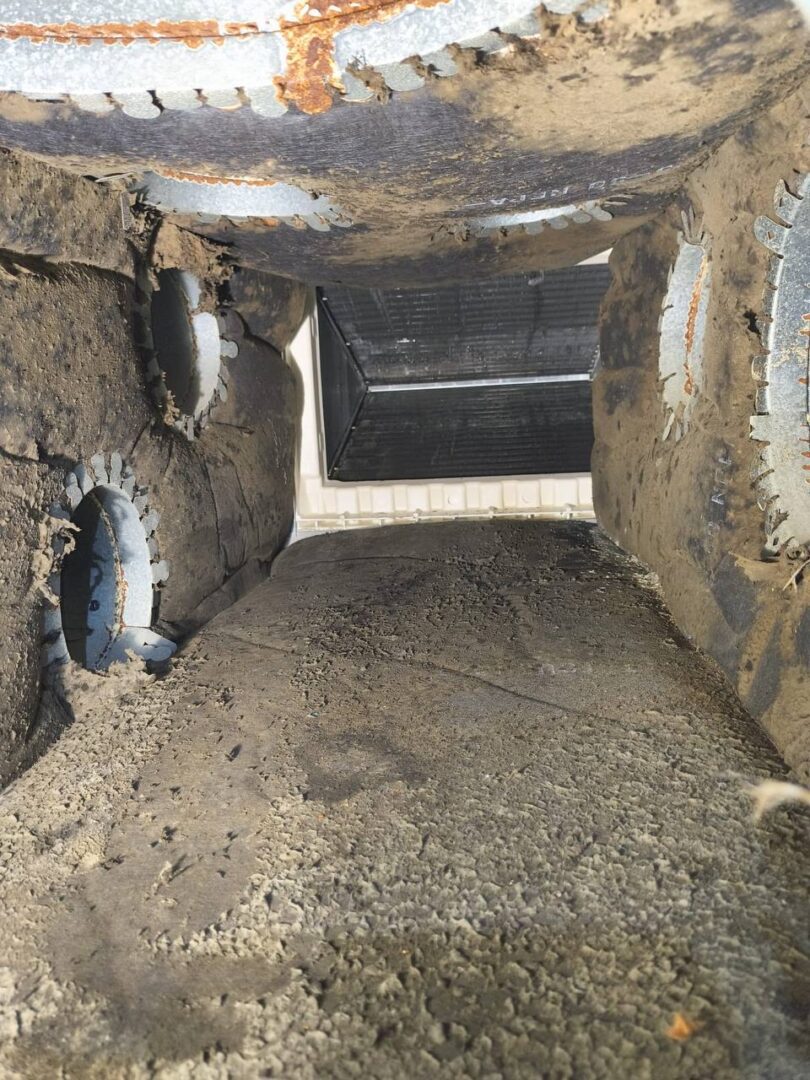
We find active mold growth inside duct systems in a significant percentage of Houston-area homes that haven’t been professionally cleaned. The flex duct systems prevalent in Texas homes are particularly susceptible: the porous liner material retains moisture from condensation, providing a substrate for biological growth that continuously sheds spores into the airstream.
For asthma patients, living in a home with mold in the duct system is like living in a home where someone periodically releases mold spores directly into the air — because that’s functionally what’s happening every time the system runs.
Dust Mite Allergens: The Invisible Trigger
Dust mites produce the most common indoor allergen associated with asthma. Their protein-laden particles are among the most allergenic substances documented — a single exposure can trigger significant airway inflammation in sensitized individuals.
Houston’s climate is a dust mite paradise. The temperature and humidity ranges found inside flex duct systems during AC operation fall squarely within optimal mite habitat conditions. While the mites themselves don’t typically live directly in the duct system, their allergen particles from bedding and soft furnishings enter through return ducts and accumulate throughout the system.
Fine Particulate Matter (PM2.5)
Particles in the 2.5 micron and smaller range are the most dangerous from an asthma perspective. They penetrate the deepest into the respiratory system, reaching bronchioles and alveoli where they trigger inflammation directly.
Contaminated duct systems are active generators of fine particulate matter. Debris on duct walls, particularly from degrading flex duct liner material, produces particles in this critical size range. These particles pass easily through standard filters and are delivered continuously to the breathing zone.
One family in The Woodlands contacted us after their teenage son’s asthma — previously well-controlled — suddenly became much harder to manage. The home was eight years old and had never had duct cleaning. Our inspection found the flex duct liner visibly degraded with significant particulate generation, plus biological growth in two duct sections. After cleaning and remediation, his pulmonologist noted improved lung function measurements at his next appointment.
The Filter Doesn’t Protect Asthma Sufferers Adequately
Standard HVAC filters — even relatively good ones at MERV-8 — capture larger particles but allow the fine particles most dangerous for asthma to pass through. This is a design reality, not a defect: filters that stop everything would also stop adequate airflow.
Upgrading to MERV-13 or MERV-16 filters helps significantly with fine particle capture. But there’s an important caveat: higher-MERV filters only capture particles entering the system from the living space. They don’t remove:
- Particles already deposited inside the duct system
- Material shed by degrading duct components within the system
- Biological growth on duct surfaces shedding spores between the filter and the supply registers
An asthma sufferer living in a home with a MERV-13 filter and contaminated ductwork is protected from some of what’s coming in — but is still being continuously exposed to what’s already there.
How Cockroach Allergens Enter the Duct System
Cockroach allergen is particularly prevalent in Houston, and duct systems are one of the primary ways it spreads through a home.
Cockroaches access duct systems through:
- Floor-level return grilles (particularly common in older Houston homes)
- Disconnected or poorly sealed register boots
- Gaps in duct sections running through wall cavities or under floors
Once inside the duct system, cockroach activity deposits protein allergens that are picked up by airflow and distributed throughout the home. A cockroach problem that was addressed through extermination may still be causing ongoing allergen exposure if the duct system wasn’t cleaned after treatment.
We’ve arrived at homes where pest control had been performed but the ductwork showed clear evidence of prior cockroach activity — debris, frass, and shed skins in return duct sections. That material continues generating allergen exposure until physically removed.
Taking Action for Asthma Households
The intervention strategy for asthma sufferers combines filter management with duct system cleaning:
Step 1: Assess the duct system. A professional inspection determines the extent of contamination — debris accumulation levels, biological growth, integrity issues, and any pest evidence.
Step 2: Professional duct cleaning. [Residential duct cleaning](https://ahchooindoorair.com/residential-duct-cleaning) removes the accumulated reservoir of asthma triggers from throughout the duct system. The approximately 7-hour process addresses all supply and return ducts, register boots, and the air handler.
Step 3: Address any biological growth. If mold is confirmed, [mold remediation](https://ahchooindoorair.com/mold-remediation) treats the growth and the conditions that created it. Cleaning alone isn’t sufficient for active mold colonies.
Step 4: Ongoing management. Higher-MERV filters, changed every 30-60 days, reduce the rate of re-accumulation. Periodic professional cleaning — every 2-3 years for households with active asthma — maintains the benefit.
For commercial environments where asthma-affected employees work, [commercial duct cleaning](https://ahchooindoorair.com/commercial-duct-cleaning) applies the same principles at a larger scale, improving the breathing environment for everyone in the space.
The Inspection as a Starting Point
For households where asthma control is a priority, knowing what’s in your duct system is valuable information. Our free inspection assesses contamination levels and gives you a clear picture of what your HVAC system may be contributing to your symptoms.
You don’t have to accept poorly controlled asthma as simply the cost of living in Houston. There may be a correctable source in your own duct system.
[Book your free inspection at crm.ahchooindoorair.com/book](https://crm.ahchooindoorair.com/book)
Frequently Asked Questions
Can dirty air ducts trigger asthma attacks?
Yes. Contaminated ducts actively distribute known asthma triggers — mold spores, dust mite allergens, cockroach proteins, pet dander, and fine particulate matter — throughout your home with every HVAC cycle. For people with asthma, this continuous low-level exposure keeps airways inflamed and increases the frequency and severity of symptoms.
Why is asthma particularly problematic in Texas?
Texas combines several asthma risk factors: high humidity that promotes mold and dust mite growth, one of the country’s most intense outdoor allergen loads, long hot seasons requiring near-constant HVAC use, and a high percentage of older housing stock with aging duct systems that have accumulated years of debris.
What asthma triggers hide in HVAC duct systems?
The main asthma triggers found in contaminated duct systems include: mold spores and mycotoxins, dust mite allergen particles, cockroach protein allergens, pet dander, fine particulate matter (PM2.5), and VOCs from degrading duct materials. All are documented asthma triggers that a contaminated HVAC distributes continuously.
How does professional duct cleaning help asthma sufferers?
Professional duct cleaning removes the accumulated reservoir of asthma triggers from inside the duct system — material that filter changes and air purifiers cannot reach. By reducing the total trigger load in circulating air, cleaning can reduce both the frequency of asthma symptoms and the degree of ongoing airway inflammation.
Should I have my ducts cleaned before moving into a Texas home?
Absolutely, especially for anyone with asthma. You have no knowledge of the duct system’s history — what allergens the previous occupants had, whether pets lived there, whether there was water damage. Starting with a clean duct system gives you a known baseline and removes any accumulated triggers from prior occupancy.
What is the cockroach allergen problem in Houston homes?
Cockroach protein is a significant asthma trigger particularly common in urban Texas environments. Cockroach activity in duct systems — where they find food, moisture, and harborage — deposits protein allergens that get distributed throughout the home. Houston’s climate makes cockroach prevalence higher than in most U.S. cities.