How Houston’s Outdoor Air Pollution Gets Inside Your Home
Houston outdoor air pollution inside your home is more common than most homeowners realize. In Houston, outside air does not stay outside. It enters through door openings, return-side leaks, duct gaps, and normal HVAC airflow, then settles into the duct system where particulates, pollen, and moisture-driven debris can keep circulating long after the outdoor air changes.
Why Does Outdoor Air Pollution Enter Houston Homes So Easily?
Houston homes are not sealed boxes. Every time an exterior door opens, every time a return side pulls air, and every time a duct system has small leaks or pressure imbalances, outside air finds a path indoors. In a city like Houston, that matters more than it does in most U.S. markets because the outdoor environment already carries a heavy burden.
Houston continues to rank among the nation’s worst metro areas for ozone and year-round particle pollution. The American Lung Association has placed Houston near the top of the national rankings for ozone exposure, while IQAir continues to note that ozone and PM2.5 are the pollutants most often driving Houston’s overall air-quality risk.
When that outdoor load meets long Houston AC runtime, the HVAC system becomes the bridge between outside conditions and indoor air.
What Brings Houston’s Outdoor Air Pollution Into the HVAC System?
The biggest mistake homeowners make is assuming pollution only gets inside when windows are open. In reality, the HVAC system itself can be one of the main pathways.
Here are the most common entry points:
In Houston, this means outdoor pollutants do not just enter the living space once. They are repeatedly pulled into circulation through the HVAC system and redistributed room to room.
What Actually Builds Up Inside Your Ducts?
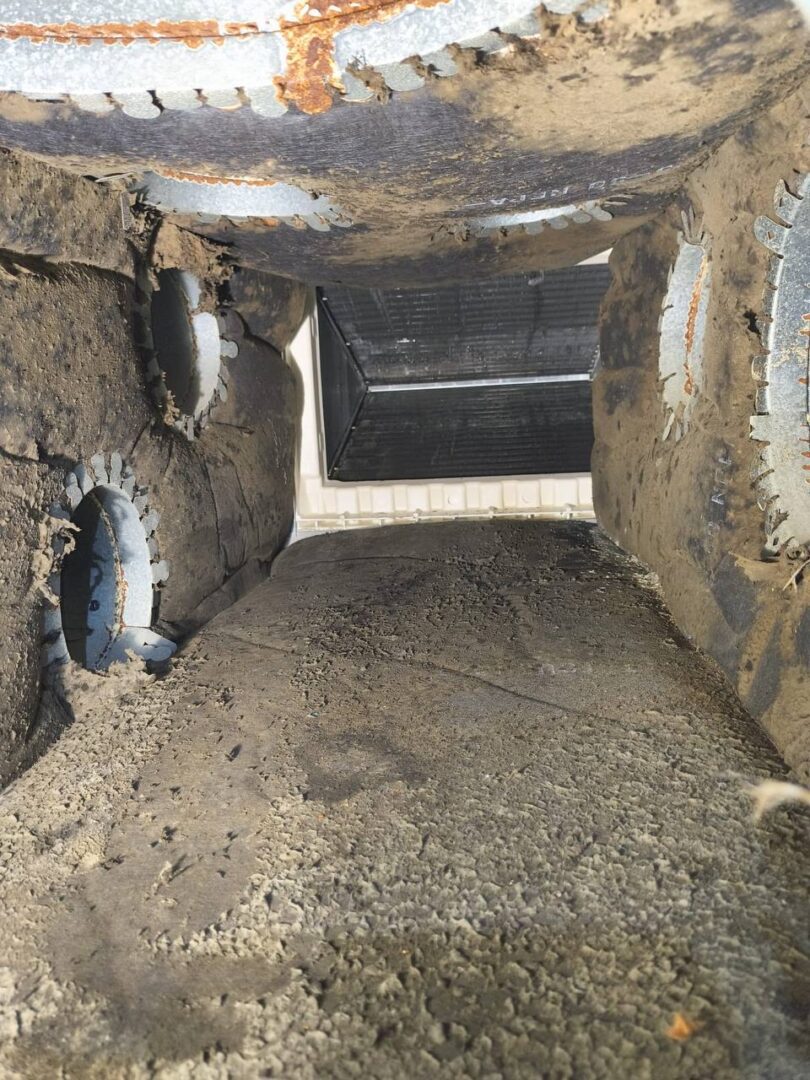
Once outdoor air makes it indoors, the duct system begins acting like a collection surface. Not everything stays airborne. Some of it settles, sticks, and accumulates.
That buildup typically includes:
This matters because the buildup does not disappear when the outdoor AQI improves. It can stay inside the supply and return system, on blower components, and around coil housing surfaces, then recirculate through the home every time the system runs.
That is why some Houston homeowners still feel irritated indoors even after they leave the outdoor environment. The duct system may be carrying yesterday’s outdoor air burden into today’s indoor air.
What Should Houston Homeowners Watch for During Bad Air Days?
When Houston’s outdoor air quality worsens, the signs inside a home can become easier to notice. Pay attention to:
Official alerts from Houston Health and TCEQ are helpful for knowing when outdoor conditions are elevated, but they do not tell you what has already built up inside your duct system.
Can Duct Cleaning Help Reduce the Indoor Carryover Problem?
Yes. Duct cleaning does not fix Houston’s outdoor air quality, but it can remove what your system has already collected from it.
AH-CHOO! Indoor Air Quality is NADCA certified and has served Houston for 38 years. A proper full-system residential cleaning takes about 7 hours and addresses the components where outside pollutants and seasonal debris actually gather:
We complete one job per day so the system is cleaned thoroughly instead of rushed. For homeowners who are unsure whether their indoor symptoms are tied to duct buildup, a free inspection gives a documented starting point.
What Can You Do Right Now to Reduce Outdoor Air Carryover?
Houston homeowners can reduce the problem before it becomes worse by doing the basics consistently:
These steps do not replace professional cleaning when the system is already loaded, but they do reduce the speed at which Houston’s outdoor environment becomes an indoor problem.
Frequently Asked Questions
Does outdoor air pollution really get inside Houston homes?
Yes. Outdoor air pollution enters Houston homes through infiltration, pressure imbalances, door openings, duct leakage, and normal HVAC operation. In a city with heavy ozone and particulate exposure, that outdoor burden does not stay outside.What pollutants matter most in Houston air quality?
Ozone and PM2.5 are two of the most important pollutants in Houston’s air-quality profile. These are the same categories that repeatedly drive Houston’s poor national air-quality rankings.Can dirty ducts make bad outdoor air feel worse indoors?
Yes. If the system already contains dust, pollen, particulates, and residue from prior weeks or months, the HVAC can continue recirculating that material even after outdoor conditions improve.How do I know if my HVAC system is pulling in outside air?
Fast filter loading, dust around vents, musty odor, stale rooms, and symptoms that worsen when the system runs can all point to an indoor-air problem tied to the HVAC system. A professional inspection can determine whether duct leakage or buildup is contributing.Is duct cleaning worth it for Houston homes with air-quality concerns?
In many cases, yes. Houston’s long cooling season, high humidity, and poor outdoor air make buildup inside the duct system more likely and more persistent than in milder climates.Start With a Cleaner Houston System
Houston’s outdoor air pollution does not stop at your front door. In many homes, it becomes part of the air your HVAC system keeps recirculating.
AH-CHOO! Indoor Air Quality is NADCA certified, has served Houston for 38 years, and offers free inspections with no obligation. We complete one 7-hour full-system clean per day so your home gets the full attention a loaded duct system requires.
To see how this connects with Houston’s broader air-quality burden, read Houston’s air quality ranking and what it means for your ducts. If you want the climate-specific case for service, see why duct cleaning is worth it in Houston’s humid climate. If your symptoms suggest moisture issues too, review the signs of mold in Houston air ducts.
Schedule your free inspection →
Related AH-CHOO resources: Houston air duct cleaning; schedule a free inspection.