When TCEQ declares an Ozone Action Day for Houston, the standard advice is clear: stay indoors, avoid strenuous outdoor activity, and limit time in areas with heavy traffic. The assumption behind this advice is that going inside improves your air quality. That assumption is correct — unless your HVAC system is recirculating its own contamination problem every time it runs.
What Is a Houston Ozone Action Day?
The Texas Commission on Environmental Quality (TCEQ) issues Ozone Action Day forecasts daily throughout the ozone season — which runs approximately March through November in Houston. When TCEQ meteorologists project that atmospheric conditions will produce elevated ground-level ozone concentrations, they issue an OAD alert typically a day in advance, giving residents, businesses, and industries time to reduce the emissions that contribute to ozone formation.
Ground-level ozone is a secondary pollutant — it forms when volatile organic compounds (VOCs) and nitrogen oxides react in sunlight. Houston’s combination of petrochemical industrial activity, heavy vehicle traffic, and hot sunny spring and summer days makes it one of the most ozone-challenged metro areas in the United States. The spring period — starting in March when ozone season opens — is when the first OAD events begin, often on warm, low-wind days when ozone has no mechanism to disperse.
TCEQ’s current forecast shows Houston in the Moderate air quality range, with conditions conducive to ozone formation on light-wind, warm, sunny days. Houston ozone season is active now.
The Problem: Staying Inside Doesn’t Guarantee Clean Indoor Air
The “stay inside on OAD days” guidance assumes that indoor air is cleaner than outdoor air — which is true for ground-level ozone itself in a sealed home. Ozone doesn’t penetrate building envelopes as effectively as fine particles; indoor ozone concentrations are typically lower than outdoor levels when windows are closed and HVAC is running normally.
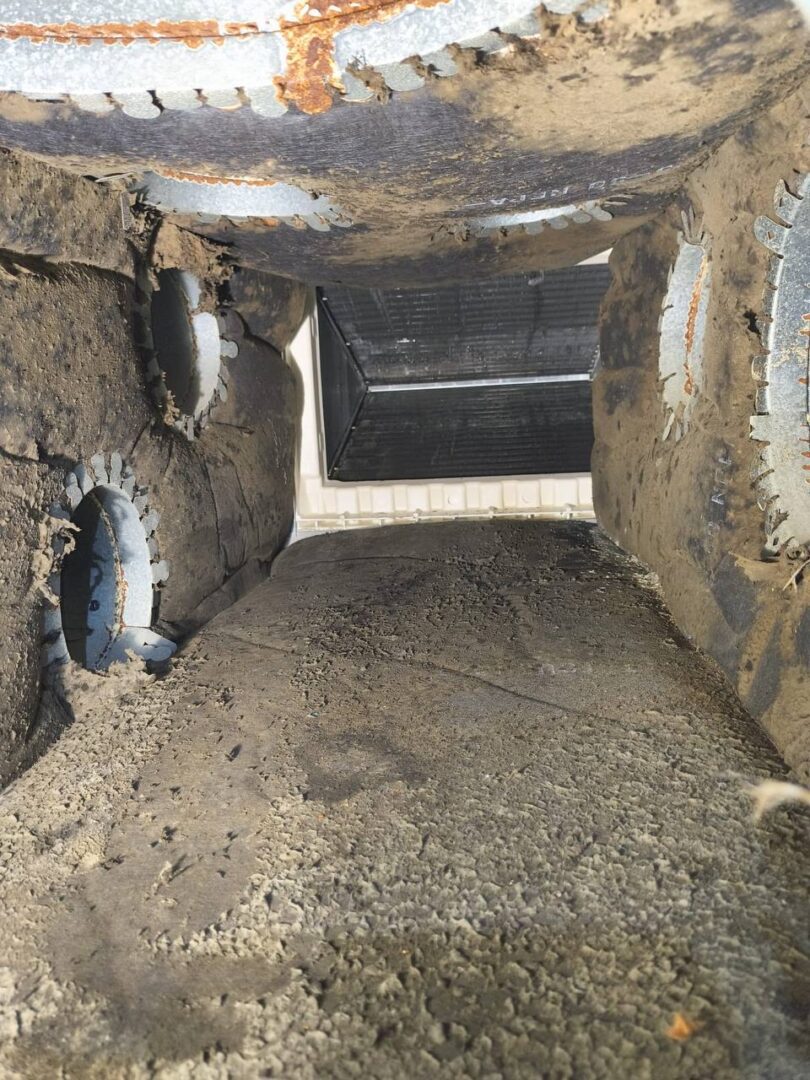
The complication: while ozone concentrations are lower indoors, the HVAC system running on an OAD day is also running through whatever accumulated contamination has built up in the ductwork across the current allergy season. In March, that means a Houston system may be recirculating:
- Cedar pollen residue from the December–February season, deposited on blower wheel fins and duct walls
- Early spring oak pollen now layering on top of cedar residue
- Biological growth seeded on contaminated duct surfaces during recent spring humidity events
- Fine particulate matter that infiltrated during prior high-pollution days
The practical result: on an ozone action day, Houston residents who follow official guidance and stay indoors are spending more time in their homes with their HVAC running continuously — which means they’re getting a higher dose of whatever the duct system is recirculating. If the system is contaminated, the advice to “stay inside” amplifies indoor exposure rather than eliminating outdoor exposure.
How Ozone Reacts With Duct System Contaminants
Even at the reduced ozone concentrations that infiltrate a closed home, ozone reacts with the organic material that accumulates inside HVAC systems. This reaction generates secondary pollutants — including formaldehyde and ultrafine particles — that may not be present in the outdoor air at all.
The blower wheel is the primary concern. Pollen, mold spores, and biological debris accumulated on blower wheel fins provide a reactive surface for incoming ozone. Each time the blower runs, it both re-suspends settled particles and creates conditions where trace ozone in the return airstream contacts organic residue and produces secondary combustion byproducts.
This mechanism is why Houston homes with contaminated ductwork may actually have worse indoor air chemistry on high-ozone days than their outdoor readings would suggest. The outdoor ozone reading doesn’t capture what the indoor duct system is manufacturing from its accumulated organic load.
Related: Houston spring pollen and ozone: the indoor connection | How Houston outdoor air pollution gets inside your home
What to Do Before the Next Houston Ozone Action Day
The most impactful HVAC action for Houston households during ozone season is removing the accumulated contamination that makes the indoor ozone problem worse than it needs to be. A NADCA-standard duct cleaning eliminates the reactive organic surface inside the mechanical components — the blower wheel, duct walls, evaporator coil area, and air handler interior — that amplify indoor air chemistry problems on high-ozone days.
AH-CHOO! Indoor Air Quality has been NADCA certified for 38 years and serves the Houston area. Every residential cleaning is a complete full-day service — approximately seven hours — covering the entire interior system. One job per day, per crew. That’s what a genuine source-removal cleaning of the mechanical components actually requires.
Secondary steps that help during active ozone season:
- Check TCEQ’s air quality forecast at tceq.texas.gov — sign up for daily email or text OAD alerts for Houston
- Keep HVAC filters current — a loaded filter restricts airflow and reduces the system’s ability to capture incoming fine particles on high-ozone days
- Keep windows closed during afternoon hours (peak ozone formation period) on forecast OAD days
- Consider a free inspection to assess whether your duct system’s current accumulation level warrants cleaning before peak ozone season
Also see: Houston spring rain and mold risk in HVAC systems | What blower wheel cleaning covers
Frequently Asked Questions
What is a Houston Ozone Action Day?
A Houston Ozone Action Day is declared by TCEQ when meteorological conditions — warm temperatures, light winds, and sufficient sunlight — are forecast to produce elevated ground-level ozone concentrations in the Houston metro area. TCEQ issues OAD forecasts daily during ozone season (approximately March through November) and notifies residents via email and text alert so they can reduce outdoor activity and emissions that contribute to ozone formation.
Does staying inside during a Houston ozone action day protect indoor air quality?
Staying inside reduces exposure to outdoor ground-level ozone, which doesn’t penetrate closed buildings as readily as fine particles. However, if your HVAC ductwork is contaminated with accumulated pollen, biological debris, or mold, the system running continuously on an OAD day recirculates those indoor contaminants. Clean ductwork is what makes the “stay inside” guidance actually effective.
Does ozone get inside Houston homes through HVAC systems?
Ozone infiltrates homes at reduced concentrations through gaps, return air grilles, and building envelope penetrations. Trace ozone that reaches duct interiors can react with accumulated organic material on blower wheel fins and duct surfaces, generating secondary pollutants including formaldehyde and ultrafine particles. This is why contaminated ductwork can worsen indoor air chemistry on high-ozone days beyond what outdoor readings indicate.
When is Houston ozone season?
TCEQ’s official ozone forecast season for Houston runs approximately March through November — encompassing spring pollen season, summer heat, and fall ragweed season. March marks the beginning of both ozone season and peak spring allergy season, making it the highest-impact window to address HVAC duct contamination accumulated from the preceding cedar pollen months.
How can I get TCEQ ozone action day alerts for Houston?
TCEQ provides free daily air quality forecast emails and text alerts for Houston at tceq.texas.gov/airquality/monops/ozone_email.html. Alerts are issued typically one day in advance so residents can plan outdoor activity and HVAC use accordingly.
AH-CHOO! Indoor Air Quality is NADCA certified and has served Houston for 38 years. Contact us for a free inspection.
Related AH-CHOO resources: Houston air duct cleaning; schedule a free inspection.