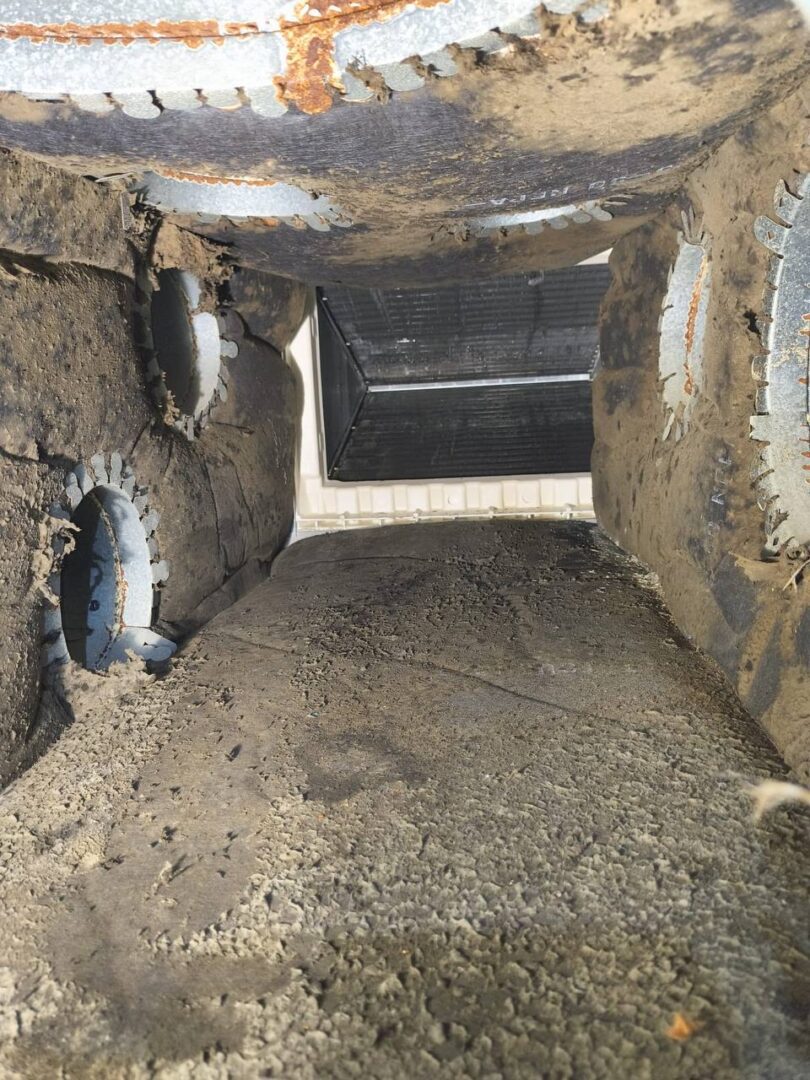
Houston’s outdoor air ranks 7th worst in the nation for ozone pollution, with Harris County earning an F grade and averaging 34.8 unhealthy air days per year according to the American Lung Association’s 2025 State of the Air report. In spring, that outdoor air quality worsens further — and every cycle your HVAC runs pulls that outdoor air through your home and deposits its contents inside your ductwork.
What “7th Worst in the Nation” Actually Means for Your Home
The American Lung Association grades metro areas on two air pollution measures. Houston’s 2025 grades:
- Ozone pollution: 7th worst out of 228 metro areas nationally. Harris County averaged 34.8 unhealthy ozone days per year — an F grade. This is worse than Houston’s prior year ranking of 10th worst.
- Year-round particle pollution: 8th worst in the nation. Fine particulate matter (PM2.5) — particles small enough to penetrate deep into lung tissue — is a persistent daily problem, not a seasonal one.
IQAir’s analysis adds a striking detail: Houston has never met daily attainment levels for ozone. This is not a city that occasionally has bad air days. It is a city where exceeding safe ozone thresholds is the documented baseline.
The Houston Chronicle, citing the same ALA data, describes the causes directly: abundant sunshine, high temperatures, a large oil and gas industry, and a car-dependent population. None of those conditions improve in spring. Most of them get worse.
Why Spring Makes Houston’s Indoor Air Quality Worse
Ozone forms when nitrogen oxides (from vehicles and industry) react with sunlight and heat. Spring in Houston brings more of both. The TCEQ issues Ozone Action Days — warnings that outdoor ozone is forecast to reach unhealthy levels — most frequently from March through October, with the heaviest concentration in spring and summer.
Spring compounds Houston’s outdoor air problem in a second way: pollen. The Houston Health Department measures daily pollen counts for Harris County. Spring introduces overlapping tree pollen waves — oak, elm, ash, and pecan — on top of particle pollution that is already elevated year-round. Homes running air conditioning in March and April are cycling outdoor air that contains both elevated ozone precursors and peak-season pollen.
The EPA’s own research notes that indoor air can be two to five times more polluted than outdoor air — not because indoor air is inherently worse, but because HVAC systems concentrate and recirculate whatever enters the home. In a city with Houston’s outdoor air profile, that multiplier has real consequences for what accumulates inside your ducts over time.
What Houston’s Outdoor Air Deposits Inside Your Ductwork
Every time your HVAC system draws in air — through the return intake, around door frames, through any unsealed penetration — it captures a sample of Houston’s outdoor environment. Over weeks, months, and years of operation, that sample accumulates on every interior surface of your duct system:
- Fine particulate matter (PM2.5): The same fine particles Houston ranks 8th worst in the nation for year-round. These particles are small enough to bypass standard filters and deposit on duct walls, coil surfaces, and blower components. Once in the ductwork, they recirculate continuously.
- Ozone and ozone byproducts: Ozone itself degrades quickly indoors, but it reacts with indoor surfaces and volatile organic compounds to form secondary pollutants. These secondary products accumulate in the duct environment over time.
- Spring pollen: Oak and elm pollen particles entering during March and April deposit throughout the duct system. As documented in the research behind AH-CHOO!’s recent post on Austin’s oak pollen season, fine pollen particles adhere to duct surfaces and do not leave when the outdoor season ends — they recirculate through summer.
- Humidity-driven mold: Houston’s outdoor air carries moisture. That moisture enters the duct system, where it interacts with accumulated particulate matter and organic debris to support mold growth. The EPA specifically identifies high relative humidity as a condition that warrants duct cleaning — Houston’s climate meets that threshold on a sustained basis.
Is There Anything You Can Do About Houston’s Outdoor Air Quality?
Houston’s outdoor air quality ranking reflects decades of industrial, transportation, and climate factors. Individual homeowners cannot change the city’s ozone ranking. What you can control is what happens to that outdoor air after it enters your home.
The practical steps Houston homeowners take to manage the indoor air quality impact of the city’s outdoor conditions:
- Periodic professional duct cleaning — removes the accumulated deposit of particulates, pollen, and mold that outdoor air has built up inside the system over time. For a city with Houston’s air quality profile, NADCA’s 3–5 year recommendation should be treated as a maximum interval, not a target.
- High-efficiency filtration — upgrading from a standard 1-inch filter to a MERV-13 or higher-rated filter captures more of the fine particles Houston’s outdoor air contributes. Filters should be changed more frequently than the national average recommendation given Houston’s higher particulate load.
- Reducing infiltration — sealing duct leaks, ensuring return air intakes are positioned away from outdoor pollution sources, and keeping doors and windows closed during TCEQ Ozone Action Days all reduce the volume of outdoor pollutants entering the duct system.
- Spring timing for cleaning — late March through May is both the peak outdoor pollution window and the highest-pollen period. A professional cleaning in this window removes the accumulated winter load before the heaviest spring deposit adds to it, or removes the full spring deposit before the summer AC season recirculates it for months.
What AH-CHOO!’s Full-System Cleaning Removes
AH-CHOO! Indoor Air Quality is NADCA certified and has performed full-system duct cleaning in Houston for 38 years. A complete residential cleaning — which takes approximately 7 hours — removes accumulated particulates, pollen, and biological growth from every component where Houston’s outdoor air has deposited its contents:
- All supply and return ducts, cleaned under negative pressure to prevent redistribution
- Branch lines running to every room in the home
- The blower wheel and blower compartment, where fine PM2.5 particles and pollen concentrate
- Evaporator coil housing, where moisture and particulates combine to create mold conditions
- All registers and grilles, removed and cleaned individually
We complete one full system per day. In a city with Houston’s outdoor air quality profile, that thoroughness matters — a partial cleaning that misses the blower or coil leaves the highest-concentration deposit points untouched.
If you want to know what your specific system has accumulated, a free inspection will document current conditions before any work begins.
Frequently Asked Questions
Why does Houston have such poor outdoor air quality?
Houston’s air quality challenges stem from several converging factors: a large petrochemical and refining industry along the Ship Channel, a car-dependent metropolitan area with heavy vehicle traffic, abundant sunshine that drives ozone formation, high temperatures that accelerate chemical reactions, and geography that limits wind dispersal. The American Lung Association’s 2025 State of the Air report ranked Houston 7th worst nationally for ozone, noting that conditions worsened from the prior year.
Does outdoor air pollution in Houston affect indoor air quality?
Yes. The EPA’s research indicates that indoor air can be two to five times more polluted than outdoor air because HVAC systems draw in outdoor air and recirculate it continuously. In Houston, where outdoor air ranks among the nation’s worst for ozone and fine particle pollution, the indoor concentration effect means that homes without adequate filtration and periodic duct cleaning are accumulating a significant pollutant load over time.
When is Houston’s air quality worst during the year?
Houston’s ozone problem is year-round — IQAir notes the city has never met daily ozone attainment levels. Ozone peaks in spring and summer when heat and sunshine intensify the chemical reactions that form it. The TCEQ issues Ozone Action Day warnings most frequently from March through October. Spring adds elevated pollen on top of the baseline particle and ozone pollution, making March through May the most compounded outdoor air quality period of the year.
How often should Houston homeowners clean their air ducts given the city’s air quality?
Given Houston’s F-grade ozone ranking, 8th-worst particle pollution rating, year-round HVAC use, and sustained high humidity, NADCA’s baseline recommendation of every 3–5 years should be treated as a maximum, not an average. Homes with allergy sufferers, prior moisture events, or documented mold should not wait the full interval. A free inspection can assess current accumulation and inform the right timing for your specific system.
Is spring the best time to clean air ducts in Houston?
Spring offers two valid cleaning windows. Cleaning in mid-March removes the winter accumulation before spring’s peak pollen and elevated ozone season adds to it. Cleaning in late April or May removes the full spring deposit before the summer AC season — which runs continuously for 5–6 months — begins recirculating that material. Both approaches are defensible; the right choice depends on the current state of your specific system.
Start This Spring With a Cleaner System
Houston’s outdoor air quality ranking is a fact that every homeowner in Harris County lives with. What happens to that outdoor air after it enters your home is something you can control.
AH-CHOO! Indoor Air Quality has served Houston continuously for 38 years, holds NADCA certification, and offers free inspections with no obligation. We complete one full residential system per day — the full 7-hour job that Houston’s outdoor air profile actually warrants.
Learn more about why Houston’s humidity makes duct cleaning worth it and the EPA’s own position on humid-climate systems — or read about the signs of mold in Houston air ducts and what to look for in your own home.
Schedule your free Houston inspection →
AH-CHOO! Indoor Air Quality | NADCA Certified | Serving Houston, The Woodlands, Katy, Sugar Land, Pearland, Pasadena, Cypress, and the Greater Houston Area
Related: Houston spring pollen and ozone indoors.
Related AH-CHOO resources: Houston air duct cleaning; schedule a free inspection.