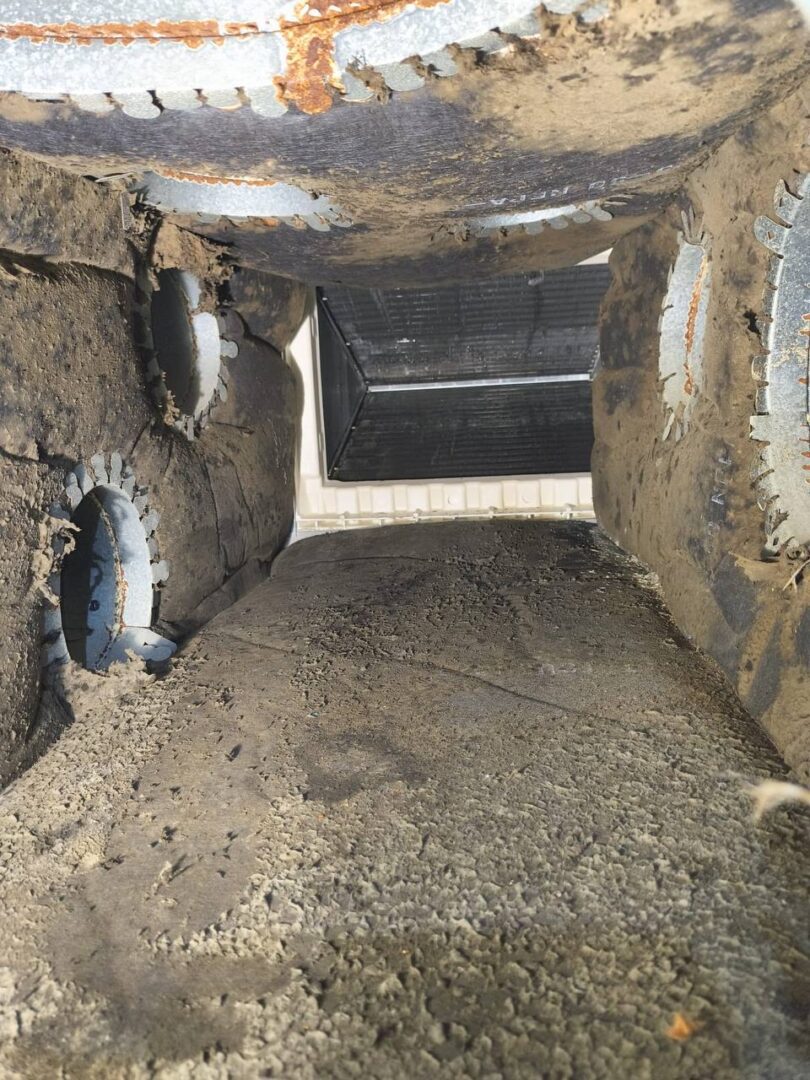
Converse, Texas occupies a distinctive position in the San Antonio metropolitan area — located east of downtown along Interstate 10, immediately adjacent to Randolph Air Force Base, and situated within the influence zone of Calaveras Lake and the east-side industrial corridor. This convergence of military aviation emissions, heavy truck traffic, aging infrastructure, and industrial activity creates an indoor air quality (IAQ) profile that is uniquely challenging among San Antonio suburbs.
Despite having a dedicated service page for Converse air duct cleaning and the recently published San Antonio IAQ regional guide, Converse has had no dedicated indoor air quality post until now. This guide fills that gap with a focused look at what makes Converse TX indoor air quality unique and how NADCA-certified air duct cleaning addresses the specific contaminants found in homes across this east-side community.
What Makes Converse TX Indoor Air Quality Different from Central San Antonio
Converse’ IAQ challenges are rooted in five interconnected factors that differentiate this east-side community from central San Antonio and the Hill Country suburbs:
- Randolph AFB airfield emissions. Converse borders Randolph Air Force Base to its north and east, placing a significant portion of the community directly adjacent to active military airfield operations. Randolph AFB operates T-38 Talon and T-6 Texan II trainer aircraft, as well as support and transport aircraft. Jet fuel combustion releases ultrafine particulates (UFPs), volatile organic compounds (VOCs), and nitrogen oxides into the air. Unlike the general aviation emissions that affect communities farther from the base, Converse neighborhoods adjacent to the airfield perimeter experience direct ground-level emissions from taxiing, engine testing, and low-altitude approach and departure operations. These emissions are most concentrated in the Converse neighborhoods along the base’s southern and western boundaries.
- I-10 and I-410 interchange PM2.5. Converse sits at the junction of Interstate 10 and Interstate 410, one of the busiest highway interchanges in San Antonio. The I-10/I-410 exchange carries massive volumes of through traffic — including heavy truck freight, logistics fleet vehicles, and commuter traffic — creating a concentrated PM2.5 emission zone. Converse lies predominantly downwind of this interchange, meaning prevailing south-southeasterly winds push traffic-generated fine particulates into the community. Unlike Schertz’ linear I-35 corridor exposure, Converse receives PM2.5 from multiple highway sources converging at the interchange, creating a broader particulate distribution across the community.
- Older housing stock with aging ductwork. Converse has a significantly older housing stock than the rapidly growing north-side suburbs. Many Converse homes were built during the 1970s, 1980s, and 1990s — decades when standard HVAC construction used galvanized steel ductwork with fiberglass duct liner. Over 20-40 years, these ducts accumulate substantial interior debris: settled dust, fiberglass particles from deteriorating liner, microbial colonies in moisture-prone sections, and debris from rodent and insect intrusion common in older galvanized duct systems. The age of the housing stock means ductwork has had decades longer to accumulate contaminants than in newer communities.
- Calaveras Lake moisture influence. Calaveras Lake, located approximately 6 miles southeast of Converse, is a CPS Energy cooling reservoir with a surface area of over 3,500 acres. The lake’s large surface area adds measurable humidity to the local microclimate through evaporation, particularly during summer months when warm water temperatures increase evaporation rates. Converse sits within the lake’s moisture influence zone, experiencing 3-5% higher humidity levels than communities farther from the lake. This elevated humidity, combined with the older housing stock’s less effective moisture barriers, promotes microbial growth in galvanized steel ductwork where condensation forms at air temperature differential points.
- East Side industrial corridor. Converse’ eastern and southern boundaries border light industrial and logistics zones that serve the San Antonio metropolitan area. These facilities — including warehousing, distribution centers, concrete batch plants, and logistics terminals — generate PM10 and PM2.5 from diesel truck operations, material handling, and industrial processes. The industrial corridor extends along the I-10 corridor east of Converse, and prevailing winds carry industrial particulates into the community during certain meteorological conditions.
Common Converse TX Indoor Air Pollutants
Converse homeowners contend with a specific mix of indoor air pollutants shaped by the Randolph AFB proximity and older housing stock environment:
- Aviation ultrafine particulates (UFPs). Jet fuel combustion particles from Randolph AFB aircraft operations. UFPs are 0.1 microns or smaller — small enough to bypass standard 1-inch fiberglass filters and settle in ductwork. Highest concentrations in Converse neighborhoods adjacent to the base perimeter, particularly those under low-altitude approach and departure paths.
- Traffic PM2.5 from I-10/I-410. Fine particulate matter from the interchange, including diesel exhaust PM2.5 from heavy truck freight and gasoline engine PM2.5 from commuter traffic. Converse is predominantly downwind of the interchange, meaning traffic particulates are pushed into the community by prevailing winds. Diesel PM has distinct PAH compounds that are more chemically reactive than general urban PM.
- Deteriorated galvanized steel duct debris. In homes built during the 1970s-1990s, galvanized steel ductwork with fiberglass duct liner breaks down over time. Fiberglass particles, rust flakes, and accumulated debris from decades of use become airborne when the HVAC system operates, circulating particulate matter throughout the home.
- Mold spores. Aspergillus and Penicillium species thrive in older ductwork where condensation forms at air temperature differential points. The elevated humidity from Calaveras Lake influence and the moisture-retention characteristics of aging galvanized steel ductwork create favorable conditions for microbial colonization. Homes with original ductwork from the 1970s-1990s are most affected.
- Industrial PM10. Coarse particulates from the east-side industrial corridor, including concrete dust from batch plants, diesel particulate from logistics truck traffic, and fugitive dust from material handling operations. These particles are larger than traffic PM2.5 and settle in ductwork where they accumulate over time.
- Pollen (live oak, grass, ragweed). Converse’ east-side location and open terrain create extended pollen exposure zones. Live oak pollen (March-April), summer grass pollen, and fall ragweed are the primary seasonal allergens. The open terrain east of I-410 allows wind-driven pollen to travel farther than in wooded neighborhoods.
How Randolph AFB and I-10/I-410 Shape Converse Indoor Air Quality
The two defining IAQ factors in Converse — Randolph AFB aviation emissions and I-10/I-410 traffic pollution — create distinct contaminant profiles that require different mitigation strategies:
- Proximity to Randolph AFB matters. Homes adjacent to the base perimeter experience the highest aviation UFP loads. T-38 Talon and T-6 Texan II trainer aircraft operate year-round, with peak flight training in spring and fall. During engine testing and taxiing operations, ground-level emissions can approach nearby neighborhoods. Ultrafine particulates from jet fuel combustion are chemically distinct from traffic PM2.5 — they contain higher concentrations of VOCs and are small enough to penetrate deeper into HVAC systems. Homes within 0.5 miles of the base perimeter should consider more frequent HVAC filter changes (monthly during peak training periods) and regular duct inspection.
- The I-10/I-410 interchange effect. Unlike communities on a single highway corridor, Converse receives PM2.5 from multiple converging highway sources. The interchange carries over 200,000 vehicles daily, with heavy truck traffic constituting a significant percentage. Converse’ position downwind of the interchange means particulates are carried directly into the community during prevailing southeasterly wind conditions. During peak traffic hours and days with temperature inversions, near-roadway PM2.5 levels in Converse can be 2-3 times higher than areas farther from the interchange.
- Combined exposure zone. The area of Converse where Randolph AFB proximity and I-10/I-410 downwind influence overlap — roughly the western and northern quadrants of the city — represents a combined exposure zone where homes receive both aviation UFP and traffic PM2.5 loads. NADCA recommends a 1-2 year duct inspection interval for homes in this overlap zone.
Aging Ductwork in Converse’ Older Homes
Converse’ housing stock is significantly older than the rapidly developing north-side suburbs, and this age difference has direct implications for indoor air quality:
- Galvanized steel duct accumulation. Homes built in the 1970s-1990s typically used galvanized steel ductwork with internal fiberglass duct liner. Over 20-40 years, these ducts accumulate interior debris layers that reduce HVAC efficiency and degrade indoor air quality. The smooth metal surface of galvanized steel actually promotes debris accumulation because the temperature differential between cold duct surfaces (during air conditioning) and warmer attic air creates condensation that traps dust and particulates.
- Fiberglass duct liner deterioration. Internal fiberglass duct liner, common in 1970s-1990s construction, degrades over time. The fiberglass fibers break loose from the binder, enter the air stream, and circulate through the home. Fiberglass is a respiratory irritant, and its presence in ductwork indicates the liner has reached the end of its useful service life.
- Rodent and insect intrusion. Older homes with galvanized steel ductwork and less effective sealing are more susceptible to rodent and insect intrusion. Rodent droppings, nesting material, and dander accumulate in ductwork over decades, creating a biological contaminant load that degrades indoor air quality. The Raniolph AFB greenbelt areas and Calaveras Lake wildlife corridors increase the potential for rodent activity in east Converse neighborhoods.
- Slab foundation moisture wicking. Many Converse homes built before 2000 are on slab foundations without modern moisture barriers. Ground moisture wicks through the concrete slab into the home’s interior, increasing indoor humidity and promoting microbial growth in ductwork where HVAC air temperature differentials create condensation points.
Seasonal IAQ Concerns in Converse TX
Converse’ indoor air quality varies significantly by season, with each period bringing different contaminant profiles shaped by Randolph AFB operations and the east-side environment:
- Winter (December-February): Colder temperatures mean homes are sealed tightly, trapping indoor pollutants. Randolph AFB flight training continues through winter. Wood-burning fireplace use in older Converse homes adds wood smoke PM2.5. Galvanized steel ductwork that accumulated summer moisture and mold spores continues recirculating through sealed HVAC systems. This is typically the worst period for indoor air recirculation of trapped contaminants in older homes.
- Spring (March-May): Live oak pollen peak combines with the ramp-up of Randolph AFB spring training schedules. Calaveras Lake evaporation increases as water temperatures rise, adding humidity load. Industrial activity in the east-side corridor increases with construction season. HVAC systems recirculate trapped winter debris plus new spring pollen whenever the system runs.
- Summer (June-August): Peak humidity from Calaveras Lake evaporation coincides with peak ozone transport from the San Antonio urban plume. I-10/I-410 traffic volumes peak during summer travel season. Concrete batch plants in the industrial corridor operate at full capacity, generating PM10. Higher HVAC runtime means more air is pushed through aging galvanized steel ductwork, dislodging accumulated decades-old debris and circulating it through living spaces.
- Fall (September-November): Ragweed season peaks. Randolph AFB training continues into November. Industrial activity increases for pre-holiday logistics demand. Fall is the ideal time for duct inspection and cleaning before winter sealing, when HVAC systems recirculate trapped debris from spring through fall accumulation.
When Converse Homeowners Should Consider Duct Cleaning for Better IAQ
These Converse-specific scenarios suggest it may be time for a professional duct inspection and cleaning:
- Visible dark dust on registers near Randolph AFB. If you notice a dark, fine dust on HVAC supply registers in a home within 0.5 miles of the base perimeter, this is likely aviation UFP mixed with household dust. Jet fuel combustion particulates have a distinct fine texture and dark color compared to standard household dust. NADCA-certified cleaning removes accumulated aviation particulates from duct surfaces.
- Unexplained respiratory symptoms during peak flight training periods. If family members with no known allergies experience scratchy throats, eye irritation, or coughing during peak flight training periods (spring and fall), aviation UFP infiltration may be the cause. Homes near the base perimeter are most affected, but aviation particulates can travel up to 2 miles from the airfield depending on wind conditions.
- Musty odors from older ductwork. If your Converse home was built before 2000 and you notice persistent musty smells when the HVAC runs, aging galvanized steel ductwork with fiberglass liner is likely harboring microbial colonies. The combination of slab-foundation moisture wicking and duct condensation in older HVAC systems creates ideal conditions for mold growth.
- Visible debris from registers. If you see fiberglass particles, rust flakes, or dark debris on or around HVAC supply registers, your ductwork’s internal fiberglass liner is deteriorating and releasing particles into the air stream. This indicates the duct liner has reached the end of its service life and professional cleaning and possible duct remediation are needed.
- Heavy HVAC use with filters darkening quickly near I-10/I-410. If your HVAC filter darkens significantly within 2-3 weeks of replacement and you live within one mile of the I-10/I-410 interchange, your duct system may be recirculating accumulated fine particulates from traffic emissions that are too small for standard filters to capture on a single pass.
- NADCA 3-5 year cleaning cycle. NADCA recommends duct inspection every 2-3 years with cleaning based on findings. Converse homes near Randolph AFB, within one mile of the I-10/I-410 interchange, with original ductwork from the 1970s-1990s, or near Calaveras Lake should consider a 1-2 year inspection interval.
Frequently Asked Questions About Indoor Air Quality in Converse TX
How does living near Randolph AFB affect indoor air quality in Converse?
Converse borders Randolph Air Force Base to its north and east. Military aircraft — T-38 Talon and T-6 Texan II trainers — generate ultrafine particulates (UFPs) from jet fuel combustion during flight operations, engine testing, and taxiing. These sub-0.1 micron particles bypass standard HVAC filters and accumulate in ductwork. Homes within 0.5 miles of the base perimeter experience the highest aviation UFP exposure, with peak concentrations during spring and fall training periods.
Does the I-10/I-410 interchange affect indoor air quality in Converse?
Yes. Converse sits predominantly downwind of the I-10/I-410 interchange, one of the busiest in San Antonio with over 200,000 vehicles daily. Prevailing south-southeasterly winds push traffic-generated PM2.5 — including diesel exhaust from heavy trucks — directly into Converse neighborhoods. During peak traffic hours and temperature inversion days, near-roadway PM2.5 levels can be 2-3 times higher than areas farther from the interchange.
Does the age of my Converse home affect indoor air quality?
Yes. Converse has a significantly older housing stock than rapidly growing north-side suburbs. Homes built during the 1970s-1990s typically have original galvanized steel ductwork with fiberglass duct liner that deteriorates over time. After 20-40 years, this ductwork accumulates substantial interior debris: fiberglass particles from deteriorating liner, microbial colonies, rodent intrusion debris, and decades of settled dust. Professional duct inspection can assess the condition of older duct systems.
Does Calaveras Lake affect humidity in Converse homes?
Calaveras Lake, approximately 6 miles southeast of Converse, is a 3,500-acre CPS Energy cooling reservoir. Its large surface area adds measurable humidity to the local microclimate through evaporation, particularly during summer months. Converse sits within the lake’s moisture influence zone, experiencing 3-5% higher humidity than communities farther from the lake. This elevated humidity contributes to microbial growth in galvanized steel ductwork where air temperature differentials create condensation.
How often should Converse homeowners clean their air ducts?
NADCA recommends duct inspection every 2-3 years with cleaning based on findings. Converse homes near Randolph AFB, within one mile of the I-10/I-410 interchange, with original galvanized steel ductwork from the 1970s-1990s, or near Calaveras Lake should consider a 1-2 year inspection interval. Standard homes away from these exposure zones may follow the 3-5 year cycle.
Does AH-CHOO serve the Converse TX area?
Yes. AH-CHOO provides NADCA-certified air duct cleaning and HVAC sanitation services throughout the Converse TX area, including all neighborhoods adjacent to Randolph AFB, near the I-10/I-410 interchange, in the older housing stock areas east of I-410, and throughout the Calaveras Lake vicinity within our service radius. Contact us to schedule a free in-home IAQ assessment.
Disclaimer: This information is for educational purposes only. AH-CHOO’s air duct cleaning services are designed to improve HVAC system cleanliness and indoor air quality but do not prevent illness, cure allergies, or guarantee specific health outcomes. Individual results vary. Always consult a qualified healthcare provider for health concerns related to indoor air quality.