The American Lung Association’s annual “State of the Air” report has once again given Harris County an F grade for ozone pollution. For Houston homeowners, this isn’t just a headline — it’s a signal that protecting your indoor air quality deserves serious attention.
While you can’t control outdoor air quality in Houston, you have significant control over the air inside your home. And when your county receives an F grade from the ALA, understanding what that means — and what you can do about it — becomes essential for your family’s comfort and well-being.
Harris County Gets an F: What the American Lung Association Report Actually Says
The American Lung Association’s State of the Air report grades counties across the United States on two primary metrics: ozone smog (measured as “high ozone days”) and year-round particle pollution. Harris County consistently receives an F grade — meaning residents experience an unhealthy number of days with elevated ozone or particle pollution levels.
For Houston specifically, the F grade reflects the region’s unique pollution profile:
- Ozone pollution: Houston’s heat and sunlight combined with vehicle emissions and industrial activity create conditions for ground-level ozone formation — a powerful lung irritant that’s especially dangerous on hot summer afternoons.
- Particle pollution: Fine particulate matter (PM2.5) from vehicle exhaust, industrial facilities, and even natural sources like pollen contributes to the year-round particle burden in Harris County.
- Short-term spikes: High-pollution days push Houston into the “unhealthy” category multiple times per year, particularly during summer heat waves and winter inversion events.
The ALA report uses actual monitoring data from air quality sensors across the county. When the grade is an F, it means Harris County residents face statistically significant health risks from outdoor air pollution on a recurring basis.
Why Indoor Air Quality Matters More When Outdoor Air Scores an F
Standard advice during high-pollution days is to stay indoors. But here’s the catch: according to the EPA, indoor air can be 2 to 5 times more polluted than outdoor air — and sometimes up to 100 times more polluted in specific circumstances.
Why does this matter for Houston homes? There are three key factors at play:
- HVAC recirculation: Most Houston homes run air conditioning 8-9 months per year. If your ductwork has leaks, gaps, or accumulated debris, that recirculated air can contain more pollutants than the outdoor air you’re trying to avoid.
- Sealed-home construction: Modern Houston homes are built tight for energy efficiency. While this keeps cool air in, it also traps indoor pollutants — dust, pet dander, VOCs from furniture and cleaning products, and biological contaminants.
- Pollutant infiltration: Outdoor ozone and fine particles infiltrate homes through open windows, door gaps, attic bypasses, and duct leaks. An F-grade outdoor environment means more pollutants entering your living space.
This creates a paradox: the advice to “stay indoors to avoid bad air” only works if your indoor air is actually cleaner than outdoor air. Without proper HVAC maintenance and air duct hygiene, that assumption may not hold in Houston.
What Houston Homeowners Can Do About Indoor Air Quality Today
You don’t need expensive equipment or major renovations to start improving your indoor air quality. Here are actionable steps you can take right now:
- Upgrade your HVAC filter to MERV 13: Standard fiberglass filters (MERV 1-4) catch only large particles. A MERV 13 filter captures the fine particulate matter that contributes to the ALA’s F-grade concerns — including PM2.5, pollen, and mold spores. Check your system’s specifications first, as some older units may need a lower-MERV filter to avoid airflow restriction.
- Change filters on schedule: In Houston’s humid climate, filters should be changed every 60-90 days minimum — and every 30 days during peak allergy season or if you have pets. A dirty filter forces your HVAC system to work harder and recirculates trapped pollutants.
- Seal duct leaks: Leaky ductwork in unconditioned attics or crawl spaces can draw polluted outdoor air or attic contaminants directly into your living spaces. A professional duct inspection can identify and seal these entry points.
- Use portable air purifiers in high-use rooms: Bedrooms and living areas benefit from HEPA-equipped purifiers during high-pollution days. Look for units with a Clean Air Delivery Rate (CADR) appropriate for the room size.
- Reduce indoor pollution sources: Avoid burning candles or incense during high-ozone days, use exhaust fans when cooking, and consider low-VOC cleaning products to reduce the chemical burden on your indoor air.
The Connection Between Dirty Air Ducts and Indoor Air Quality
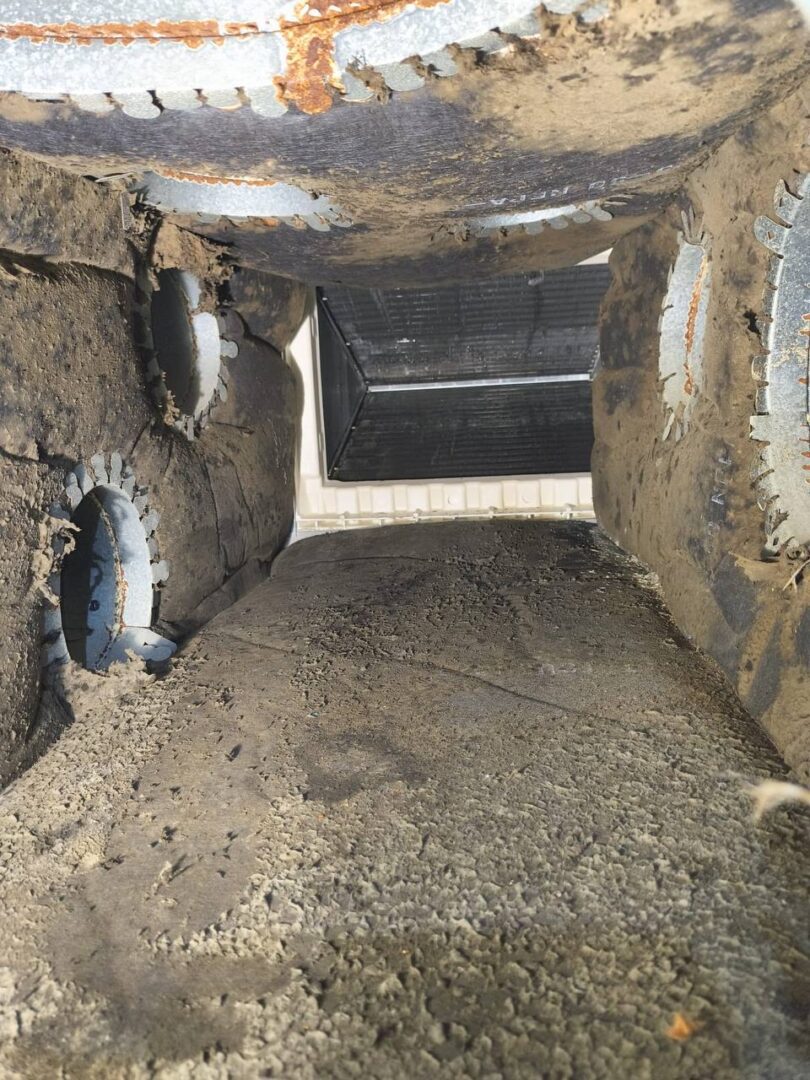
Your air duct system is the respiratory system of your home. If it’s contaminated with dust, debris, mold, or pest residue, every cycle of your HVAC system distributes those contaminants throughout your living spaces.
In a county with an F-grade outdoor air quality rating, clean ductwork becomes even more critical. Here’s why:
- Debris accumulation reduces filtration effectiveness: When dust builds up inside ducts, your HVAC filter has to work harder to capture particles — and it will miss more of them.
- Moisture in ducts creates a breeding ground: Houston’s humidity means condensation inside ductwork is common. ALA-grade areas already experience higher outdoor humidity, which increases indoor moisture risk.
- Duct leaks bypass filtration entirely: If your ducts have leaks (common in Houston attics), unfiltered air from the attic or crawl space enters the airstream after your filter — meaning your HVAC filter never touched that air.
This is why NADCA (National Air Duct Cleaners Association) recommends annual duct inspections and cleaning when warranted. A professional NADCA-certified cleaning removes accumulated debris, improves airflow, and reduces the recirculation of pollutants that outdoor air quality data links to health concerns.
When to Consider Professional Air Duct Cleaning in Houston
If you live in Harris County and any of the following apply, it’s worth scheduling a professional duct inspection:
- You notice visible dust escaping from supply registers shortly after cleaning
- Musty or stale odors persist in your home, especially when the HVAC system runs
- Allergy symptoms worsen when you’re at home versus away
- Your HVAC system struggles to maintain consistent temperatures
- It’s been more than 12 months since your last duct inspection
- You live near major industrial facilities, refineries, or high-traffic corridors in Harris County
- Your home was built or renovated in the last 5 years (construction debris in ducts is common)
An NADCA-certified inspection documents the condition of your ductwork with photographic evidence and provides a clear recommendation — without pressure for unnecessary services.
How AH-CHOO Helps Houston Homes Fight the F-Grade
AH-CHOO Indoor Air is Houston’s locally owned, NADCA-certified air duct cleaning company. We serve Harris County homeowners who want to take control of their indoor air quality — especially when the ALA’s data shows that outdoor air needs serious improvement.
Our process starts with a thorough inspection of your entire duct system. We document findings, explain what they mean for your indoor air quality, and provide a transparent recommendation. If cleaning is warranted, our NADCA-certified technicians use professional-grade equipment to remove accumulated debris, mold, and contaminants — restoring your ductwork to optimal condition.
Start with a free inspection. We’ll assess your ductwork, check for leaks and debris, and give you a clear picture of your indoor air quality. No pressure, no upsell — just honest answers about what your home needs.
Frequently Asked Questions
Q: Why does Harris County get an F for air quality?
A: The American Lung Association’s State of the Air report grades Harris County F for high ozone days and particle pollution. Houston’s combination of vehicle emissions, industrial activity, heat, and humidity creates conditions where ground-level ozone forms easily, and fine particulate matter reaches unhealthy levels on multiple days each year.
Q: Can air duct cleaning help with Houston’s outdoor air pollution?
A: Indirectly, yes. While air duct cleaning doesn’t change outdoor air quality, clean ductwork ensures your HVAC system isn’t adding indoor pollutants to the air you breathe. When outdoor air scores an F, having clean, sealed ducts means your home’s recirculation system isn’t making things worse.
Q: What’s the first thing I should do if I live in an F-grade area?
A: Start with your HVAC filter — upgrade to MERV 13 if your system supports it, and change it on a 60-90 day schedule. Then schedule a professional duct inspection to identify leaks, debris, or contamination that could be compromising your indoor air quality.
Q: How often should I change my HVAC filter in Houston?
A: Every 60-90 days is standard, but every 30 days during peak summer (June-August) and spring allergy season (March-May) provides better protection. In Harris County’s F-grade air quality environment, more frequent filter changes help capture pollutants before they recirculate.
Q: Is the ALA State of the Air report released annually?
A: Yes, the American Lung Association releases updated State of the Air reports each spring. The data uses the most recent three-year period of air quality monitoring from official EPA monitoring stations, including stations in Harris County.
Q: Does AH-CHOO offer free inspections in Harris County?
A: Yes — we provide free, no-obligation duct inspections for Houston-area homeowners. Our NADCA-certified technicians will assess your ductwork, document any issues, and provide a clear recommendation. Schedule yours today through our contact page.
Related Service Areas
- Indoor Air Quality in Katy, TX
- Indoor Air Quality in Pearland, TX
- Indoor Air Quality in Spring, TX
- Indoor Air Quality in Sugar Land, TX
Related AH-CHOO resources: Houston air duct cleaning; schedule a free inspection.