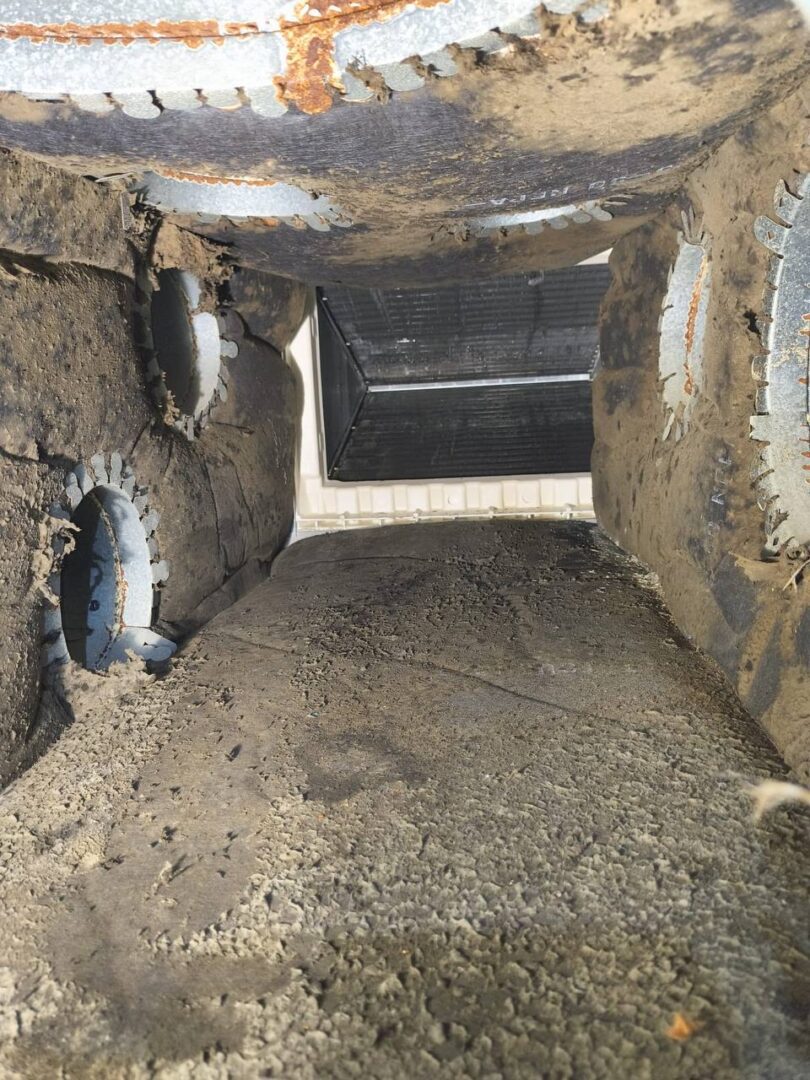
Government building air quality standards exist to protect the health of every employee, contractor, and visitor who walks through a federal facility’s doors. Yet many facility managers discover too late that compliance goes far beyond changing filters—it requires a comprehensive approach to HVAC maintenance, ventilation performance, and duct system cleanliness that only certified professionals can reliably deliver.
The Federal Framework: Who Sets the Rules?
No single agency owns indoor air quality (IAQ) in government buildings. Instead, compliance draws from a layered framework of federal standards and guidelines:
- OSHA enforces the General Duty Clause, requiring employers to provide workplaces free from recognized hazards—poor IAQ qualifies. Its Technical Manual (Section III, Chapter 2) provides detailed investigation guidelines for indoor air contaminants in non-industrial settings.
- EPA and NIOSH jointly produced Building Air Quality: A Guide for Building Owners and Facility Managers, the foundational reference for public building IAQ management, including an 8-step action plan.
- ASHRAE Standard 62.1 specifies minimum ventilation rates for commercial and institutional buildings to maintain acceptable IAQ and minimize adverse health effects. This standard is referenced in federal construction and renovation specifications nationwide.
- GSA (General Services Administration) issues its own Indoor Air Quality Management policy (PBS 1000.8A) covering federal properties it owns and leases—mandating periodic HVAC inspection, filter maintenance, duct condition assessments, and post-renovation flush-outs.
Taken together, these standards create a clear obligation: federal facility managers cannot treat HVAC maintenance as discretionary. It is a compliance function.
What GSA’s IAQ Policy Actually Requires
GSA’s PBS 1000.8A policy is one of the most detailed federal IAQ mandates in existence. Key requirements include:
- Routine HVAC inspection: Coils must be relatively clean, condensate pans must be unobstructed and treated with biocide, and high-quality air filters must be in place and properly fitted at all times.
- Duct condition assessments: Facility managers must inspect plenums and, where possible, the interior of ducts for signs of moist or delaminating insulation liners—a known mold risk.
- Construction zone HVAC isolation: During partial-building renovations, HVAC systems serving construction areas must be isolated to prevent contaminating occupied zones.
- Post-renovation flush-outs: Buildings undergoing major renovations are often required to perform multi-day ventilation flush-outs before occupancy—placing additional demand on duct cleanliness.
The GSA explicitly states that “periodic filter replacement and duct cleaning can help provide improved indoor air quality and improve HVAC performance and efficiency.” This is not a suggestion—it is embedded in the operational framework for buildings serving tens of thousands of federal employees.
NADCA Standards: The Professional Benchmark for Duct Cleaning
When government facilities need duct cleaning performed, the recognized professional standard is NADCA ACR (Assessment, Cleaning, and Restoration)—the same standard AH-CHOO! Indoor Air Quality has followed for 38 years. NADCA’s General Specifications for Commercial HVAC Cleaning are referenced in government project specifications worldwide precisely because they define minimum requirements for a defensible, verifiable cleaning outcome.
NADCA-certified technicians are trained to:
- Assess the system condition before and after cleaning
- Use source-removal methods (not surface coatings or masking agents)
- Protect occupied spaces during the cleaning process
- Document results in a format facility managers can retain for compliance records
For government buildings in the Houston and Gulf Coast region, NADCA certification is not just a quality signal—it is increasingly expected by procurement officers writing contractor requirements. Learn more about what NADCA certification means for your facility and why it matters for compliance documentation.
Common IAQ Compliance Failures in Public Buildings
Even diligent facility managers can fall short of federal air quality expectations. The most common failure points include:
- Deferred duct inspections: Visible ductwork may look clean from the outside while harboring debris accumulation, microbial growth, or damaged insulation liners internally.
- Filter bypass: Improperly fitted filters—even high-MERV ones—allow unfiltered air to circulate. GSA’s policy specifically calls out proper fit as a compliance requirement.
- Condensate pan neglect: Standing water in drain pans is one of the most common sources of biological contamination in commercial HVAC systems. Without biocide treatment, mold spores enter the air stream and distribute throughout the building.
- Post-renovation duct contamination: Construction dust contains silica, VOCs, and particulates that settle into ductwork and recirculate after work is complete. Many facilities skip post-renovation duct cleaning, unknowingly distributing construction debris to every occupied room.
- Inadequate ventilation rates: ASHRAE 62.1 prescribes minimum outdoor air exchange rates by occupancy type. Buildings that tighten envelopes for energy efficiency without adjusting ventilation can fall below compliance thresholds.
Understanding how to tell if your air ducts need cleaning is a practical first step any facility manager can take before scheduling a professional assessment.
Houston and Gulf Coast Government Facilities: Added Risk Factors
Federal and state government buildings in the Houston metro area and along the Gulf Coast face IAQ challenges that facilities in drier climates do not. Extreme humidity—regularly exceeding 80% in summer months—accelerates microbial growth inside ductwork, particularly in systems that experience temperature differentials between conditioned and unconditioned spaces. This is not a theoretical risk: the combination of Gulf Coast humidity and HVAC systems cycling between high-load and low-load operation creates condensation conditions that support mold proliferation.
Post-storm scenarios compound the risk. Government buildings that experienced water intrusion during major weather events—even if the primary structure was unaffected—may have had moisture introduced into return air plenums, air handlers, and duct systems. Without proper inspection and remediation, those systems become ongoing contamination sources for building occupants.
AH-CHOO! Indoor Air Quality has served commercial and institutional clients across Houston, the surrounding Texas markets, and Louisiana for 38 years. Our NADCA-certified technicians complete one full-system job per day—meaning your facility gets an undivided, 7-hour deep clean, not a rushed crew splitting attention across multiple sites. We provide the documentation facility managers need for compliance records, including pre- and post-cleaning assessments aligned with NADCA ACR standards.
Schedule a Compliance Assessment for Your Facility
If your government or institutional building has not had a professional HVAC and duct assessment within the past year, the first step is a free inspection. AH-CHOO! will evaluate your system condition against current federal IAQ guidelines and provide a clear picture of what, if anything, needs to be addressed.
No obligation. No pressure. Just honest findings from NADCA-certified professionals who have been doing this work since 1988. Contact us to schedule your free inspection.
For more on Houston indoor air quality, see signs of mold in air ducts.
For more on Houston indoor air quality, see whether duct cleaning is worth it in Houston.
Related Service Areas
- Commercial Duct Cleaning in Houston
- Commercial Mold Remediation in Texas
- Industrial Facility Air Quality — OSHA
Related AH-CHOO resources: commercial air duct cleaning.