Meta Description: Commercial mold remediation in Texas requires specialized expertise for large HVAC systems. Learn what office buildings, schools, and warehouses need — and what proper remediation involves.
“`json
{
“@context”: “https://schema.org”,
“@graph”: [
{
“@type”: “Article”,
“headline”: “Commercial Mold Remediation in Texas: Office Buildings, Schools, and Warehouses”,
“description”: “Commercial mold remediation in Texas requires specialized expertise for large HVAC systems. Learn what office buildings, schools, and warehouses need — and what proper remediation involves.”,
“author”: {
“@type”: “Organization”,
“name”: “AH-CHOO! Indoor Air Quality”
},
“publisher”: {
“@type”: “Organization”,
“name”: “AH-CHOO! Indoor Air Quality”,
“url”: “https://ahchooindoorair.com”
},
“mainEntityOfPage”: “https://ahchooindoorair.com/blog/commercial-mold-remediation-texas”
},
{
“@type”: “FAQPage”,
“mainEntity”: [
{
“@type”: “Question”,
“name”: “How is commercial mold remediation different from residential?”,
“acceptedAnswer”: {
“@type”: “Answer”,
“text”: “Commercial mold remediation typically involves larger, more complex HVAC systems with rooftop units, air handling units serving multiple zones, and ductwork spanning thousands of square feet. The work requires specialized equipment, larger crews, and scheduling that accommodates occupied buildings or minimizes business disruption. Liability and documentation requirements are also more substantial in commercial settings.”
}
},
{
“@type”: “Question”,
“name”: “What are signs of mold in a commercial building’s HVAC system?”,
“acceptedAnswer”: {
“@type”: “Answer”,
“text”: “Signs include musty odors in specific zones or throughout the building, employee complaints of allergy or respiratory symptoms that improve off-site, visible discoloration at supply or return registers, and HVAC maintenance records showing persistent moisture or drain pan issues. Sick Building Syndrome complaints among multiple occupants often trace back to contaminated HVAC systems.”
}
},
{
“@type”: “Question”,
“name”: “Do Texas schools have special requirements for mold remediation?”,
“acceptedAnswer”: {
“@type”: “Answer”,
“text”: “Yes. Texas schools are subject to specific indoor air quality guidelines, and mold remediation in occupied school buildings requires careful attention to occupant protection during work, containment protocols that prevent spore migration to occupied areas, and post-remediation verification. Many Texas school districts have specific protocols for mold assessment and remediation that contractors must follow.”
}
},
{
“@type”: “Question”,
“name”: “How long does commercial duct cleaning and mold remediation take?”,
“acceptedAnswer”: {
“@type”: “Answer”,
“text”: “For commercial properties, the timeframe depends on the size and complexity of the system. Unlike residential jobs where a thorough cleaning takes approximately 7 hours, commercial systems may require multi-day projects with phased work areas to accommodate building occupancy. Scope is determined after a comprehensive assessment of the specific system.”
}
},
{
“@type”: “Question”,
“name”: “What documentation should I receive after commercial mold remediation?”,
“acceptedAnswer”: {
“@type”: “Answer”,
“text”: “Commercial properties should receive comprehensive documentation including pre-remediation assessment findings, scope of work performed, methods and products used, post-remediation verification results, and equipment certifications. This documentation supports insurance claims, protects property owners and managers from liability, and satisfies tenant, employee, and regulatory inquiries.”
}
}
]
}
]
}
“`
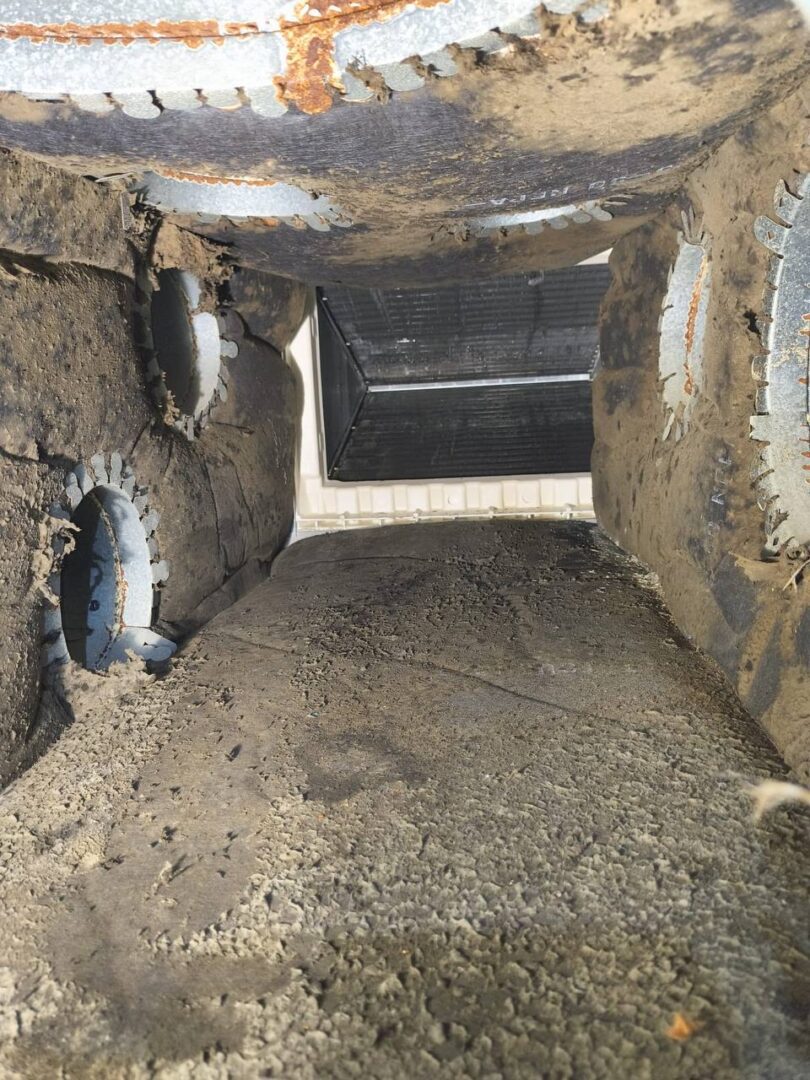
When mold shows up in a Texas office building, school, or warehouse, the stakes are fundamentally different from a residential situation. You’re not managing one family’s air quality — you’re managing the health and legal exposure of an organization with dozens, hundreds, or thousands of occupants. Texas’s relentless climate amplifies the risk, and the complexity of commercial HVAC systems means that proper assessment and remediation requires expertise that goes well beyond residential work.
After 38 years in the indoor air quality industry, our NADCA-certified team has performed [commercial duct cleaning](/commercial-duct-cleaning) and mold remediation across Texas’s Gulf Coast markets. We understand both the technical requirements of large commercial systems and the operational constraints that make scheduling and execution in occupied commercial buildings uniquely challenging.
Why Texas Commercial Properties Face Elevated Mold Risk
The same climate factors that make Houston residential ductwork vulnerable to mold apply to commercial buildings — with added complexity:
Scale Amplifies Every Problem
A commercial HVAC system may move tens of thousands of cubic feet of air per minute through ductwork spanning an entire multi-story building. When mold is present in that system, the distribution mechanism isn’t delivering contaminated air to three or four bedrooms — it’s delivering it to an entire office floor, a school’s multiple classrooms, or a warehouse’s entire interior.
Rooftop Units and Outdoor Air Intake
Most Texas commercial buildings use rooftop package units or air handling units with outdoor air intake. These systems are pulling humid Texas air into the building as part of their ventilation function. In a climate where outdoor humidity regularly exceeds 80%, managing the moisture load of outdoor air is a constant challenge. When these systems are not properly maintained or are oversized for dehumidification, humidity problems develop in the duct system downstream.
Multiple Zones and AHUs Create Complexity
Commercial buildings often have multiple air handling units serving different zones. Mold in one zone’s ductwork may not appear in another zone’s air quality — meaning symptoms and complaints are localized, complicating diagnosis. A proper assessment of a commercial building’s mold status requires evaluating each AHU and its associated ductwork independently.
Deferred Maintenance
Commercial HVAC maintenance is often the first item cut in budget cycles. Coils go longer between cleanings, drain pans go unchecked, filter schedules slip. In Texas’s climate, this deferred maintenance directly translates to accelerated mold development in duct systems.
Office Buildings: When Employee Complaints Point to Ducts
Office building managers often encounter mold problems through an indirect route: employee complaints. “Sick Building Syndrome” — a pattern of health complaints (headaches, fatigue, respiratory irritation, concentration difficulties) among multiple occupants in a specific building or zone — is frequently linked to contaminated HVAC systems.
When multiple employees in a specific area of an office building are reporting consistent symptoms that improve when they’re not in the building, the HVAC system serving that area deserves investigation. The pattern is often specific to zones served by a particular AHU — which is an important clue in a multi-unit commercial building.
What managers and facilities directors should look for:
- Zone-specific complaints (different parts of the building experiencing different symptom rates)
- Complaints concentrated in offices near supply registers or directly below ceiling tiles
- Maintenance records showing persistent condensate drain issues or high filter loading in specific AHUs
- Visible discoloration at ceiling supply registers or around return grilles
- Musty odors that are present in the building first thing in the morning (when HVAC has been running overnight in a vacant building)
A comprehensive [commercial duct cleaning](/commercial-duct-cleaning) inspection can assess the full extent of contamination across all AHUs and duct zones.
Texas Schools: Heightened Obligations
Schools occupy a unique position in the commercial mold remediation conversation for several reasons:
Vulnerable population: Children, particularly those with developing respiratory systems, asthma, or allergies, are more susceptible to the health impacts of elevated indoor mold spore counts. The responsibility of school administrators and facilities staff to maintain safe air quality is both moral and legal.
Texas regulatory environment: Texas has specific indoor air quality guidelines for schools, and mold incidents in school buildings attract regulatory scrutiny from the Texas Education Agency and local health authorities. Documentation of assessment and remediation becomes critical for demonstrating due diligence.
Public accountability: Schools are public-facing institutions. Mold problems that become public knowledge affect community trust and can have significant political and administrative consequences. Addressing problems quickly and professionally — with documentation — is both the right approach and the protective approach.
For Texas schools, proactive mold prevention through regular [commercial duct cleaning](/commercial-duct-cleaning) and HVAC maintenance is far preferable to the reactive, high-pressure scenario of addressing a mold problem after parent and media attention.
Warehouses and Industrial Facilities
Warehouses present a different but equally significant set of challenges. Many Texas warehouses:
- Have high ceilings with large duct runs serving wide-open spaces
- Use evaporative cooling components or industrial coolers that introduce moisture
- Have loading dock areas where outdoor humid air regularly infiltrates
- Operate with temperature and humidity ranges that vary significantly from a typical office building
In food storage and pharmaceutical warehousing, mold contamination of the HVAC system is a regulatory compliance issue, not just a comfort issue. Federal and state food safety regulations impose specific air quality requirements that mold-contaminated duct systems can violate.
Industrial facilities that have experienced flooding — as many Gulf Coast Texas warehouses have — face the same post-water-damage duct contamination risks as residential properties, at larger scale.
What Commercial Mold Remediation Involves
[Commercial mold remediation](/commercial-duct-cleaning) for Texas properties follows the same fundamental principles as residential work — containment before cleaning, mechanical removal before antimicrobial treatment, post-remediation verification — but at a scale that requires significantly more resources:
Comprehensive system assessment: Multiple AHUs, multiple duct zones, and potentially multiple building floors require more extensive baseline assessment than a residential inspection. Camera inspection of accessible ductwork across all zones establishes the true scope.
Phased work to accommodate occupancy: Unlike residential jobs where the building is vacated for the work day, commercial remediation often must occur in phases — treating one zone or floor at a time — to allow continued building occupancy. Our team coordinates with facilities management to develop a phased schedule that minimizes business disruption.
Appropriate equipment scale: Commercial duct systems require larger-capacity vacuum extraction and air movement equipment than residential systems. Our NADCA-certified team is equipped for commercial-scale jobs.
Documentation for liability protection: Commercial property owners and managers need comprehensive documentation of the remediation scope, methods, and results. This documentation supports insurance claims, demonstrates due diligence in litigation contexts, and satisfies tenant and employee inquiries.
The Cost of Inaction
Commercial building managers sometimes defer mold investigation and remediation because the disruption seems manageable and the cost seems avoidable. This calculation almost always goes wrong:
- Employee sick days and productivity loss from degraded air quality are quantifiable costs
- Regulatory scrutiny and fines can exceed remediation costs for facilities with health code implications
- Liability exposure from employee health claims is disproportionate to the cost of preventive maintenance
- Mold problems worsen over time; the remediation required 6 months from now will almost certainly be more extensive than the remediation required today
For commercial property owners and managers, the question isn’t whether mold remediation is worth the cost. It’s whether you’re addressing it proactively or reactively — and reactive is always more expensive.
Get a Commercial Assessment
If you manage or own commercial property in Texas — office, school, or industrial — and have concerns about HVAC air quality, the right first step is a comprehensive assessment.
[Book your free inspection at crm.ahchooindoorair.com/book](https://crm.ahchooindoorair.com/book)
Our NADCA-certified team has the equipment, certification, and experience to assess and address commercial mold situations of any scale. 38 years in Gulf Coast markets means we understand Texas’s specific climate challenges and the unique requirements of commercial HVAC systems. Let’s talk about what your facility needs.
Frequently Asked Questions
How is commercial mold remediation different from residential?
Commercial mold remediation typically involves larger, more complex HVAC systems with rooftop units, air handling units serving multiple zones, and ductwork spanning thousands of square feet. The work requires specialized equipment, larger crews, and scheduling that accommodates occupied buildings or minimizes business disruption. Liability and documentation requirements are also more substantial in commercial settings.
What are signs of mold in a commercial building’s HVAC system?
Signs include musty odors in specific zones or throughout the building, employee complaints of allergy or respiratory symptoms that improve off-site, visible discoloration at supply or return registers, and HVAC maintenance records showing persistent moisture or drain pan issues. Sick Building Syndrome complaints among multiple occupants often trace back to contaminated HVAC systems.
Do Texas schools have special requirements for mold remediation?
Yes. Texas schools are subject to specific indoor air quality guidelines, and mold remediation in occupied school buildings requires careful attention to occupant protection during work, containment protocols that prevent spore migration to occupied areas, and post-remediation verification. Many Texas school districts have specific protocols for mold assessment and remediation that contractors must follow.
How long does commercial duct cleaning and mold remediation take?
For commercial properties, the timeframe depends on the size and complexity of the system. Unlike residential jobs where a thorough cleaning takes approximately 7 hours, commercial systems may require multi-day projects with phased work areas to accommodate building occupancy. Scope is determined after a comprehensive assessment of the specific system.
What documentation should I receive after commercial mold remediation?
Commercial properties should receive comprehensive documentation including pre-remediation assessment findings, scope of work performed, methods and products used, post-remediation verification results, and equipment certifications. This documentation supports insurance claims, protects property owners and managers from liability, and satisfies tenant, employee, and regulatory inquiries.
Related Service Areas
- Commercial Duct Cleaning in Houston
- Government Building Air Quality Standards
- Industrial Facility Air Quality — OSHA
Related AH-CHOO resources: commercial air duct cleaning; schedule a free inspection.