—
Why Houston’s Humidity Creates HVAC Mold (In 40 Words)
Houston’s summer humidity—often 90%+ from June through September—is the #1 cause of mold in air ducts. When your AC condenses moisture onto cold duct surfaces, combined with dust and organic debris, mold thrives. Annual cleaning stops it.
—
The Houston Humidity Problem: A Perfect Storm for Duct Mold
Houston homeowners face a unique HVAC challenge that residents in drier climates simply don’t encounter. The problem isn’t just hot summers; it’s the crushing combination of heat AND humidity that transforms your ductwork into a mold incubator.
From June through September, Houston’s relative humidity regularly exceeds 90%. This means the air outside your home contains nearly as much moisture as it can hold. When you run your AC, something has to give—and that something is condensation inside your ducts.
Most homeowners don’t understand the science. They see mold and assume it’s a freak accident, or they blame poor maintenance. But the truth is simpler: Houston’s climate actively creates the conditions for mold growth. It’s not if mold will grow—it’s when.
Understanding why this happens is the first step to stopping it permanently.
How AC Condensation Creates Mold Growth in Ducts
Here’s what happens inside your ductwork during a Houston summer:
The Temperature Gradient
The Condensation Process
– Duct elbows and turns (where airflow slows) – Seams and connections (where insulation is incomplete) – The underside of horizontal ducts – Areas with poor air circulation
The Mold Feeding Cycle
This isn’t a maintenance failure. This is Houston’s climate working against you.
Why Houston Is Different: The Climate Multiplier
Other regions experience summer humidity. Houston doesn’t just experience it—Houston *lives* in it.
Humidity Comparison: Houston vs. Other Markets
| Month | Houston RH | Phoenix RH | Denver RH | |——-|———–|———–|———-| | June | 88% | 25% | 35% | | July | 90% | 28% | 38% | | August | 90% | 30% | 40% | | September | 87% | 32% | 42% |
Phoenix and Denver are arid enough that condensation rarely forms in ducts. Houston? Your AC is fighting a losing battle against atmospheric moisture.
The Gulf of Mexico is 50 miles away. That moisture is relentless.
Why AC Cycling Makes It Worse
Your air conditioner cycles on and off throughout the day. Each cycle creates:
A running AC is constantly removing moisture. A *cycling* AC creates micro-wet conditions that last hours between cycles. Those hours are when mold grows.
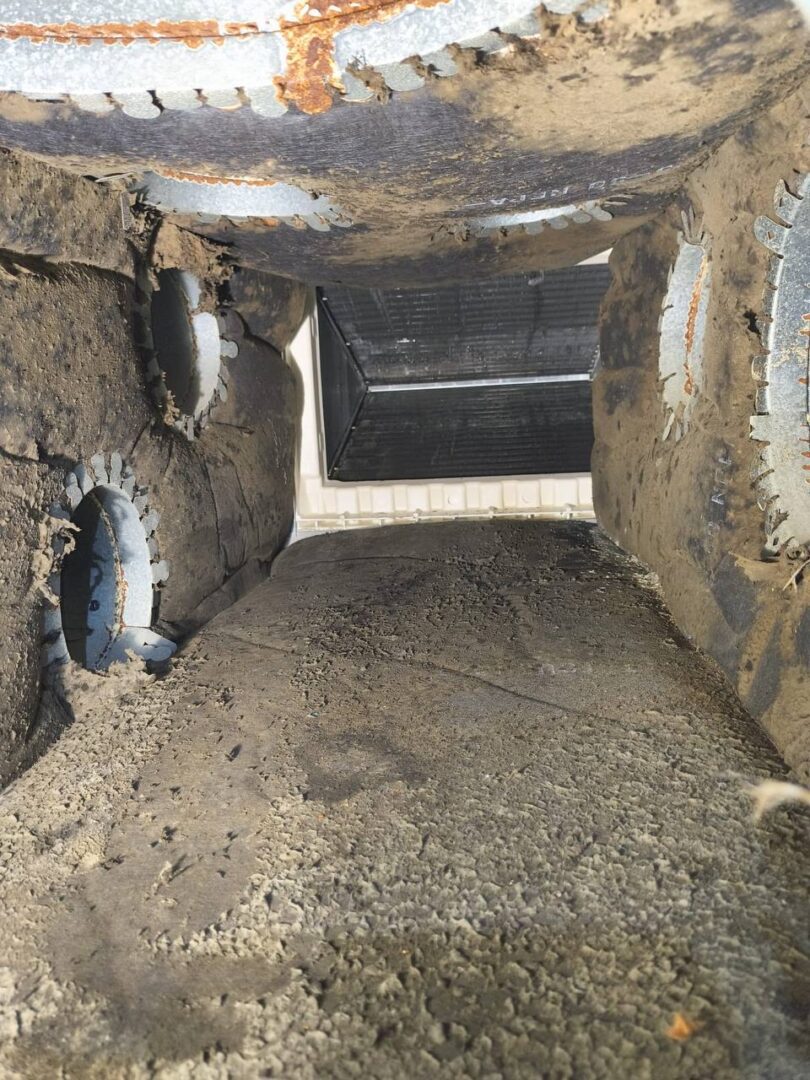
What Duct Mold Looks Like: Identifying the Signs
Not all mold is visible. Houston’s duct mold often hides where you can’t see it—deep inside the ductwork. But here’s what to watch for:
Visual Signs (if you can see them)
Smell (The Most Reliable Indicator)
Health & Performance Indicators
The Hidden Majority Most duct mold grows in sections you can’t see: inside the main trunk lines, behind walls, in the plenum box, or in fiberglass-lined ducts where mold penetrates the material itself. You may never see it—but you’ll smell and feel it.
The AC Condensation Cycle: Why Houston’s Summer Makes It Inevitable
Let’s walk through a typical June day in Houston and see how mold takes hold.
6:00 AM – AC Cycles Off (Overnight)
9:00 AM – Cooling Load Builds
9:05 AM – 12:30 PM – AC Running (Peak Cooling)
12:30 PM – 3:00 PM – Cooling Demand Lessens
3:00 PM – 6:00 PM – Afternoon Peak Heat
6:00 PM – Evening Cool-Down (AC Off)
Repeat this cycle every single day from June through September. That’s 122 days of relentless condensation and mold feeding.
No wonder Houston homeowners fight mold.
Mold Spore Proliferation: Houston’s Open-Air Incubator
Mold spores are everywhere in Houston’s air. The city’s humidity creates the perfect outdoor environment for mold reproduction.
Why Houston Breeds Mold Outdoors
Your home’s HVAC system pulls 3,000–5,000 CFM of outdoor air through the return vents. Every cubic foot carries mold spores. Those spores bypass the filter (filters stop particles 20+ microns; spores are 2–10 microns) and enter your ductwork.
When they land on the wet, organic-rich surface inside your ducts, they germinate within 24 hours.
Your AC becomes a spore incubator.
What Mold Eats: The Organic Matter Inside Your Ducts
Mold doesn’t survive on water alone. It needs organic food. Houston ducts have plenty.
What Lives in Your Ductwork (And Feeds Mold)
A typical Houston home’s ducts accumulate 1–3 lbs of dust per year. When that dust gets wet from AC condensation, it’s a five-star restaurant for mold.
The longer the ductwork remains moist, the more organic matter gets trapped there—and the faster mold colonizes.
Temperature & Humidity: The Mold Growth Sweet Spot
Mold has a comfort zone. Houston’s ducts are sitting right in it.
Mold Growth Thresholds
Houston’s Duct Environment During Summer
Your ducts are in the Goldilocks zone for mold. Not too hot, not too cold, perfectly humid, with abundant food. Mold couldn’t ask for better conditions.
How to Stop Duct Mold: The Houston Solution
You can’t control Houston’s humidity. But you can control what grows inside your ducts.
Annual Air Duct Cleaning (Non-Negotiable)
Houston’s climate demands annual cleaning—not every 3–5 years like other regions. Here’s why:
– Return air ductwork (where moisture enters)
– Evaporator coils (where condensation forms)
– Blower fan (where mold spores recirculate)
– Heating chamber (transition zone for temperature changes)
– Plenum box (where condensation accumulates fastest)
– Supply ducts (where mold spores blow into your home)
– Register boxes (behind wall vents where moisture collects)
– Grills and registers (visible entry points for spores)
A professional cleaning removes all this—and takes 7 hours on average to do it right. That thoroughness is what stops mold for another season.
Improve Return Air Ventilation
Mold grows in stagnant, humid ducts. Better airflow helps:
Seal Duct Leaks (Especially Return Ducts)
Leaking return ducts pull in unconditioned, humid air from attics, crawl spaces, and walls. This adds moisture to the system. Sealing leaks reduces the humidity load on your AC.
Clean or Upgrade Your AC Filter
A clogged filter reduces airflow, which:
Monthly filter changes help, but they don’t stop moisture. Professional duct cleaning addresses the root cause.
Run Your AC Year-Round (Even Winter)
Moderate AC operation during cooler months prevents stagnant duct conditions. Even running your system on low for 1–2 hours per day keeps air moving and prevents moisture from settling.
Monitor for Visible Mold
Check your return air vents, supply registers, and any visible ductwork quarterly. Early detection means faster remediation before mold spreads throughout the system.
The Real Cost of Ignoring Duct Mold in Houston
Mold in ducts isn’t just an odor problem. It has cascading effects:
Health Impact
Home Value Impact
System Efficiency Impact
Remediation Cost Impact
The math is simple: invest in annual cleaning today, or pay far more for duct replacement tomorrow.
Why Professional Duct Cleaning Is Non-Negotiable in Houston
You can’t stop mold with filters, air purifiers, or dehumidifiers. These tools help—but they don’t address the mold already growing inside your ducts.
Professional duct cleaning is the only solution that removes:
A thorough cleaning, which takes about 7 hours and requires professional equipment and NADCA certification, resets your duct system. It removes the mold food source and gives you a clean slate for another season.
AH-CHOO! Indoor Air Quality offers [air duct cleaning in Houston](/air-duct-cleaning-houston/) with NADCA certification and 38 years of local experience. We clean all 8 components thoroughly, identify moisture issues, and provide [mold remediation](/mold-remediation-houston/) if needed.
A free inspection lets us assess your specific situation and recommend the right cleaning schedule for your home.
FAQ: Mold in Houston Air Ducts
Q: What humidity level causes mold in air ducts?
A: Mold grows rapidly when humidity exceeds 60%, and thrives above 70%. Houston’s summer humidity often reaches 90%+, creating ideal mold conditions inside your ductwork. AC condensation combined with high outdoor humidity creates the perfect storm.
—
Q: Why does condensation form in air ducts during summer?
A: Your AC cools return air to around 55°F inside the ducts while outdoor air is 95°F+ with 90%+ humidity. This temperature difference causes moisture in the air to condense on duct surfaces, especially at elbows, seams, and insulation. The condensation sits there, feeding mold growth for months.
—
Q: How often should Houston homeowners clean air ducts to prevent mold?
A: Houston’s climate demands annual air duct cleaning. Unlike drier regions that may go 3–5 years, Houston’s persistent humidity makes mold inevitable without regular maintenance. Annual cleaning removes the organic material (dust, skin cells, hair) that mold feeds on.
—
Q: What does mold in air ducts smell like?
A: Duct mold smells musty, earthy, or like a wet basement. Many Houston homeowners describe it as a stale, stuffy odor that gets worse when the AC cycles. If your home smells moldy but you can’t find visible mold, your ducts are likely the culprit.
—
Q: Can I clean my own air ducts?
A: DIY duct cleaning removes surface dust but can’t address mold, condensation, or deep contamination. Professional equipment and NADCA-certified technicians are required to properly clean all 8 components (return air, coils, blower fan, heating chamber, plenum box, ducts, register boxes, and grills) without cross-contaminating your home with spores.
—
Q: What’s the difference between air duct cleaning and mold remediation?
A: Air duct cleaning removes dust, debris, and light mold as preventive maintenance. Mold remediation is a specialized process for heavy mold contamination, which may include encapsulation or duct replacement if the problem is severe.
—
Conclusion: Annual Cleaning Is Your Houston Reality
Houston’s humidity isn’t a bug—it’s a feature of living here. Accepting that mold will grow in your ducts without intervention is the first step to protecting your home.
Annual professional duct cleaning stops the cycle. It removes the mold, the food source, and the conditions that let mold thrive. Combined with a free inspection to assess your specific situation, you’ll know exactly what’s happening inside your ducts.
The longer you wait, the deeper mold colonizes. The deeper it colonizes, the more expensive remediation becomes.
For homeowners ready to take the next step, our guide on how to prevent mold in air ducts in Houston covers the specific strategies that work in our humidity climate. If you suffer from allergies, also read our guide on air duct cleaning for allergy sufferers in Houston.
For a complete breakdown of our cleaning process, see our guide on the 8 HVAC components we clean and why each one matters.
Schedule your free inspection today and get ahead of Houston’s humidity problem. We’ll assess your ductwork, explain what we find, and recommend the right cleaning schedule for your home’s unique environment.
Related reading: What causes mold in air ducts in Austin — Texas Hill Country edition.
Related: Mold remediation vs air duct cleaning.
Need the full Houston game plan? Start with our Houston air duct cleaning page for the complete 7-hour, 8-component process. If mold is part of the problem, review our Houston mold remediation service. For the full residential scope, see our residential air duct cleaning process.
Related AH-CHOO resources: schedule a free inspection.