You invested time and money into remodeling your Houston home — a new kitchen, a bathroom remodel, or a full floor renovation. The last thing on your mind right now is air ducts. But if you skip post-renovation air duct cleaning, you might be undoing one of the biggest investments you made in your home’s air quality.
Houston’s combination of high humidity, fine construction dust, and closed-loop HVAC systems means that every drywall job, tile cut, and paint session sends microscopic particles straight into your ductwork. Here’s what happens during a renovation, why it matters for your family’s health, and what you should do before you move back in.
Why Renovation Dust Is Different From Household Dust
Household dust is mostly skin cells, fabric fibers, pet dander, and outdoor pollen. Renovation dust is a completely different problem.
**Drywall dust** is composed of gypsum powder and fine calcium sulfate particles. It is alkaline, extremely lightweight, and small enough to travel deep into your duct liner material. Unlike household dust, drywall dust doesn’t settle quickly — it stays airborne for hours and gets pulled directly into your HVAC return ducts.
**Concrete and silica dust** from masonry work, tile removal, and countertop cutting poses a long-term respiratory hazard. The silica particles are microscopic and can lodge deep in lung tissue. If your HVAC system was pulling air during any phase of your renovation, these particles are now inside your ducts.
**Wood dust and MDF particles** from framing, trim work, and cabinet finishing work contain formaldehyde resins and adhesive compounds. When MDF or engineered wood is cut, these compounds become part of the dust cloud. If they settle inside your duct system, they may off-gas over time through your supply vents.
**Paint vapors and adhesive off-gassing** from new materials linger in your indoor air for weeks after renovation. While the volatile organic compounds (VOCs) themselves dissipate over time, the particulate matter they carry does not — it settles on interior duct surfaces and may get redistributed every time your HVAC system cycles.
Where Renovation Dust Goes in Your Houston Home
Your HVAC system is running constantly during a Texas renovation. Between the Houston heat and humidity, most homeowners keep their A/C system running throughout the entire project. Every cycle is pulling renovation-contaminated air through your duct system.
**Return ducts act as a vacuum for renovation dust.** Because return ducts are the intake pathway for your entire HVAC system, they pull in the highest volume of air from every room in your home during renovation activity. Return grills near work areas become the primary entry points for drywall dust, silica, and wood particles. Within a two- to three-month renovation project, a single return duct can pull in several pounds of construction-grade particulates.
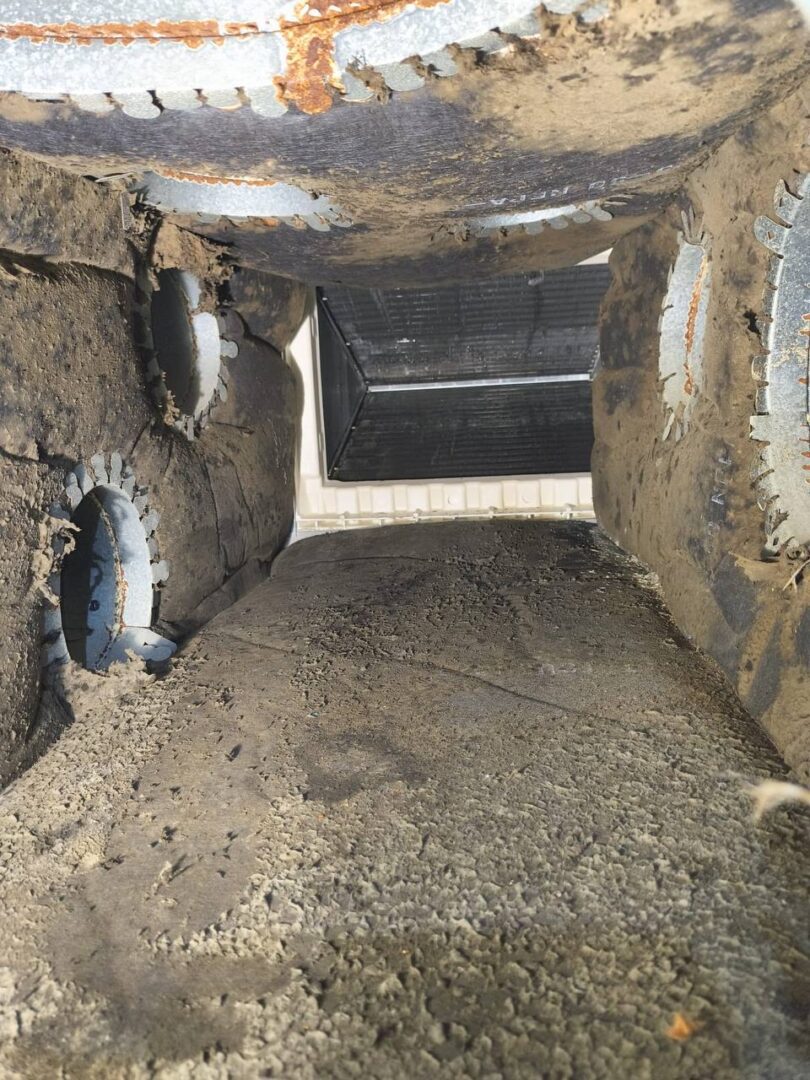
**The plenum box becomes a debris reservoir.** The plenum — the central transition space between ductwork and your air handler — is the bottleneck through which every cubic foot of air passes. Construction dust concentrates in the plenum at much higher rates than in any individual duct branch. If your plenum has not been cleaned since the renovation, it may contain a visible layer of dust and debris on every interior surface.
**Evaporator coil contamination is the most expensive long-term problem.** The evaporator coil is one of the most critical components in your HVAC system. When renovation dust settles on the coil surface, it creates an insulating layer that reduces your system’s ability to transfer heat effectively. This means higher electricity bills, longer runtimes, and accelerated wear on components. In Houston’s climate, dusty coils are also a primary catalyst for mold growth — the combination of dust, moisture from condensation, and 60-70% indoor humidity creates the perfect environment for mold to establish colonies on the coil surface.
When Post-Renovation Duct Cleaning Should Be Scheduled
Timing is critical. The ideal window for post-renovation duct cleaning is after construction is fully complete but before your family moves back into the space or begins using the rooms that were renovated.
**Don’t clean during the renovation.** Cleaning while construction is still active means the system will be immediately re-contaminated with fresh dust. Schedule your cleaning for the final week of the project or after construction crews have fully departed.
**Don’t wait months to clean.** The longer renovation dust sits inside your duct system in Houston’s humid climate, the more likely it is to combine with moisture, promote mold growth, and permanently embed itself in duct liner material. Post-renovation cleaning should happen within 1-2 weeks of construction completion.
**Include the entire system, not just the renovated area.** Even if you only renovated one room, your HVAC system is a closed loop. Dust travels through return ducts and gets pulled into the central system where it spreads to the entire home. A full-system post-renovation cleaning is always the correct approach.
What Should Be Cleaned After a Renovation?
Professional post-renovation duct cleaning covers all 8 HVAC system components — not just supply ducts. This is a NADCA standard and it is exactly what your system needs after a renovation.
**Return air ducts:** Where the highest volume of renovation dust entered the system. Multiple return branches must each be treated individually.
**Evaporator coils:** The most critical component for heat transfer. Coil fouling from renovation dust is the top cause of reduced HVAC efficiency after a remodel.
**Blower fan:** The motor fan blades accumulate dust and can become unbalanced from uneven debris deposits, reducing airflow and creating excess motor noise.
**Heating chamber:** Heat exchange surfaces collect renovation dust and debris that reduces heating efficiency during the winter months.
**Plenum box:** The central debris collection point where construction dust concentrates. This area typically shows the heaviest contamination after any renovation.
**Supply ducts:** Every branch duct delivers air to your living spaces and must be cleared of accumulated debris.
**Register boxes:** The termination points in each room where dust and construction particulates often pool near the floor-level boxes.
**Grills and registers:** The visible vent covers that collected surface dust and debris throughout the renovation.
Why Houston’s Climate Makes This More Urgent
In a dry climate like Denver or Phoenix, construction dust in ducts is primarily an indoor air quality concern. In Houston, it’s also a mold risk.
Houston’s average indoor humidity of 60-70% creates an environment where renovation dust — which is a combination of organic and inorganic particles — can retain moisture and support mold growth. The plenum and evaporator coil are the most common sites for post-renovation mold development, because those are the locations where dust concentration and moisture accumulation intersect.
If your renovation project lasted more than a few weeks during Houston’s humid months, the risk of mold development inside your duct system is significant. A thorough post-renovation cleaning combined with a free inspection of your system’s current condition is a critical step that most renovation checklists overlook.
Book Your Post-Renovation Inspection
Don’t let your renovation’s dust cloud become a long-term indoor air quality problem. Our free inspection documents exactly what’s in your ductwork after construction and lets you make an informed decision about cleaning.
**[Book your free inspection →](https://crm.ahchooindoorair.com/book)**
AH-CHOO! Indoor Air Quality — NADCA certified. 38 years of experience. One job per day. Serving Houston, Austin, San Antonio, and South Louisiana.
Related: How Air Duct Cleaning Works: A Step by Step Guide for Houston Homeowners.
Related: What Home Inspectors Look for in HVAC Systems: A Guide for Houston Home Buyers and Sellers.
Related: What to Expect During a Professional Duct Cleaning: A Houston Homeowner Walkthrough.
Related: What to Expect During a Professional Air Duct Cleaning in Houston.
Related AH-CHOO resources: Houston air duct cleaning; schedule a free inspection.