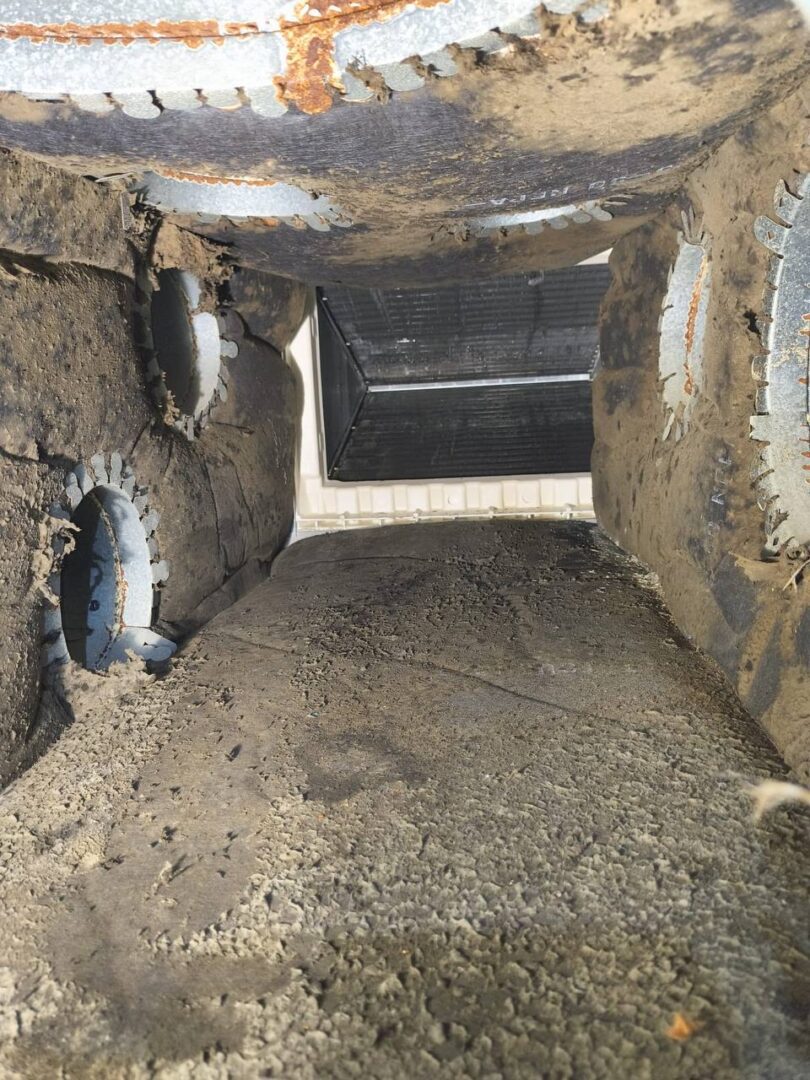
Houston HVAC mold risk doesn’t drop after spring rain — it spikes. While rain temporarily clears pollen from the air, the post-storm humidity surge that follows is exactly the condition mold spores need to colonize duct surfaces, evaporator coils, and air handler interiors. For Houston homeowners, spring rain events are a warning signal for indoor air quality, not a relief.
Why Does Spring Rain Increase HVAC Mold Risk in Houston?
The mechanism is straightforward: rain saturates the atmosphere. Houston’s outdoor relative humidity regularly reaches 70–90% in the hours and days following a spring storm. That moisture-laden air infiltrates every home — through doors, windows, envelope gaps, and the HVAC return air system itself.
Mold spores are always present in the air. What triggers active growth isn’t the spores — it’s the moisture. Research and industry standards consistently place the mold growth threshold at approximately 60% relative humidity sustained over time. Houston’s post-rain indoor environment routinely exceeds this threshold, often by a significant margin.
Inside your ductwork, this plays out in a specific sequence:
- Post-rain outdoor air, saturated with moisture, infiltrates the building envelope and return air system
- Humidity condenses on cooler duct surfaces, evaporator coils, and the air handler interior
- Pollen residue, dust, and organic matter already accumulated on these surfaces provide a food source for mold spores
- If the system cycles off during a cool post-rain night, condensation remains — and mold begins establishing within 24–48 hours of sustained moisture
The spring season compounds this problem because duct surfaces are already loaded with months of pollen accumulation from cedar, oak, and elm seasons. A clean duct surface has less biological substrate for mold to anchor to. A surface coated with pollen residue — which carries proteins and organic compounds — is a significantly more hospitable environment.
The Counter-Intuitive Part: Rain Feels Like Relief
After a heavy spring rain, Houston homeowners typically do two things: open windows to enjoy the fresh air, and relax their vigilance about indoor air quality because the pollen count has dropped. Both responses are understandable — and both can accelerate the post-rain mold window in your HVAC system.
Opening windows during or after a spring rain storm floods your indoor environment with air at 80%+ relative humidity. That moisture gets drawn into the return system and deposited on duct surfaces. If your system has existing pollen accumulation and you add a post-rain humidity event, you’ve created near-ideal mold germination conditions inside your ductwork.
The pollen count drops are real — temporarily. But the 24–72 hours following a Houston spring rain are when HVAC mold risk is at its highest for the season.
What Post-Rain Mold in Houston HVAC Looks and Smells Like
Duct mold is rarely visible from a register unless growth is extensive. What Houston homeowners notice first is typically:
- Musty odor when the system first kicks on — particularly noticeable after the system has been off overnight or during a cooler post-rain period
- Odor that dissipates after the system runs for 10–15 minutes — a classic sign that surface mold is being disturbed and partially exhausted with each run cycle
- Worsening allergy or respiratory symptoms in the days following a major rain event — mold spores circulating through the duct system are irritants distinct from pollen
- Visible dark spots or discoloration on supply registers — surface indicator of biological growth deeper inside
Houston’s spring rain pattern — frequent storms in March and April, often followed by humid, partly cloudy days — means these post-rain mold windows occur repeatedly across the season, not just once. Each event without intervention allows mold to establish more deeply in duct surfaces.
What a NADCA-Standard Cleaning Removes
Addressing post-rain mold risk in Houston HVAC systems requires more than filter replacement or a surface cleaning of registers. The biological material establishes on interior duct surfaces, the blower wheel, the evaporator coil area, and the air handler — components that a standard vent cleaning doesn’t reach.
AH-CHOO! Indoor Air Quality has been NADCA certified for 38 years. A complete residential cleaning covers the full interior system — all supply and return ductwork, the blower wheel and air handler, the evaporator coil area, and all registers and grilles. The process uses source-removal methodology: negative air pressure combined with mechanical agitation to extract biological matter and debris from duct surfaces, not just displace it further into the system.
Each job is a dedicated full-day service — approximately seven hours. That timeline reflects what source-removal cleaning of a complete Houston residential system actually requires. One job per day, per crew.
Related: Signs of mold in Houston air ducts — a homeowner’s guide | What blower wheel cleaning covers and why it matters
Timing: When to Act After a Spring Rain Event
Houston homeowners who want to protect their HVAC systems through spring storm season have two effective windows:
- Before the rainy season begins (late February to early March) — removing existing pollen accumulation before humidity events arrive eliminates the biological substrate mold needs to establish. A clean duct system is significantly more resistant to post-rain mold germination than one carrying months of pollen residue.
- After a major storm event if symptoms appear — musty odor, worsening respiratory symptoms, or visible register discoloration following a rain event are signals that mold has already begun establishing. Early intervention prevents deeper system colonization.
A free inspection after a significant spring rain event can identify whether mold has established in the mechanical components and what remediation the system needs.
Also see: Is duct cleaning worth it in Houston during spring allergy season? | Spring pollen and Houston indoor air quality
Frequently Asked Questions
Does spring rain in Houston clean out HVAC ducts?
No. Rain temporarily clears outdoor pollen, but the post-storm humidity surge — Houston outdoor air routinely reaches 70–90% relative humidity after spring storms — introduces moisture into the duct system. That moisture, combined with existing pollen and organic accumulation on duct surfaces, creates the conditions for mold germination within 24–48 hours of sustained humidity.
At what humidity level does mold grow in Houston HVAC systems?
Mold growth typically begins at sustained relative humidity above 60%. Houston’s post-rain indoor environment regularly exceeds this threshold, particularly in homes without whole-home dehumidification. Duct surfaces, evaporator coils, and air handler interiors are the highest-risk accumulation points because they remain cool and can hold condensation.
Why does my HVAC smell musty after it rains in Houston?
A musty odor when the system starts — particularly after it’s been off overnight — is a classic sign of mold or biological growth on interior duct surfaces or the evaporator coil. Post-rain humidity events are a common trigger in Houston. The odor often dissipates after the system runs for 10–15 minutes as surface spores are distributed and partially exhausted through the supply side.
How is spring rain mold risk different from Harvey-era mold?
Harvey-related mold was primarily a structural flooding event — water intrusion into walls, subflooring, and building materials. Spring rain mold risk in Houston HVAC systems is a recurring seasonal pattern driven by humidity, not flooding. It’s cumulative: each post-rain humidity event deposits moisture onto surfaces with existing pollen and organic accumulation, gradually building conditions for biological growth without any visible water damage.
Can I prevent post-rain mold in my Houston HVAC without a full cleaning?
Partial measures help but don’t address the root cause. Running the HVAC on “fan only” mode after a rain event to dry out duct surfaces, maintaining indoor humidity below 50% with a dehumidifier, and changing filters after major storm events all reduce risk. However, if pollen accumulation from the current or prior seasons has already built up on blower wheel fins and duct walls, those surfaces remain mold-hospitable regardless of ventilation changes. A full-system NADCA cleaning removes the biological substrate.
AH-CHOO! Indoor Air Quality is NADCA certified and has served Houston for 38 years. Contact us for a free inspection.
Related AH-CHOO resources: Houston air duct cleaning; schedule a free inspection.