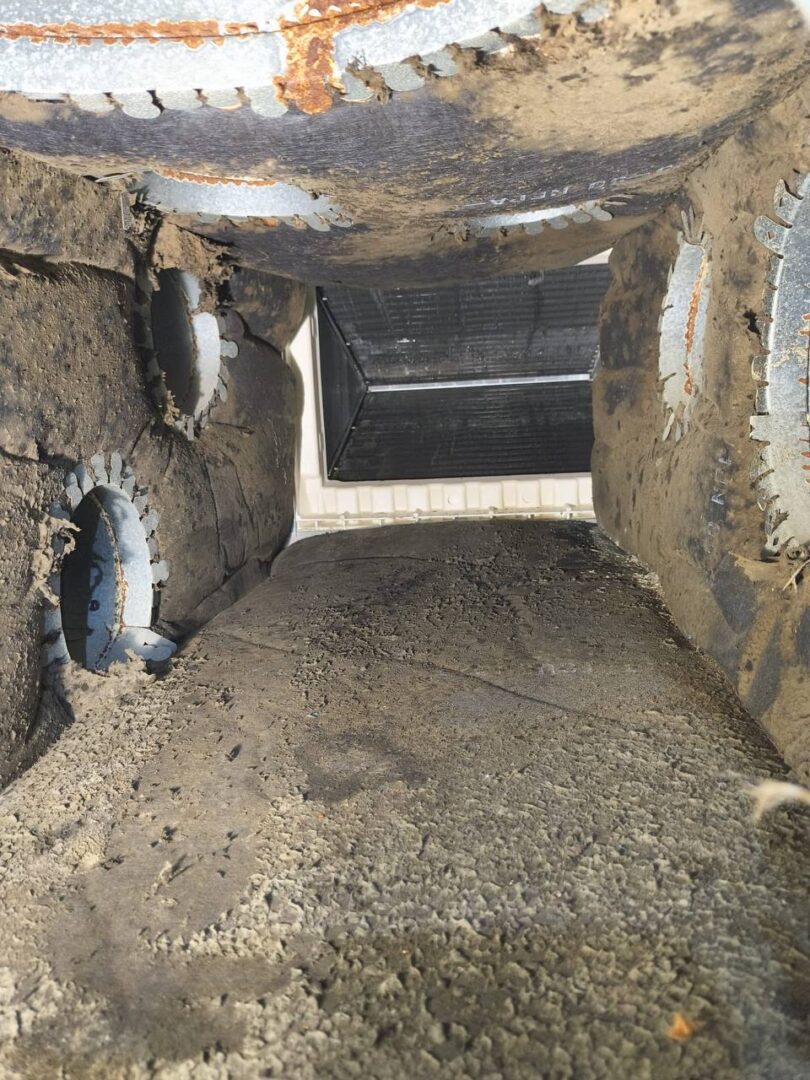
An air duct inspection is a visual, condition-focused review of your home’s accessible ductwork and the immediate HVAC components those ducts connect to. A qualified technician looks at supply and return pathways, registers, boots, accessible connections, insulation, the air handler area, and the filter housing. The goal is simple: document what the ducts look like now so you can decide whether any further work — cleaning, sealing, repair, or replacement — is actually warranted. In Houston, where HVAC systems run hard for much of the year and humidity shapes what moves through those ducts, an inspection-led approach helps homeowners avoid paying for services they may not need while catching issues that can affect system performance and indoor conditions.
Why Houston homes may warrant a closer look
Houston’s climate creates conditions that can put extra demand on duct systems. High humidity, Gulf moisture, storm debris, and seasonal temperature swings all contribute to what may collect inside ductwork over time. Homes built in different decades bring different duct materials — some may have older flex duct, unsealed metal runs, or insulation that has deteriorated. Renovation projects, even small ones, can introduce drywall dust and construction debris into the system. Pest activity or evidence of past rodents can leave material in ducts that affects airflow and indoor conditions. Visible debris at supply registers, uneven airflow between rooms, or recurring odors that return after cleaning are practical reasons a Houston homeowner might decide to have the ductwork inspected.
Houston’s Gulf Coast humidity is a factor that sets the region apart from drier climates. Moisture that enters ductwork — whether from unconditioned attic spaces, crawlspace humidity, or condensation on uninsulated duct surfaces — can create conditions where debris clings to duct walls or where biological growth becomes possible. Even well-maintained homes can develop duct moisture issues after storm events, roof leaks, or plumbing incidents that go unnoticed in attic spaces. An inspection is one way to check for these conditions before they lead to larger problems.
None of these conditions means there is definitely a problem. They are reasons to assess, not assumptions about what will be found. An inspection provides the evidence needed to make an informed decision rather than guessing about ductwork you cannot easily see.
What a professional air duct inspection can review
A thorough visual inspection typically examines accessible portions of the ductwork and related HVAC components. The technician looks at supply and return paths, the registers and grilles in each room, accessible boots and connections, the area around the air handler and evaporator coil, the filter housing and filter condition, visible insulation on duct runs, and any gaps, disconnections, or signs of moisture or debris.
For Houston homes specifically, inspectors often pay close attention to flex duct condition in attic spaces — a common installation type in the region that can sag, tear, or separate over time. They also check for condensation trails on duct surfaces, which can indicate inadequate insulation or air leakage at connections. In homes with crawlspaces, the inspector may examine duct runs for signs of moisture wicking, pest access, or insulation breakdown from ground moisture.
Access limitations are real. Ducts behind finished walls, ceilings, or floors cannot be inspected without invasive access. A competent inspector will explain what can and cannot be seen during the visit and will document what was reviewed. Photographs of findings — whether clean, debris-filled, or damaged — give the homeowner a record they can keep and compare against future inspections.
What an inspection cannot establish
An air duct inspection is a condition assessment of accessible ductwork — it is not a medical evaluation, not an indoor air quality test, and does not ensure any specific indoor outcome. It does not replace a licensed HVAC diagnosis for equipment performance issues or refrigerant concerns. Findings should be considered one piece of the overall picture of a home’s HVAC health, alongside equipment age, filter maintenance, humidity control, and ventilation habits.
An inspection also cannot definitively identify every type of particulate or growth visible in ducts without laboratory sampling — and in most residential settings, laboratory sampling is not part of a standard duct inspection. If the inspector sees material that appears consistent with mold, they may recommend a specialist evaluation, but the inspection itself is a visual screen, not a biological analysis.
Signs an inspection may be useful
No single sign means ducts need attention, but several signals together can make an inspection a logical step:
- Dust reappears quickly at supply registers after cleaning, suggesting material is being pulled from inside the duct system rather than settling from room air.
- A musty or stale odor is present when the system runs, but not when it is off — a pattern that often points to duct conditions rather than room conditions.
- The home recently underwent remodeling, drywall work, flooring replacement, or any project that generates fine particulate that can be drawn into return ducts.
- There is evidence of pests or rodent activity in the attic or crawlspace, including droppings, nesting material, or gnawed duct insulation.
- Standing water or past moisture intrusion has occurred near duct runs — common after Houston heavy rain events, roof leaks, or AC condensate overflow.
- Some rooms stay noticeably warmer or cooler than others regardless of damper settings, which can indicate disconnected or crushed duct runs rather than just balancing issues.
- Filter loading seems unusually fast or uneven, or filter media shows discoloration or debris types that do not match the home’s normal dust profile.
Inspection versus immediate cleaning
An inspection-first approach documents what the ductwork actually looks like before any work begins. If findings show normal dust accumulation consistent with the home’s age and filter history, cleaning may not be necessary. If they show construction debris, pest material, mold-suspect growth, or heavy buildup, then cleaning — and possibly repairs — can be planned based on evidence rather than assumption.
This sequence matters because duct cleaning is an investment. NADCA, the industry standards organization for air duct cleaning, recommends inspection as part of the evaluation process. Their standards emphasize that cleaning should be recommended when inspection findings support it — not as a default for every home or every service call. The inspection protects the homeowner from paying for work that may not be needed and gives any provider clear before-and-after reference points for measuring results.
Questions to ask a provider about an inspection
Before scheduling an inspection, homeowners can ask a few direct questions to understand what they will receive:
- Which sections of ductwork will you be able to access and inspect? Are there areas that will remain inaccessible due to my home’s construction?
- Will you provide written documentation and photographs of what you find, or will the report be verbal only?
- What limitations should I expect based on my home’s construction type, attic configuration, and foundation style?
- How do you protect equipment, flooring, and finishes during access — especially in finished attic spaces or closets?
- Is the inspection provided as a standalone service, and will I receive a written summary of findings before any additional services begin?
- If you recommend cleaning, will you show me the specific evidence that supports that recommendation?
Houston homeowner checklist and next step
Before requesting an inspection, Houston homeowners can prepare by gathering a few pieces of information that will make the visit more productive:
- Note the age of the HVAC system and the date of the last filter change — these provide context for what an inspector sees.
- List any rooms where airflow, temperature, or odors seem different from the rest of the house — this helps the inspector focus on specific duct runs.
- Record any recent renovations, water events, pest treatments, or major weather events that could have introduced debris or moisture.
- If there are visible concerns at registers — debris, discoloration, or moisture stains — take a photo before cleaning them so the inspector can see the original condition.
- Check whether you have access to the attic or crawlspace and whether any storage items need to be moved for inspection access.
When you are ready for a professional assessment, contact AH-CHOO Indoor Air to discuss an inspection. A documented, inspection-led approach to your ductwork helps you make informed decisions about the air moving through your Houston home.
Frequently asked questions
Is an air duct inspection in Houston worth scheduling?
Whether an inspection makes sense depends on your home’s age, any recent renovations, and whether you have noticed signs like uneven airflow or recurring odors at registers. Many Houston-area providers include a ductwork evaluation as part of their service visit. AH-CHOO Indoor Air provides inspection-led evaluations — reach out for details on what is covered and how the inspection fits into your overall HVAC maintenance plan.
How long does a duct inspection take?
A typical residential air duct inspection in a single-family Houston home takes between 45 and 90 minutes, depending on the number of HVAC systems, accessibility of duct runs, and whether attic or crawlspace access is required. Larger homes or those with multiple systems may take longer. The time includes accessing each accessible duct section, taking photographs, checking connections and insulation, and reviewing findings with the homeowner afterward.
Do I need an inspection before duct cleaning?
While not required by every provider, an inspection before cleaning is considered best practice by NADCA (National Air Duct Cleaners Association) standards. Inspecting first documents the actual condition of the ductwork, identifies whether cleaning is warranted, and provides a baseline for evaluating results afterward. It also helps homeowners avoid paying for cleaning they may not need — in some cases, inspection findings show that a filter change, a minor repair, or simply more time between cleanings is the right course of action.
What is the difference between a duct inspection and an HVAC tune-up?
A duct inspection focuses on the condition of the ductwork itself — the pathways that move conditioned air through the home. The inspector looks at duct material condition, connections, insulation, debris, moisture, and airflow at registers. An HVAC tune-up focuses on the mechanical equipment: the furnace, air conditioner, heat pump, coils, blower motor, refrigerant levels, electrical connections, and safety controls. Both are valuable, but they examine different parts of the system. A homeowner may benefit from both, particularly in Houston where systems work hard year-round and ductwork in unconditioned spaces faces continuous environmental stress.
For Houston homeowners who want to understand their ductwork condition before making service decisions, AH-CHOO’s Houston air duct cleaning service begins with a documented inspection. Read our general air duct inspection guide for more on the process, and if you have recently completed renovations, see our article on air duct cleaning after home renovation in Houston.