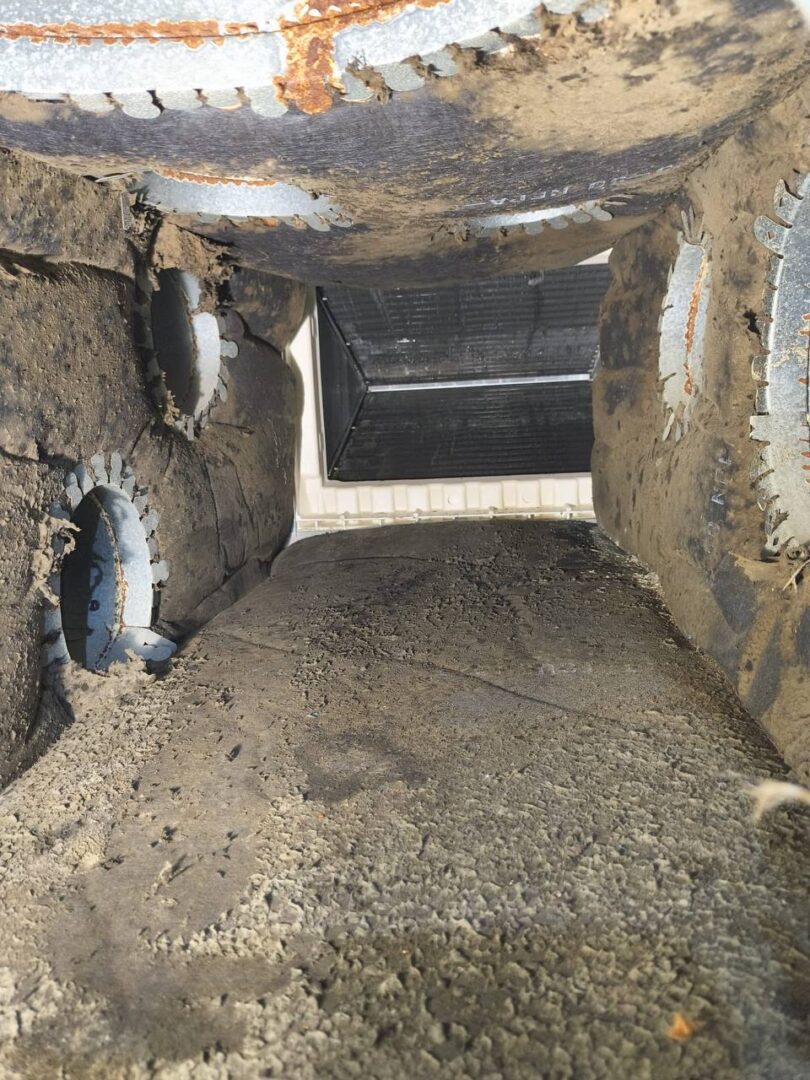
After a Houston renovation, the right ductwork question is not whether every remodeled home needs cleaning. The useful first step is to document what the project may have disturbed, what parts of the system are accessible, and whether a defined cleaning scope fits the observed conditions.
Short answer: Remodeling can justify an inspection when construction dust, drywall work, insulation disturbance, altered registers, or HVAC work may have affected accessible duct components. A qualified technician should separate visible findings from assumptions and explain whether cleaning, repair, HVAC service, or another specialist is the appropriate next step.
Why remodeling changes the inspection question
Renovation work can change the relationship between rooms, registers, returns, and equipment. A wall may be opened, a ceiling replaced, a kitchen or addition extended, or an HVAC component moved. Dust from cutting, sanding, drywall finishing, flooring, or insulation work may settle near openings. Those possibilities are reasons to ask focused questions, not proof that debris entered every duct section.
Houston projects also occur in homes with long cooling seasons, attic equipment, crawlspaces, and mixed original and replacement materials. Heat and humidity may make insulation condition, condensation management, and access important observations around the system. A post-project review should record what was actually seen and identify areas that could not be reached without opening finished construction.
What to record before requesting a review
Start with the renovation timeline and scope. Note which rooms were opened, whether ceilings or walls were removed, whether registers or returns were covered, and whether the HVAC system operated during dusty work. Keep photographs, contractor notes, and any record of temporary filter protection. Also record when registers were cleaned, when the filter was changed, and whether any equipment or duct connections were altered.
- Rooms affected by demolition, sanding, drywall, flooring, insulation, or cabinet work.
- Registers, grilles, or returns removed, replaced, painted, or temporarily covered.
- Visible material near openings, unusual debris, staining, or damage.
- Any roof, plumbing, or equipment event that changed the surrounding area.
- New airflow concerns, rattling, disconnected covers, or a filter that does not fit correctly.
Do not push debris into a register while attempting to clean it. Vacuum loose material from accessible grille surfaces carefully, keep openings protected during remaining work, and ask the renovation contractor how dust control was handled. These steps preserve useful evidence without turning a household observation into a diagnosis.
Which components may be inspected
An inspection-led visit may review accessible supply registers, return grilles, register boots, branch connections, trunk sections, filter areas, and relevant air-handler surroundings. The exact scope depends on the home’s construction, safe access, equipment layout, and the work performed. Finished ceilings and walls can limit visibility, so the report should state what was viewed and what remained inaccessible.
Accessible components may be checked for loose debris, separated joints, damaged surfaces, displaced insulation, obstructions, or other conditions relevant to the renovation history. The technician should distinguish construction material from ordinary household dust and distinguish a visible condition from a claim about concealed sections. Photos or notes can make that explanation easier to follow.
Inspection does not require unnecessary removal of finished materials. If a section cannot be reached safely, that limitation is part of an honest scope. A homeowner should be wary of a blanket conclusion about every hidden section when the visit did not establish what is present there.
Cleaning, repair, and HVAC work are different scopes
A defined cleaning recommendation may make sense when accessible components show substantial loose material or another documented cleanliness condition that is included in the proposed work. The recommendation should identify the components addressed and explain the preparation and protection plan. It should not promise that cleaning changes every system performance issue or reaches every concealed section.
Some post-renovation findings point elsewhere. Separated duct joints, crushed flexible duct, damaged lining, missing insulation, active moisture, electrical concerns, refrigerant equipment, or a persistent equipment problem may require an HVAC, insulation, building, or other qualified specialist. Cleaning should not be presented as a substitute for repairing a leak, correcting moisture, replacing damaged material, or servicing equipment.
Filter changes and ordinary HVAC maintenance are separate from duct cleaning. Use the filter size and replacement guidance for the equipment and household conditions. Keep returns and supplies unobstructed, and ask an HVAC professional about equipment operation when airflow or temperature behavior changed after the project. Separating these scopes keeps a visible renovation concern from becoming an unsupported conclusion.
Questions to ask before scheduling service
- What specific accessible finding supports the proposed scope?
- Which registers, returns, connections, and equipment-adjacent areas are included?
- Which sections cannot be viewed because of finished construction or access limits?
- How will the home and the newly renovated areas be protected?
- Will the visit document observations with notes or photographs?
- How will damaged insulation, moisture, pests, or equipment concerns be referred?
- What should be repaired or evaluated before cleaning is considered?
- What follow-up information will be provided after the visit?
What to expect during an inspection-led Houston visit
A professional visit should begin with the renovation history, the homeowner’s concern, and the system layout. The technician can then identify safe access points, review relevant components, document observations, and explain limitations. If cleaning appears appropriate, the scope should be specific and tied to the accessible findings rather than to the home’s renovation status alone.
Before work begins, confirm the path through finished rooms, floor and surface protection, register handling, and any areas that must remain closed. Ask how the system will be left at the end of the work and what observations should be shared with the renovation contractor or HVAC specialist. For broader context, read our air duct cleaning guide, review Houston air duct cleaning service, or see our air duct cleaning information.
Timing can matter after a remodel. If sanding, painting, flooring, or insulation work is still active, ask the project team when dust-producing work is complete and how openings will be protected before an inspection. A visit performed while materials are still moving through the home may document a temporary condition rather than the finished result. The technician and contractor should coordinate access without interrupting equipment safety or leaving open registers exposed.
For a useful record, keep the visit report with renovation documents and note the date, accessible areas, photographs, filter condition, and any recommendations outside the cleaning scope. If later work changes a register, return, filter rack, or duct connection, update that record. Clear documentation helps a homeowner compare observations over time and helps separate a new renovation event from an older system condition. It also gives the next technician a factual starting point instead of relying on memory or assumptions about the completed renovation.
Frequently asked questions
Does every Houston renovation require air duct cleaning?
No. The renovation history, accessible conditions, system operation, and inspection findings should guide the decision. A project label alone is not proof that cleaning is needed.
What renovation work deserves extra attention?
Demolition, drywall finishing, sanding, insulation work, flooring, register changes, and HVAC alterations may justify focused questions about accessible components and protection during the project.
Can duct cleaning fix airflow changes after remodeling?
Not necessarily. Airflow changes can involve a filter, damper, leak, insulation, equipment, balancing, or duct design. An HVAC evaluation may be needed alongside any cleaning discussion.
What if I see damaged insulation or moisture?
Ask an appropriate qualified specialist to evaluate the underlying condition. Cleaning should not be presented as a replacement for moisture correction or material repair.
What should I prepare before a Houston inspection?
Gather the renovation timeline, affected rooms, photographs, filter history, equipment notes, and any visible observations. Share access limits and ask for a clearly defined inspection-led scope.
When you are ready to discuss the home’s renovation history and an inspection-led scope, contact AH-CHOO Indoor Air with your questions.