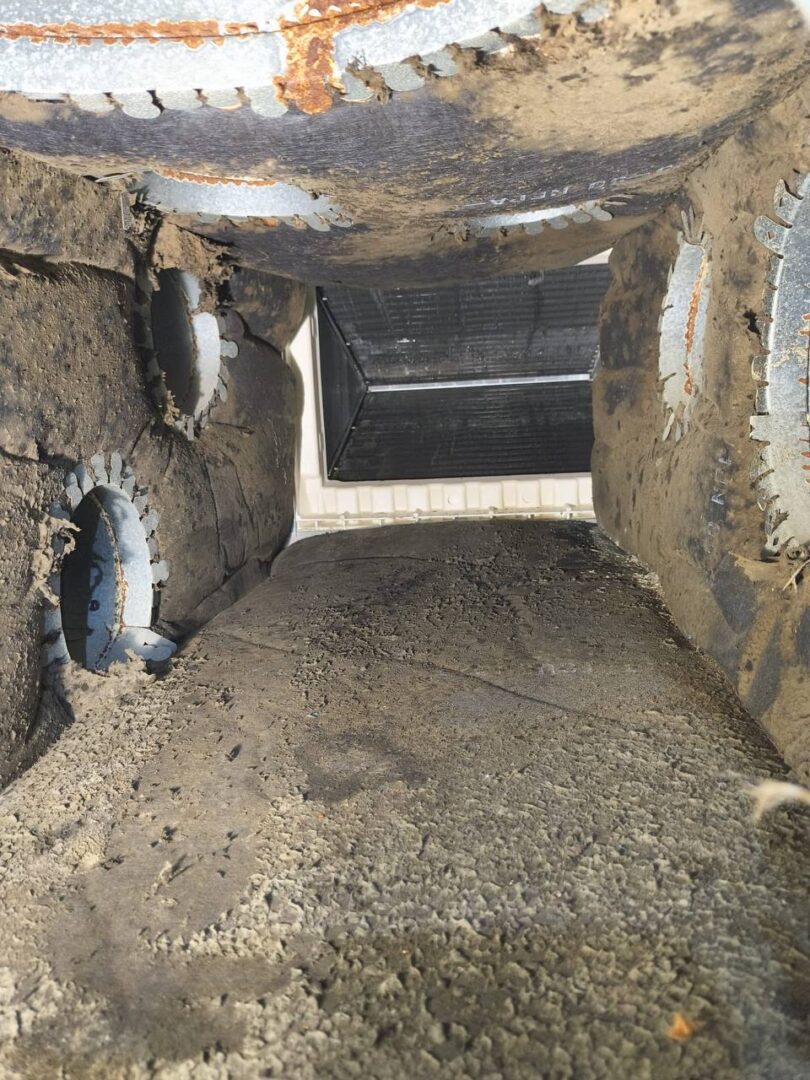
Homeowners researching air duct cleaning older homes Houston can start with the home’s documented condition rather than its age. Older Houston homes often have ductwork shaped by decades of repairs, additions, insulation work, equipment replacements, and changing household use. The right question is not whether a home is old enough to need cleaning. The better question is what an inspection can document about accessible components and whether a defined cleaning scope fits the findings.
Short answer: Older-home ductwork is worth an inspection when its condition or history raises a specific question, such as visible debris at accessible registers, separated connections, damaged insulation, or a renovation that disturbed the system. Age alone is not proof that cleaning is needed.
What makes older Houston duct systems worth inspecting
Many Houston homes built or remodeled over different periods contain more than one kind of duct section. An original metal trunk may connect to later flexible branches, replacement registers, or an extension added during a room remodel. Access may vary between an attic, crawlspace, mechanical closet, and finished ceiling. A useful inspection records what can actually be seen and what remains inaccessible.
Houston’s long cooling season and humid weather also make system history relevant. Condensation management, prior leaks, insulation condition, and equipment changes can affect the surrounding area. These factors do not automatically establish a cleanliness problem. They explain why an inspection-led conversation is more reliable than a calendar rule or a conclusion based only on a dusty grille.
Homeowners may also seek a review after construction dust, a roof or plumbing leak, pest activity, or an HVAC replacement. Each situation calls for attention to the underlying condition and a clear explanation of which work is within a duct-cleaning scope.
How heat, humidity, renovations, and prior HVAC work affect older ductwork
Heat in an attic can stress aging materials and connections. Humidity can make moisture management and insulation condition important observations near HVAC equipment. A renovation can introduce sawdust, drywall dust, or insulation debris near registers and returns. Prior HVAC work can leave capped branches, altered plenums, replacement filter racks, or connections that deserve documentation.
None of these observations should be treated as a diagnosis. A qualified technician should distinguish visible conditions from assumptions and explain the limits of a visual review. If the concern involves active moisture, structural openings, electrical components, refrigerant equipment, pests, or damaged insulation, the appropriate specialist may be a building, HVAC, insulation, or pest professional rather than a cleaning crew alone.
Which accessible components may be reviewed
An inspection-led visit may review accessible supply and return openings, registers, grilles, branch connections, trunk lines, filter areas, and relevant air-handler surroundings. The exact scope depends on construction, safety, access, and the system layout. Finished walls and ceilings may prevent direct viewing of some sections, so a responsible report should identify those limitations.
- Supply registers and return grilles for visible debris, staining, damage, or obstructions.
- Accessible duct joints and boots for separation, gaps, loose insulation, or damaged surfaces.
- Filter location and fit, because a poorly seated filter can affect how material enters the system.
- Equipment-adjacent areas for visible condition concerns that should be referred to an HVAC specialist.
- Attic or crawlspace sections where safe access exists and where insulation or moisture context matters.
Inspection is not an invitation to open finished surfaces unnecessarily. The technician should explain what was observed, what was not accessible, and whether photographs or other documentation support the recommendation.
Findings that may support a cleaning or repair recommendation
A cleaning recommendation is strongest when it is tied to a defined, observable condition in accessible components. Examples may include substantial loose debris at accessible openings, recurring material near registers after ordinary housekeeping, or documented accumulation in components included in the proposed scope. The recommendation should identify which components will be addressed and which will not.
Other findings point toward repair or another trade. Separated joints, damaged duct lining, crushed flexible duct, missing insulation, active moisture, pest entry, or equipment faults should not be presented as problems that cleaning alone resolves. Weak airflow can have several causes, including a filter, damper, leak, insulation issue, equipment condition, balancing, or duct design. The service discussion should keep those possibilities separate.
Older homes deserve especially clear documentation because a mixed system may need more than one kind of work. Ask for the reason behind each recommendation and whether the proposed service is cleaning, repair, HVAC maintenance, or referral. A measured scope protects the homeowner from treating every visible imperfection as a reason for the same service.
Cleaning versus filter changes and ordinary HVAC maintenance
Air duct cleaning and routine HVAC maintenance are different activities. A correctly sized filter, replaced according to the equipment maker’s guidance and household conditions, helps manage material entering the system. Keeping supply registers and return grilles unobstructed supports normal operation. Vacuuming loose dust from accessible grille surfaces without pushing it into the opening is a sensible housekeeping step.
Routine HVAC maintenance may involve equipment inspection, electrical work, refrigerant-related service, coil care, condensate management, or airflow evaluation. Those tasks belong in the appropriate HVAC conversation. Cleaning accessible duct components does not replace repair of leaks, correction of moisture, replacement of damaged materials, or service of equipment.
Keep records of filter changes, renovations, leaks, equipment replacements, and prior observations. Records help a technician understand why a review is being requested and help the homeowner compare a new recommendation with the home’s history.
Questions to ask before scheduling service
- What specific accessible finding supports the recommended scope?
- Which supply, return, register, and equipment-adjacent components are included?
- Which sections cannot be viewed because of finished construction or access limits?
- Will the visit document conditions with notes or photographs?
- How will damaged insulation, moisture, pests, or equipment concerns be handled?
- What should be repaired or referred before cleaning is considered?
- How will the system and home be protected during the work?
- What follow-up information will I receive after the visit?
What to expect during an inspection-led visit
A professional visit should begin with a conversation about the home’s age, renovations, equipment history, recent events, and the reason for the request. The technician can then identify accessible components, document relevant observations, and explain limitations. If cleaning appears appropriate, the scope should be specific rather than a blanket promise about every hidden section.
Before work begins, confirm the access plan and the areas that will be protected. Afterward, ask what was observed, which components were addressed, and whether any separate repair or specialist referral is recommended. For a broader overview, read our air duct cleaning guide, then review Houston air duct cleaning service or air duct cleaning for service context.
For older properties, access planning matters as much as the observations themselves. Clear a path to the air handler and note areas that may require a ladder or crawlspace access before the appointment. Do not move heavy equipment or remove finished construction just to make a section visible. Tell the technician about pets, children, recent contractors, and any rooms that must remain protected. These details help the visit stay focused, safe, and respectful of the home.
Frequently asked questions
Does an older Houston home automatically need air duct cleaning?
No. Age is background context, not a diagnosis. Accessible conditions, system history, and an inspection should guide the decision.
What should be inspected first in an older home?
Accessible supply and return openings, registers, grilles, connections, filter areas, and relevant equipment surroundings should be reviewed, with limitations documented.
Can cleaning fix weak airflow?
Not necessarily. Weak airflow can involve filters, dampers, leaks, insulation, equipment, balancing, or duct design. Inspection helps identify the appropriate next step.
What if I find moisture or damaged insulation?
Ask an appropriate qualified specialist to evaluate the underlying condition. Cleaning should not be presented as a substitute for moisture correction or material repair.
What should I do before requesting a Houston inspection?
Note recent renovations, leaks, equipment work, filter changes, visible conditions, and rooms with unusual airflow. Share that history and ask for a clearly defined, inspection-led scope.
When you are ready to discuss an inspection-led visit, contact AH-CHOO Indoor Air with the home’s history and your questions.