Marble Falls, Texas sits in the heart of the Texas Hill Country along the Colorado River at Lake LBJ — a region defined by limestone geology, dense juniper-oak woodlands, and a rapidly growing population drawn to the area’s natural beauty and small-town character. But the same features that make Marble Falls an attractive place to live also create unique indoor air quality (IAQ) challenges that homeowners in this Burnet County community need to understand.
Despite having a service page for Austin air duct cleaning — from which Marble Falls is served (approximately 45 minutes south) — the site has no dedicated content addressing Marble Falls’ specific IAQ conditions. This guide fills that gap with a focused look at what makes indoor air quality in Marble Falls TX unique and how NADCA-certified air duct cleaning addresses the specific contaminants found in homes across this Hill Country community.
Why Marble Falls Has Unique Indoor Air Quality Challenges
Marble Falls’ IAQ challenges stem from five interconnected factors that differentiate this Lake LBJ community from Texas’s larger metropolitan areas:
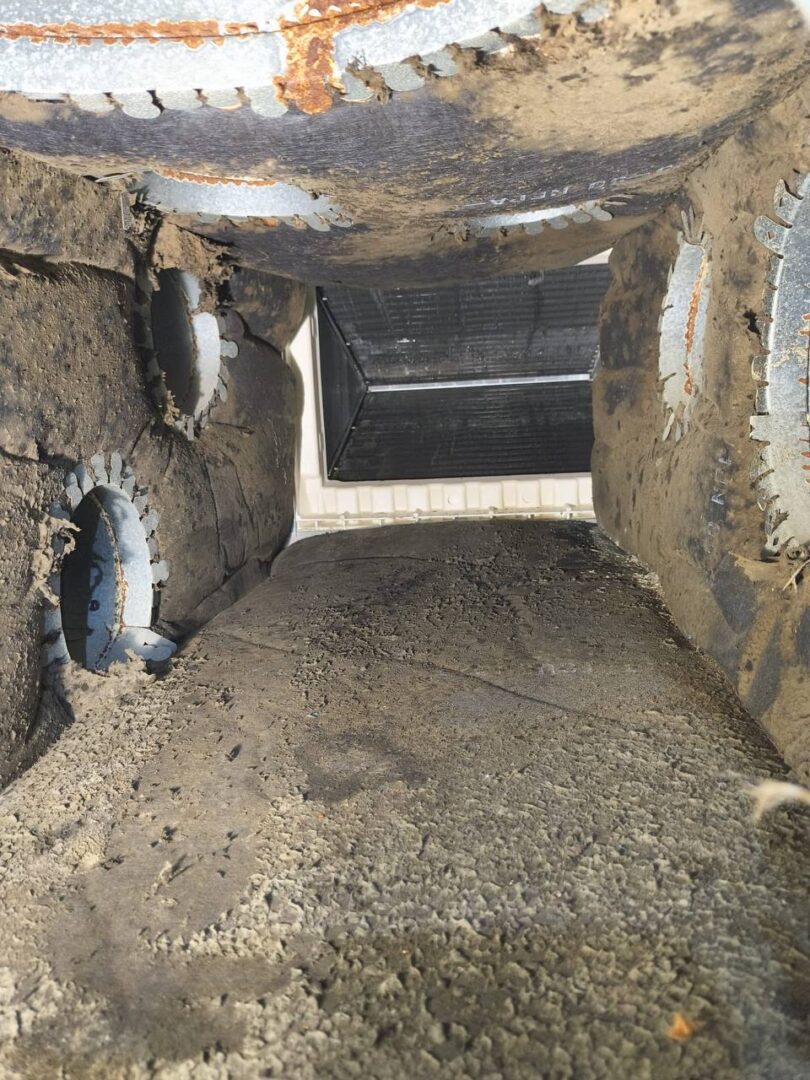
- Hill Country limestone geology. Marble Falls sits on the Ellenburger limestone formation — one of the most extensive limestone beds in Texas. Unlike the clay-based soils of Houston and East Texas, limestone weathers into fine alkaline dust that becomes airborne during dry periods and infiltrates homes through door seals, window gaps, and HVAC return air intakes. This calcium carbonate-rich dust is distinctly different from the silica-based dust found in coastal regions — it’s finer, more abrasive, and accumulates in ductwork as a fine white or light-gray powder that reduces HVAC efficiency over time.
- Cedar fever season (December-February). Marble Falls sits in the heart of Texas’s most severe Ashe juniper (mountain cedar) zone. The Hill Country’s dense stands of mature juniper produce some of the highest pollen counts recorded in North America — regularly exceeding 10,000-15,000 grains per cubic meter during peak cedar fever season (December-February). Unlike tree pollens that travel primarily in spring, juniper pollen releases during winter when homes are sealed tight, trapping pollen indoors where it recirculates through HVAC ductwork.
- Lake LBJ and Colorado River humidity. Marble Falls’ proximity to Lake LBJ and the Colorado River corridor creates a localized humidity microclimate. The 21,000-acre lake acts as a moisture source, raising relative humidity in the Marble Falls area by 5-10% compared to higher-elevation Hill Country towns. This sustained humidity — combined with limestone moisture retention in the soil — creates conditions conducive to microbial growth in HVAC systems.
- Wildfire smoke from Hill Country wildland fires. The juniper-oak brushlands surrounding Marble Falls create significant wildfire risk during dry periods (typically June-September, increasingly extending into winter during drought conditions). Smoke from wildland fires produces fine PM2.5 that settles into HVAC systems and can persist in ductwork for months after fire events.
- New construction dust from rapid development. Marble Falls is one of the fastest-growing communities in the Texas Hill Country, with new subdivisions, retirement communities, and custom homes under continuous construction. Active building sites generate PM10 (coarse construction dust) that blankets nearby properties and infiltrates HVAC systems through return air intakes.
- Limestone well water sediment in HVAC systems. Many Marble Falls-area homes rely on well water drawn from limestone aquifers. Evaporative cooling systems and whole-house humidifiers that use this water can introduce fine calcium carbonate sediment into ductwork — a contaminant source unique to limestone-formation communities.
Cedar Fever Season and Your Marble Falls HVAC System
Ashe juniper (mountain cedar) pollen is arguably the most significant IAQ concern for Marble Falls homeowners, and its relationship with HVAC systems is poorly understood by most residents.
How Cedar Pollen Enters Ductwork
Ashe juniper pollen grains are remarkably small — approximately 20-25 microns in diameter — which allows them to bypass standard HVAC filters rated at MERV 8 or below. The pollen enters homes through multiple pathways during cedar fever season (December-February):
- Through open doors and windows during mild winter days when homeowners air out homes
- Through HVAC fresh air intakes that draw outdoor air directly into the return plenum
- Through gaps in door seals, window frames, and attic bypasses common in Hill Country homes
- On clothing and pets that bring pollen indoors from outdoor exposure
Once inside, pollen settles into ductwork — particularly in low-velocity sections, at register boots, and in the air handler compartment — where it recirculates each time the HVAC system runs, prolonging exposure long after outdoor pollen levels drop.
Why Standard Filters Aren’t Enough
Most residential HVAC systems use MERV 8 filters, which capture approximately 70-85% of particles 3-10 microns but only 20-35% of particles in the 1-3 micron range — the size class that includes Ashe juniper pollen. Upgrading to a MERV 11 or MERV 13 filter improves capture but also increases static pressure, which can reduce airflow and strain the blower motor if the system wasn’t designed for higher-MERV filtration.
The most effective approach for Marble Falls homes is source-removal duct cleaning after cedar fever season ends, combined with proper filtration during the active pollen season.
Limestone Dust in Marble Falls Air Ducts
Fine alkaline particulate from Hill Country limestone soils is a year-round IAQ challenge for Marble Falls homeowners that few outside the region are familiar with.
How Limestone Dust Differs from Other Dust
Limestone dust — chemically calcium carbonate (CaCO3) — has properties distinctly different from the silica-based dust common in Gulf Coast regions:
- Alkaline pH (7.5-8.5). Limestone dust is alkaline, meaning it can affect indoor surfaces differently than neutral-pH dust. In ductwork, alkaline dust can accelerate corrosion of aluminum evaporator coils and create conditions that favor certain bacterial populations.
- Abrasive particle shape. Limestone dust particles are angular and sharp-edged compared to the rounded particles of windblown silica dust. This abrasiveness can accelerate wear on blower wheel surfaces and duct liners over time.
- Fine particle size. Most limestone dust particles are in the 2.5-10 micron range (PM2.5 to PM10), meaning they remain airborne longer and penetrate deeper into ductwork than heavier construction debris.
- Hygroscopic properties. Limestone dust absorbs moisture from humid air, creating small clumps that adhere to vertical duct surfaces and resist removal by airflow alone.
Detection Signs for Limestone Dust in Ductwork
- Fine white or light-gray dust on furniture near HVAC supply registers
- Visible powder accumulation inside supply registers when removed for inspection
- Dust returning to surfaces within hours of cleaning during dry, windy periods
- Higher indoor dust levels than neighboring homes on non-limestone soil (e.g., homes closer to the Colorado River floodplain)
Humidity and Mold Risks Near Lake LBJ
Lake LBJ — a 21,000-acre reservoir on the Colorado River — creates a localized humidity effect that significantly impacts indoor air quality in Marble Falls homes.
The Lake LBJ Microclimate
Water bodies of Lake LBJ’s size create microclimates where evaporation raises the water vapor content of the air above natural background levels. In Marble Falls, the prevailing south-southeast wind — which passes over open water before reaching developed areas — produces afternoon relative humidity readings 5-10% higher than communities just 10-15 miles inland, such as Burnet or Llano.
This persistent humidity affects HVAC systems in three ways:
- Condensation in ductwork. When humid outdoor air enters ductwork through leaks in the return plenum or through fresh air intakes, it can condense on cool duct surfaces — particularly in supply ducts running through unconditioned attics or crawl spaces. This moisture creates conditions for microbial growth.
- Slab foundation moisture wicking. Marble Falls-area homes with slab foundations on limestone bedrock experience different moisture dynamics than homes on clay soils. Limestone absorbs rainfall and releases it slowly through evaporation, creating sustained ground-level humidity that can wick through slab floors into living spaces.
- Duct liner degradation. Sustained high humidity accelerates degradation of fiberglass duct liner material and flex duct inner liners, particularly in attics where summer temperatures exceed 140°F. Degraded liner material releases fiberglass particles into the airstream.
Signs Your Marble Falls Home Needs Duct Cleaning
Marble Falls homeowners should watch for these Hill Country-specific signs that indicate professional duct cleaning may be needed:
- Visible limestone dust around vents. If you notice fine white or light-gray dust accumulating on furniture near HVAC supply registers — particularly after dry, windy periods — limestone dust has likely accumulated in your ductwork.
- Cedar pollen accumulation in registers. If you see fine yellow-green powder inside supply registers during or after cedar fever season (December-February), juniper pollen has entered your duct system and will recirculate until removed by professional cleaning.
- Musty smells after rain events. If your home develops a musty or mildew-like odor when the HVAC runs after several days of rain, moisture from the Lake LBJ microclimate may be supporting microbial growth in ductwork.
- Uneven cooling in multi-zone Hill Country homes. Many Marble Falls homes have multi-zone HVAC systems designed for open-plan Hill Country layouts. Uneven cooling between zones can indicate duct obstructions from accumulated debris.
- Higher energy bills without increased usage. Debris accumulation in ductwork reduces HVAC efficiency by restricting airflow and insulating heat transfer surfaces. A sudden increase in energy costs may indicate duct obstruction.
- New construction nearby. If a subdivision or custom home is being built within a quarter mile of your property, construction dust is infiltrating your HVAC system through return air intakes.
Why Professional Source-Removal Cleaning Matters for Hill Country Homes
Marble Falls’ unique contaminant profile — limestone dust, juniper pollen, wildfire PM2.5, and humidity-related microbial growth — requires professional cleaning methods that go beyond consumer-grade equipment.
NADCA (National Air Duct Cleaners Association) standard source-removal cleaning uses:
- HEPA-filtered negative air machines that create controlled negative pressure in the duct system, preventing contaminants from escaping into living spaces during cleaning
- Agitation devices (compressed air whips, rotary brushes, or air skippers) that dislodge adhered contaminants — including limestone dust that has bonded to duct surfaces through humidity
- Contact vacuuming of the air handler compartment, evaporator coil, blower wheel, and plenum — areas where fine limestone dust and pollen accumulate most densely
- Antimicrobial treatment for homes with confirmed microbial growth, using EPA-registered products applied to accessible duct surfaces
Source-removal cleaning is particularly important for limestone dust, which adheres to duct surfaces more tenaciously than household dust and cannot be removed by DIY methods such as vacuuming registers or using duct cleaning aerosol sprays.
Frequently Asked Questions About Indoor Air Quality in Marble Falls TX
How does Marble Falls’ location on the Colorado River and Lake LBJ affect indoor air quality?
Marble Falls sits on the Colorado River corridor at Lake LBJ, where the 21,000-acre reservoir creates a localized humidity microclimate. Afternoon relative humidity in Marble Falls is typically 5-10% higher than inland Hill Country communities. This sustained moisture — combined with limestone soil moisture retention — creates conditions favorable to microbial growth in HVAC ductwork, particularly in homes near the lakeshore and along the river corridor.
Is cedar fever worse in Marble Falls than other parts of the Hill Country?
Marble Falls sits in the heart of the most severe Ashe juniper (mountain cedar) zone in Texas. The dense juniper woodlands surrounding the city produce pollen counts that regularly exceed 10,000-15,000 grains per cubic meter during December-February — among the highest concentrations recorded in North America. Because Marble Falls occupies a valley position along the Colorado River, cold air drainage and valley topography can concentrate pollen near ground level during cedar fever season.
How does limestone dust from construction and dry conditions affect Marble Falls HVAC systems?
Limestone dust from the Ellenburger limestone formation produces fine alkaline calcium carbonate particles that infiltrate HVAC systems through return air intakes. Unlike neutral-pH household dust, limestone dust is alkaline (pH 7.5-8.5), abrasive, and hygroscopic — meaning it absorbs moisture and adheres to duct surfaces. Professional source-removal cleaning is required to remove adhered limestone dust from duct surfaces.
Does AH-CHOO serve the Marble Falls TX area for air duct cleaning?
Yes. AH-CHOO provides NADCA-certified air duct cleaning, HVAC sanitation, and indoor air quality services throughout the Marble Falls TX area, including the Lake LBJ shoreline, Meadowlakes, Horseshoe Bay, Cottonwood Shores, Granite Shoals, and all Burnet County communities within our Austin service radius. Contact us to schedule a free in-home IAQ assessment.
Disclaimer: This information is for educational purposes only. AH-CHOO’s air duct cleaning services are designed to improve HVAC system cleanliness and indoor air quality but do not prevent illness, cure allergies, or guarantee specific health outcomes. Individual results vary. Always consult a qualified healthcare provider for health concerns related to indoor air quality.
Related AH-CHOO resources: Austin air duct cleaning.