Alamo Heights — one of San Antonio’s most established and affluent neighborhoods — offers a charming blend of historic homes, mature tree-lined streets, and walkable urban living. But the very features that make Alamo Heights desirable also create a specific set of indoor air quality challenges that differ from newer suburban developments in Stone Oak or Schertz.
This guide covers the IAQ factors unique to Alamo Heights homes — from mature oak canopy pollen to pre-1980 ductwork considerations — and explains when professional duct cleaning can meaningfully improve your home’s air quality.
What Makes Alamo Heights Indoor Air Quality Unique
Alamo Heights sits just north of downtown San Antonio in Bexar County, occupying a transition zone between the urban core and the Hill Country. Several factors combine to create its IAQ profile:
- Mature tree canopy pollen: Alamo Heights is known for its massive live oaks, Texas oaks, and Ashe junipers. These mature trees produce heavy pollen loads — oak pollen in March-April and juniper/cedar pollen December-February. The dense canopy also traps ground-level moisture and reduces airflow around homes, prolonging pollen suspension.
- Older home construction and ductwork: Many Alamo Heights homes were built between 1920 and 1980, meaning original ductwork may be decades old. Pre-1980 duct insulation may contain asbestos, and older flex duct liners can degrade, releasing fiberglass particles into the airstream. Galvanized steel duct systems can develop interior rust in unconditioned spaces.
- Proximity to I-35 and US-281: Alamo Heights is sandwiched between I-35 and US-281, two of San Antonio’s busiest commuter corridors. Diesel PM2.5 from heavy traffic infiltrates homes, especially those within a quarter-mile of these highways.
- Limestone soil and fine alkaline dust: Alamo Heights sits on the Edwards Plateau limestone formation. The fine, alkaline limestone dust is easily tracked indoors and accumulates in HVAC systems, accelerating filter loading and component wear.
- Historic home envelope challenges: Older homes often have less effective air sealing than modern construction. Gaps around windows, doors, and attic penetrations allow unfiltered outdoor air — and whatever particulates it carries — to enter the home directly.
Common Alamo Heights Indoor Air Pollutants
Alamo Heights homeowners face a specific set of indoor pollutants driven by the neighborhood’s age, location, and vegetation:
- Oak and juniper pollen: Mature tree canopy produces heavy seasonal pollen loads. Live oak pollen (March-April) and Ashe juniper pollen (December-February) are the primary biological particulates affecting Alamo Heights homes.
- Limestone dust: Fine alkaline dust from the Edwards Plateau is ubiquitous — it appears as a fine white-gray powder on surfaces and is more abrasive than typical house dust.
- Diesel PM2.5 from I-35 and US-281: The convergence of these two major corridors near Alamo Heights means higher traffic-related PM2.5 exposure than most other San Antonio neighborhoods.
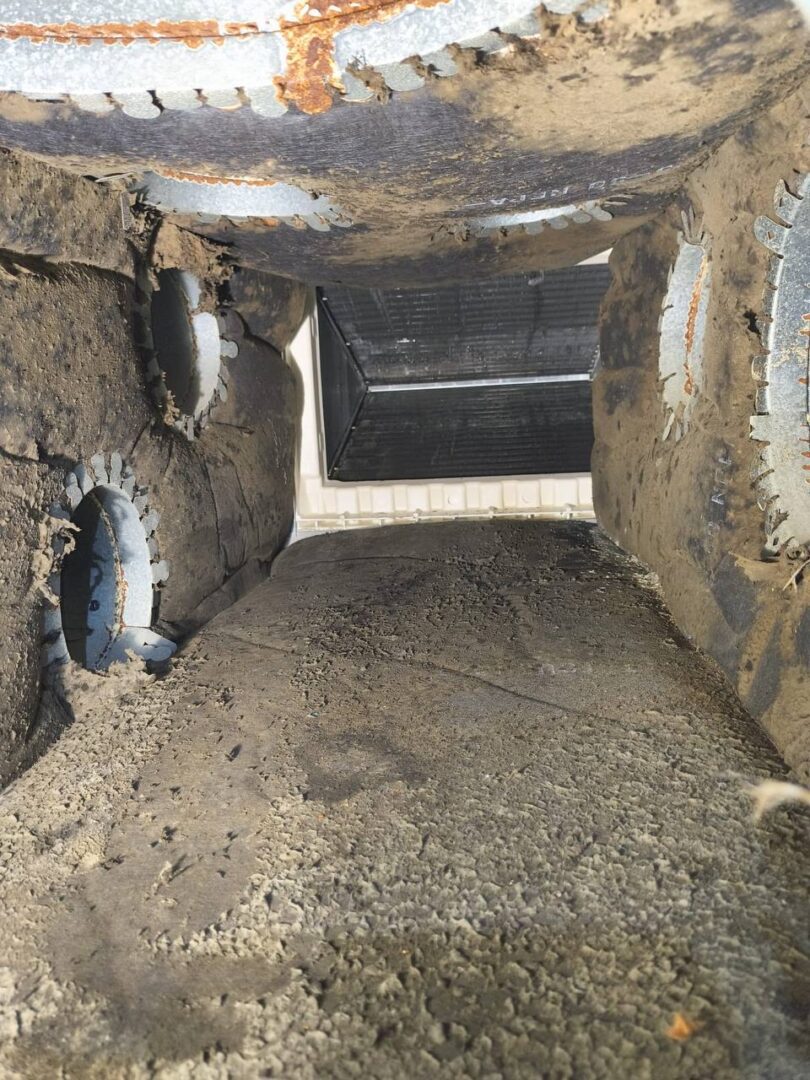
- Aged duct debris: Older ductwork can harbor accumulated debris from decades of use — degraded insulation particles, settled dust, rodent debris, and microbial biofilm in sections with past moisture exposure.
- Leaf mold and organic debris: Heavy leaf fall from mature oaks creates organic debris that can enter crawl spaces and attic areas, decomposing and releasing fungal spores.
Why Older Home Ductwork Needs Special Attention
Alamo Heights’ housing stock — much of it built before modern HVAC standards — presents unique ductwork considerations:
- Asbestos insulation risk: Ductwork in pre-1980 homes may have asbestos-containing insulation on exterior wrap or in duct board. Disturbing this material during cleaning requires specialized procedures. A NADCA-certified company will identify and handle ACM (asbestos-containing material) according to EPA and OSHA standards.
- Degraded flex duct liners: Older flex duct (pre-2000) often has inner liners that separate from the outer insulation, creating ridges that trap debris and restrict airflow. This condition is invisible without a video inspection.
- Galvanized steel duct rust: Steel duct systems in unconditioned basements or crawl spaces can develop interior surface rust from condensation, especially in areas where insulation has deteriorated. Rust particles can enter the airstream and stain registers.
- Rodent intrusion in older construction: Older homes often have more attic access points for rodents. Droppings, nesting material, and urine contamination in ductwork are common findings in Alamo Heights homes during professional inspections.
How Alamo Heights’ Location Affects Commute Corridor PM2.5
Alamo Heights’ central location between I-35 and US-281 means traffic-related pollution is a year-round IAQ factor:
- Dual corridor exposure: Unlike neighborhoods in Stone Oak (near US-281 only) or Schertz (near I-35 only), Alamo Heights is affected by both I-35 and US-281. During morning and evening rush hours, PM2.5 concentrations are elevated throughout the neighborhood.
- Diesel freight component: I-35 is the primary NAFTA trade route, carrying heavy diesel truck traffic 24/7. The fine diesel particulate (PM2.5) penetrates standard HVAC filters and accumulates in ductwork.
- Infiltration pattern: Older Alamo Heights homes typically have more air leakage than newer construction, meaning outdoor PM2.5 infiltrates more readily. Homeowners near the I-35 corridor often notice faster dust accumulation on surfaces within the neighborhood than in newer, tighter homes.
When Alamo Heights Homeowners Should Consider Duct Cleaning
Given Alamo Heights’ older housing stock and specific IAQ challenges, duct cleaning is beneficial in these situations:
- If you have an older home with unknown duct history: A video inspection can reveal decades of accumulated debris, degraded insulation, or rodent contamination that affects IAQ.
- Near I-35 or US-281 with dark register soiling: Rapid register darkening (within days of cleaning) is a sign that traffic-related PM2.5 is accumulating in your ductwork.
- If seasonal allergies persist indoors during cedar fever season: Significant juniper pollen accumulation in ducts can prolong symptoms beyond the outdoor pollen season.
- Before major home renovation: If you’re renovating an older Alamo Heights home, consider duct cleaning after construction to remove renovation debris from the HVAC system.
- Following the NADCA-recommended 3-5 year cleaning cycle: For older homes with original ductwork, annual inspections are recommended to monitor duct condition.
Before scheduling any cleaning, request a thorough video inspection of your ductwork. A NADCA-certified company serving Alamo Heights will provide a detailed assessment and identify any pre-1980 asbestos concerns before recommending service.
FAQs About Indoor Air Quality in Alamo Heights TX
Q: What indoor air quality problems are most common in Alamo Heights homes?
A: The most common IAQ issues are oak and juniper pollen from mature tree canopy, limestone dust infiltration, diesel PM2.5 from nearby I-35/US-281, and aged ductwork concerns in pre-1980 homes — including degraded insulation, rodent debris, and potential asbestos-containing materials.
Q: Does Alamo Heights have concerns with older ductwork?
A: Yes. Many Alamo Heights homes have original or aged ductwork that may contain asbestos insulation (pre-1980), degraded flex duct liners, galvanized steel rust, or rodent contamination. A professional video inspection is recommended before any cleaning service to assess duct condition.
Q: How does Alamo Heights’ proximity to I-35 affect indoor air quality?
A: Alamo Heights is between I-35 and US-281, two of San Antonio’s busiest corridors. Diesel PM2.5 from heavy traffic infiltrates homes, especially in older homes with less effective air sealing. Dark register soiling within days of cleaning is a common sign of traffic-related PM2.5 accumulation.
Q: When is the worst time of year for IAQ in Alamo Heights?
A: The most challenging period is December-February (cedar/juniper pollen season) combined with winter home sealing that traps indoor pollutants. March-April (oak pollen season) is a close second for allergy sufferers.
Q: Does AH-CHOO serve the Alamo Heights area?
A: Yes. AH-CHOO provides professional air duct cleaning and IAQ services throughout Alamo Heights and central San Antonio. All services are performed by NADCA-certified technicians using HEPA-filtered source removal equipment with specialized procedures for older duct systems.
Disclaimer: AH-CHOO Indoor Air Quality provides professional duct cleaning and HVAC sanitation services. We do not perform independent air quality testing. This guide is for educational purposes and does not constitute medical advice.
Related AH-CHOO resources: San Antonio air duct cleaning; schedule a free inspection.