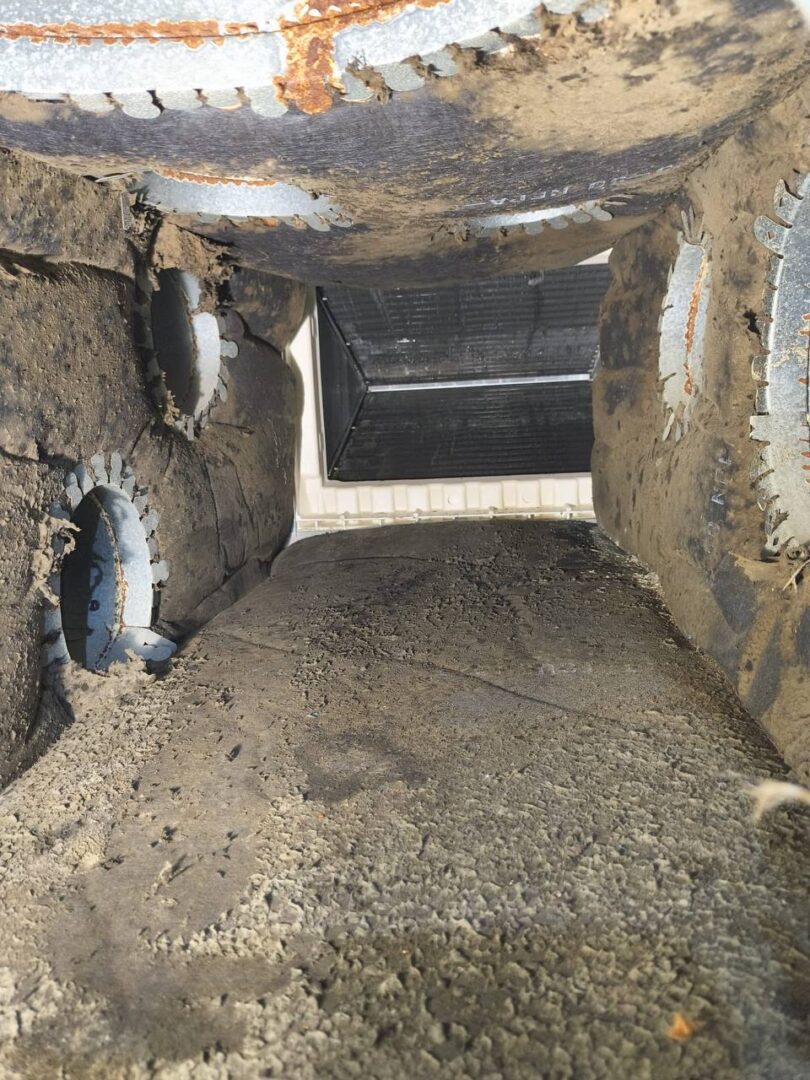
An air duct inspection gives Baton Rouge homeowners a clear look at the condition of the HVAC air-distribution system before deciding what attention it may need. Instead of assuming every dusty room or musty odor points to the same issue, an inspection focuses on visible evidence inside accessible supply ducts, return ducts, registers, and air-handling components. That evidence-first approach is especially useful in South Louisiana, where long cooling seasons, high outdoor humidity, storms, renovation activity, and heavy HVAC use can affect homes in different ways.
AH-CHOO! Indoor Air provides professional duct-system evaluations for Baton Rouge and surrounding communities. This guide explains what an inspection covers, when to consider one, what questions to ask, and how the findings can support a practical next step without guesswork.
What Is an Air Duct Inspection?
An air duct inspection is a focused visual review of accessible parts of the HVAC system. The technician looks for conditions such as accumulated dust and debris, disconnected or damaged duct sections, moisture evidence, deteriorated insulation, pest evidence, and material left behind after construction or remodeling. The goal is to document what is present and identify whether the system appears clean, needs maintenance, or deserves further evaluation by the appropriate trade.
The inspection is different from making a broad conclusion based only on a vent cover. A register may look dusty while the main trunk remains relatively clean, or a clean-looking register may conceal debris farther inside the system. A useful evaluation considers multiple access points and the relationship between the ducts, return path, filter area, blower compartment, and other accessible HVAC components.
Why Baton Rouge Homes Benefit From an Evidence-First Review
Baton Rouge homes operate in a climate where air conditioning runs for much of the year. More runtime means more air moving through filters, returns, supply ducts, and registers. That does not automatically mean a system needs cleaning, but it makes routine observation and good filtration especially important. An inspection helps separate ordinary surface dust from a larger accumulation or a mechanical condition that should be addressed.
- High outdoor humidity: Moist South Louisiana air can contribute to condensation concerns when insulation, sealing, drainage, or equipment operation is not performing as intended. An inspector can note visible moisture evidence without making assumptions beyond what can be observed.
- Long cooling seasons: Frequent HVAC operation moves a large volume of household air through the return side of the system. Filter fit, filter changes, and return leaks can influence the amount of debris entering the ductwork.
- Storm and repair history: Roof work, water intrusion, insulation replacement, and post-storm repairs can disturb material in attics and mechanical spaces. Ducts near those work areas deserve a careful visual review.
- Renovation debris: Drywall sanding, flooring work, and other remodeling activities create fine particles. If registers and returns were not sealed during the project, some of that material may enter the system.
- Mixed housing stock: Baton Rouge includes historic homes, mid-century neighborhoods, rental properties, and recent construction. Duct materials, layouts, access, and repair history vary widely, so a generic recommendation is rarely as useful as direct evidence.
Signs That Make an Inspection Worth Scheduling
No single household symptom proves that ductwork needs cleaning. Several observations together, however, can justify a closer look. Consider an inspection when you notice a change that follows HVAC operation or when the system has a known history that raises questions.
- Visible material at more than one register: Repeated buildup, dark debris, or particles appearing around several supply openings deserves documentation.
- Debris released when the system starts: A visible puff from a register can indicate loose material near that opening or elsewhere in the supply path.
- An odor tied to HVAC runtime: If an odor begins when the equipment starts and fades when it stops, the air-distribution system is a reasonable place to investigate.
- Uneven airflow after basic maintenance: Weak airflow can have several causes. A visual duct review may reveal a crushed flexible run, a disconnected section, a blocked register, or another accessible issue.
- Recent remodeling or construction: Fine project debris can travel through unprotected returns and settle in the system.
- Evidence of pests near ducts or equipment: Damaged insulation, nesting material, or droppings near accessible components should be documented and handled with the appropriate service provider.
- Unknown maintenance history: An inspection can establish a baseline after buying a home or taking responsibility for a property with limited service records.
For a deeper overview of related warning signs, read our guide to dirty air ducts in Baton Rouge. The guide can help you organize what you have observed before a technician arrives.
What a Professional Inspection Should Cover
The exact process depends on system design and safe access, but a thorough inspection should move beyond a quick glance at one register. The technician should explain which areas are accessible, what is being reviewed, and any limitations created by finished ceilings, slab construction, tight attics, or equipment placement.
Supply and Return Ducts
The review should sample both sides of the air-distribution system. Return ducts pull household air toward the equipment, while supply ducts distribute conditioned air back to rooms. Observing both helps establish whether material is localized or appears across multiple components.
Registers, Grilles, and Boots
Register faces and the boots behind them can reveal gaps, loose connections, nearby debris, or material collecting at an opening. These areas also provide practical access points for photographs and visual comparison.
Filter and Return Area
A filter that does not fit its rack can allow air to bypass the media. The technician should note visible gaps, filter condition, and debris near the return or equipment cabinet. Filter selection should follow the HVAC manufacturer’s guidance and the system’s airflow requirements.
Accessible HVAC Components
When safely accessible, nearby components such as the blower area and air-handler cabinet can provide context. Conditions there may help explain what appears inside the ducts. Mechanical defects should be referred to a qualified HVAC professional when they fall outside the inspection scope.
Visible Moisture or Damage
The review should identify visible staining, condensation, deteriorated insulation, open seams, disconnected runs, or crushed flexible duct. Finding moisture evidence is not the same as identifying its source. Roof, plumbing, drainage, envelope, or HVAC issues may require separate evaluation.
What Good Documentation Looks Like
A homeowner should be able to understand why a recommendation was made. Useful documentation includes photographs or video from representative locations, notes identifying the component shown, a summary of visible conditions, and a clear explanation of any access limitations. Ask the technician to distinguish observed facts from possibilities and to identify whether a concern appears isolated or widespread.
Before-and-after imagery is also valuable when work proceeds. It creates a record of the original condition and the completed service. AH-CHOO! follows an inspection-first process so homeowners can review visible findings rather than rely on a vague description.
How to Prepare for the Appointment
- Write down when each odor, dust event, or airflow change occurs and whether it follows HVAC operation.
- Identify rooms where the issue is most noticeable.
- Gather recent HVAC, roof, plumbing, or remodeling records when available.
- Clear reasonable access to registers, return grilles, the air handler, and the filter location.
- Point out any known leaks, storm repairs, pest activity, or disconnected ducts.
- Ask which components were viewed and request documentation of the findings.
Do not remove panels or enter unsafe attic spaces to investigate on your own. A professional can work within safe access limits and explain when another specialist is needed.
What Happens After the Inspection?
The next step should match the evidence. If the system shows only light, ordinary dust, improved filter fit and routine housekeeping may be appropriate. If photographs show substantial debris across multiple accessible components, professional cleaning may be recommended. If there is visible damage, active moisture, or a mechanical issue, repair or source correction should come before or alongside any cleaning decision.
This sequence matters because cleaning alone does not correct a disconnected duct, recurring condensation, an active leak, or filter bypass. Addressing the source helps protect the work and supports better long-term system care. Learn more about AH-CHOO!’s local approach on our Baton Rouge air duct cleaning page and our South Louisiana service guide.
Questions to Ask Before Approving Duct Work
- Which parts of my system did you inspect?
- Can you show me photographs from the supply side, return side, and accessible equipment?
- Does the observed material appear localized or present throughout the system?
- Did you see damaged ductwork, insulation, open seams, or moisture evidence?
- Is another trade needed to address a source condition first?
- How will the work protect the home and HVAC components?
- What documentation will I receive after service?
Frequently Asked Questions
Does visible dust on a vent mean the ducts need cleaning?
Not necessarily. Dust can collect on a register because of room activity, airflow patterns, or a small gap around the boot. An inspection checks multiple points to determine whether the condition is limited to the opening or appears deeper in the system.
Can a duct inspection find the source of an HVAC odor?
It may identify visible conditions connected to the odor, such as debris, moisture evidence, or pest material. Some odors originate outside the duct system, so the findings may indicate that an HVAC, plumbing, roofing, pest, or building-envelope professional should investigate further.
Should I schedule an inspection after remodeling?
It is reasonable when returns or registers were open during dusty work, when you see project debris near vents, or when the HVAC system operated during construction. The inspection can determine whether material reached accessible duct components.
How often should Baton Rouge ducts be inspected?
There is no single interval for every property. Consider the home’s history, HVAC runtime, filtration, renovations, storm repairs, pest events, and visible changes. An inspection is most useful when there is a specific observation or a need to establish a baseline.
What should I receive after an inspection?
Ask for a summary of the components reviewed, photographs or video from representative areas, noted access limitations, and an explanation of any recommended next step. Documentation should make the recommendation understandable.
Schedule a Baton Rouge Air Duct Inspection
If your home has persistent vent debris, an HVAC-related odor, recent remodeling dust, unknown duct history, or visible damage, start with documented findings. Contact AH-CHOO! Indoor Air to schedule an air duct inspection for your Baton Rouge-area home.