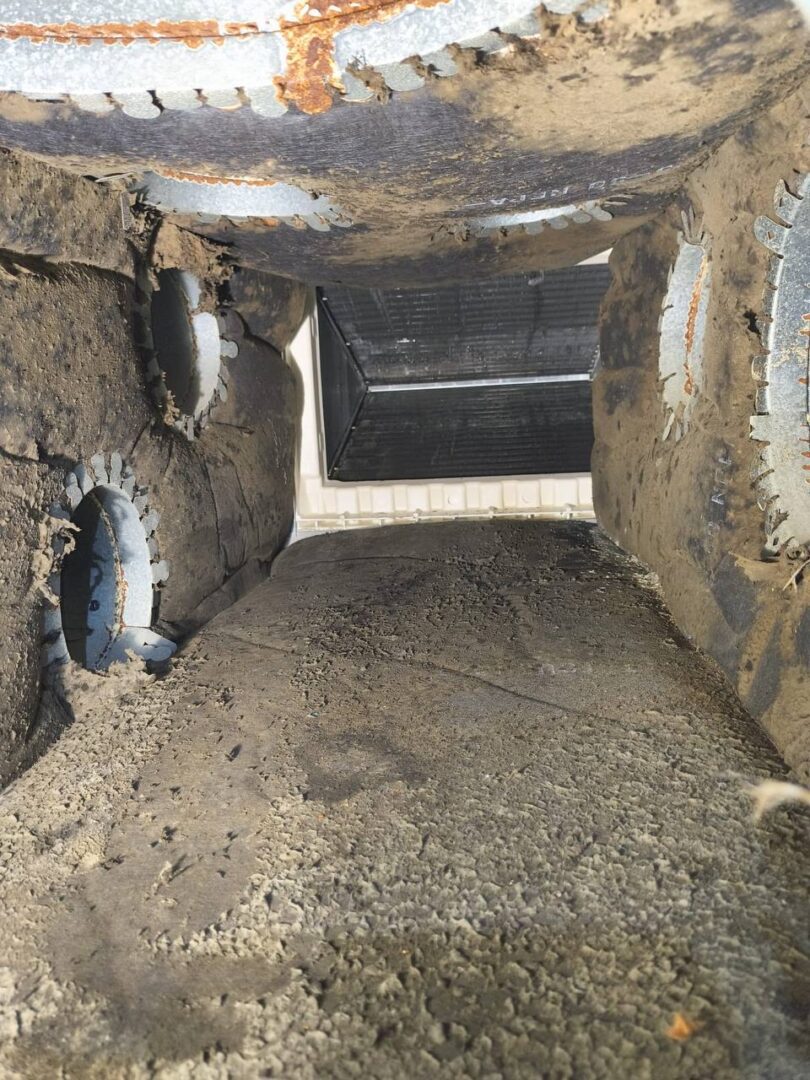
If you live in Baton Rouge and have noticed dust collecting faster than usual, musty odors from your vents, or rooms that never feel fully clean despite regular cleaning, your air ducts may be accumulating debris. Baton Rouge’s position along the Mississippi River, its humid subtropical climate, and its aging housing stock create conditions where duct systems collect more than the usual household dust. Understanding what “dirty air ducts” means in a Louisiana capital context can help you decide whether an inspection makes sense for your home.
What Does “Dirty Air Ducts” Mean for Baton Rouge Homeowners?
Dirty air ducts refers to visible accumulations of dust, debris, construction material, pet dander, and other airborne particulates inside the ductwork of your HVAC system. Over months and years of normal operation, the return side of the system pulls air — and everything floating in it — from every room in your home. In Baton Rouge, that air contains not only typical household dust but also fine particulates from the Mississippi River industrial corridor and the region’s characteristic humidity load.
Dirty ducts are not the same as mold contamination (a specific microbial condition requiring moisture), but they can create conditions where moisture-related concerns arise if left unaddressed. The first step is always a visual inspection of accessible components by a trained technician who can distinguish normal accumulations from conditions that need attention.
Signs Your Baton Rouge Home’s Air Ducts May Be Dirty
Many duct-system concerns start with observations a homeowner can make without special equipment. In Baton Rouge’s climate, these signs may be more noticeable than in drier markets:
- Visible dust escaping from vents when the HVAC kicks on: If you see puffs of dust at ceiling registers when the system starts, the duct interior likely contains loose debris. In Baton Rouge, the long cooling season means the system runs more months of the year, making this sign more noticeable.
- Persistent musty odors associated with HVAC operation: An odor that appears when the system runs and fades when it stops can point to accumulated organic material inside ductwork. Baton Rouge’s high outdoor humidity can amplify these smells.
- Rooms that never seem fully clean: If dust settles on furniture within hours of dusting, especially near supply registers, the duct system may be distributing debris rather than clean air.
- Uneven airflow between rooms: Built-up debris in duct runs can physically restrict airflow to certain rooms. Baton Rouge’s mix of older homes (Spanish Town, Garden District) and newer construction (Prairieville, Denham Springs) means duct layouts vary widely.
- Increased dust on surfaces after recent home renovations: Baton Rouge’s active construction and renovation market means drywall, wood, and insulation debris can enter ductwork that was not properly sealed during work.
- Higher-than-normal energy use for the cooling season: Debris accumulations force the HVAC system to work harder, increasing energy consumption. While not a standalone diagnostic sign, combined with other observations it supports the case for an inspection.
Why Baton Rouge Homes Face Unique Duct Contamination Risks
Baton Rouge is not like drier inland markets when it comes to what accumulates in ductwork. Several local factors create a distinct contamination profile:
- Mississippi River humidity: Baton Rouge consistently ranks among the most humid U.S. cities, with relative humidity above 75% for much of the year. Humid air carries more particulate matter and creates condensation potential inside ductwork that drier climates do not face.
- Industrial corridor particulates: The Mississippi River industrial corridor between Baton Rouge and New Orleans hosts numerous petrochemical, refining, and manufacturing facilities. Fine industrial particulates enter fresh-air intakes and settle inside ductwork throughout the metro area.
- Aging housing stock in historic neighborhoods: Homes in Spanish Town, the Garden District, and Mid City often have original or decades-old ductwork that was not designed to modern standards. Older ducts may have deteriorated insulation, disconnected sections, or accumulated decades of debris.
- LSU-area rental turnover: Properties near Louisiana State University experience frequent tenant turnover, and duct systems in rental units often receive less maintenance than owner-occupied homes. Accumulated debris from multiple occupants is common in this category.
- Slab foundation construction with clay soil: Many Baton Rouge homes sit on concrete slab foundations. South Louisiana’s expansive clay soil can wick moisture into slab-embedded duct runs, contributing to a moist environment that accelerates debris accumulation.
When Dirty Ducts Become a Bigger Problem
Left unaddressed, dirty ductwork can go beyond a cosmetic or comfort concern:
- Reduced airflow and HVAC efficiency: Debris accumulations inside supply ducts or near the air handler restrict airflow, forcing the system to run longer cycles to reach the thermostat setting. This increases wear on components like the blower motor and compressor.
- Uneven temperature distribution: Restricted airflow to certain rooms creates hot and cold spots that make the whole system work harder to maintain comfort. This is especially noticeable in Baton Rouge’s multi-story homes and historic properties.
- Increased load on the filter and air handler: Heavy debris loads in the return side of the system cause filters to load faster, and particulate that bypasses the filter can accumulate on the blower wheel and evaporator coil, degrading system performance over time.
These conditions are reasons to schedule an inspection, not evidence that cleaning is automatically required. A technician can document what is present in accessible areas and explain what scope of service — if any — is appropriate based on observed conditions.
What Professional Duct Cleaning Addresses (And What It Does Not)
Professional duct cleaning, when conducted by a qualified provider following NADCA standards, addresses visible debris accumulations in accessible ductwork. The process typically includes:
- Source removal of loose debris from accessible supply and return ducts using HEPA-filtered vacuum equipment
- Cleaning of registers, grilles, and boots
- Air handler compartment cleaning, including the blower wheel and evaporator coil where accessible
- Filter replacement with the correct size and type for the system
What professional duct cleaning is not: an air quality test, a mold remediation service, a guarantee of improved health outcomes, or a substitute for HVAC maintenance. Any provider who promises medical benefits or diagnoses conditions from a phone description should be treated with skepticism. Cleaning is one component of overall HVAC system maintenance and should be recommended based on documented conditions, not as a standalone solution.
Next Steps for Baton Rouge Homeowners
If you have noticed any of the signs described in this article, the practical next step is to schedule a professional inspection of your accessible ductwork components. An inspection documents current conditions without committing to any service before understanding what is actually present.
AH-CHOO! serves all residential and commercial properties in Baton Rouge and the surrounding South Louisiana area. To discuss your home’s duct conditions or schedule a visit, contact AH-CHOO!.
Frequently Asked Questions About Dirty Air Ducts in Baton Rouge
How do I know if my air ducts are dirty in Baton Rouge, LA?
Look for visible dust escaping from vents when the system runs, persistent musty odors associated with HVAC operation, rooms that never feel fully clean despite regular dusting, or uneven cooling between rooms. Baton Rouge’s high humidity and industrial corridor location can make these signs more noticeable than in drier markets. An annual duct inspection is a reasonable baseline for Louisiana capital area homeowners.
What causes dirty air ducts in Baton Rouge homes?
Baton Rouge’s Mississippi River humidity, industrial corridor particulates, and aging housing stock all contribute to duct contamination. Clay soil slab foundations can wick moisture into ductwork, and the region’s long cooling season means the HVAC system runs more months of the year, pulling in more outdoor particulates and household debris.
Is dirty ductwork the same as mold in air ducts?
No — dirty ducts refers to visible dust, debris, and particulate accumulation. Mold is a specific microbial growth requiring sustained moisture conditions. While dirty ducts can create conditions where mold may develop, they are separate issues. For more on that topic, see our guide on mold in air ducts in Baton Rouge.
How often should Baton Rouge homeowners check their air ducts?
NADCA recommends annual duct inspections. Given Baton Rouge’s humid climate and the region’s specific conditions — Mississippi River industrial corridor, aging housing infrastructure, and long cooling seasons — an annual inspection is a reasonable baseline for Louisiana capital area homeowners. More frequent checks may be warranted after renovations, water intrusion events, or if you notice sudden changes in your home’s air distribution.
For more information on local services, visit the South Louisiana air duct cleaning hub or read about NADCA-certified air duct cleaning in Baton Rouge.