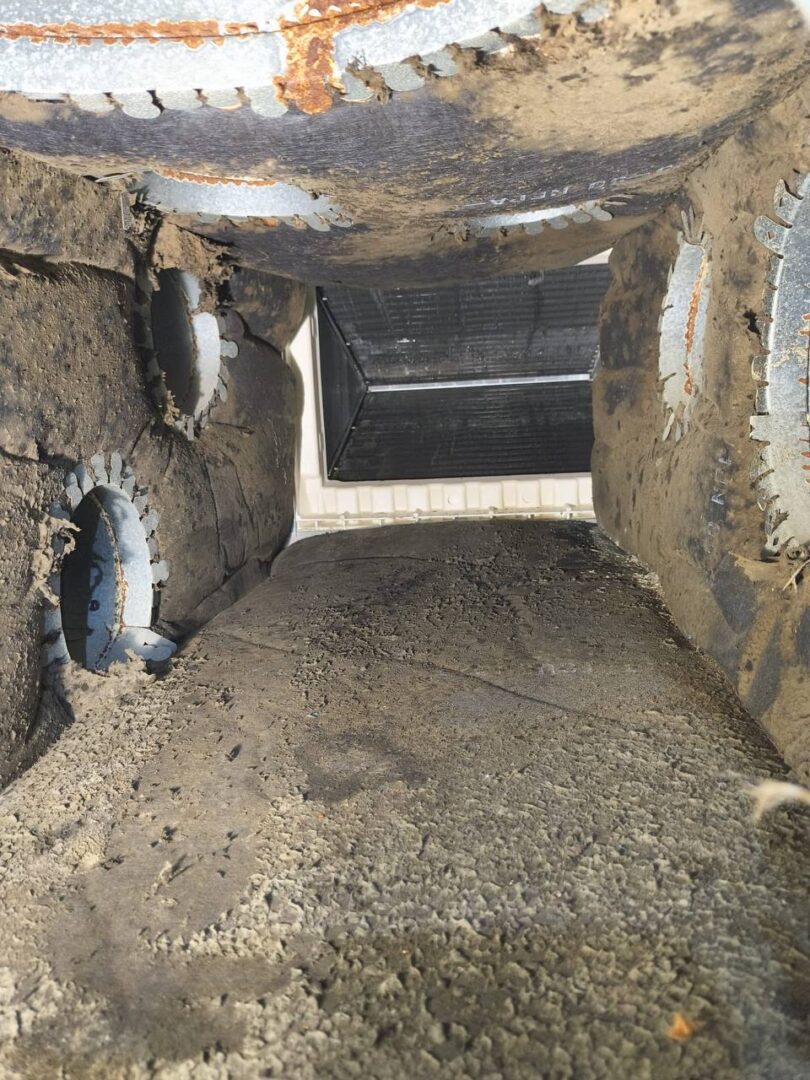
You just finished your home renovation — new floors, fresh paint, updated kitchen. The rooms look beautiful. But there’s a hidden problem you may not have considered: the construction dust that settled into your HVAC ductwork during the project. Every time your system runs, it recirculates fine particles from drywall, sanding, sawing, and demolition through every room in your house.
In Houston’s humid climate, post-renovation duct contamination isn’t just a cleanliness issue — it can affect your HVAC performance, indoor comfort, and the longevity of your system. Here’s what Houston homeowners need to know about air duct cleaning after a home renovation.
The Hidden Problem: What Remains After Construction
Even if you sealed off rooms and covered vents during your renovation, fine particles are small enough to bypass most barriers. Here’s what commonly ends up in Houston home ductwork after a renovation:
- Drywall dust: Gypsum particles so fine they remain airborne for hours and travel through the smallest gaps in duct seams, register boots, and return air openings. Drywall dust is hygroscopic — it absorbs moisture from Houston’s humid air, which can lead to caking and microbial growth inside ducts.
- Sawdust and wood particles: From cutting trim, flooring, cabinetry, or framing. These particles vary in size but accumulate inside duct runs, particularly in low-velocity zones and near bends.
- Insulation fibers: Fiberglass or mineral wool particles from attic or wall insulation disturbed during electrical, plumbing, or drywall work. These fibers can become airborne and lodge in duct surfaces.
- Paint and coating overspray: VOCs and microscopic paint particles that settle inside ductwork and can off-gas when the system heats up.
- General demolition debris: Fine concrete dust, tile particles, joint compound residue — every construction material produces dust that can infiltrate your duct system.
Once inside your ductwork, these particles don’t stay static. Each time your HVAC system cycles, air movement redistributes them throughout your home. This is why many homeowners notice increased dust on furniture and worsening allergy symptoms in the weeks following a renovation.
Why Houston’s Climate Makes Post-Reno Duct Cleaning Essential
Houston’s subtropical climate creates specific conditions that amplify the impact of post-renovation duct contamination:
- High humidity: Houston averages over 75% humidity for much of the year. Drywall dust and other construction particles are hygroscopic — they absorb moisture from the air. In a humid duct environment, this creates the ideal conditions for microbial growth on particle surfaces. A duct system contaminated with drywall dust in a dry climate is a cleanliness issue; in Houston, it becomes a potential microbial growth risk.
- Extended cooling season: Houston’s HVAC systems run 8-9 months per year. Post-renovation debris circulating through a constantly running system means more particle deposition and more redistribution into living spaces.
- Slab foundation construction: Many Houston homes have ducts running through concrete slabs or unconditioned attics. Both environments present unique challenges for post-construction debris — slab ducts can trap moisture against particles, while attic ducts in Houston’s summer heat can bake VOCs from paint and adhesive overspray.
- Urban heat island effect: Densely developed Houston neighborhoods experience higher ambient temperatures, which increases HVAC runtime and accelerates the redistribution of construction particles through ductwork.
When to Schedule Duct Cleaning After a Renovation
The ideal time for post-renovation duct cleaning is after all construction work is complete, but before you move furniture back in or occupy the space full-time. Here’s a recommended timeline:
- After final cleanup but before HVAC system restart: Your contractor should do a standard post-construction cleaning. Before you turn the HVAC system back on for regular use, schedule a duct inspection to assess contamination levels.
- Schedule the duct cleaning: A professional NADCA-certified cleaning removes accumulated debris from all duct surfaces, the air handler, evaporator coil, and blower wheel. This typically takes 2-4 hours for a standard Houston home.
- Replace all HVAC filters: After duct cleaning, install new high-quality MERV-8 or MERV-11 filters to capture any residual particles.
- Run the system: After cleaning, run your HVAC system continuously for 24-48 hours to verify air quality and system performance.
If you’re still in the renovation planning stage, take preventive steps: seal all supply and return registers with plastic and tape, use temporary filters on return grilles, and run the HVAC fan only in “on” mode (not “auto”) to maintain positive pressure and reduce particle infiltration into ductwork.
Professional vs. DIY Post-Renovation Duct Cleaning
Some homeowners consider vacuuming out registers or using duct cleaning kits from hardware stores. Here’s why professional NADCA-certified cleaning is the right approach for post-renovation contamination:
- Negative air pressure systems: Professional cleaners use truck-mounted or portable vacuums that create negative pressure throughout the entire duct system, ensuring debris is extracted rather than pushed deeper into the ductwork.
- Complete access: Professionals open access points in the duct system to clean every section — not just the main trunk lines but also branch runs, flex duct sections, and the air handler components.
- Agitation tools: Compressed air whips, rotary brushes, and air skimmers physically dislodge particles adhered to duct surfaces. DIY vacuum attachments cannot achieve the same level of cleaning.
- Post-cleaning verification: NADCA members provide before-and-after documentation, including visual inspection reports that confirm the system is clean.
The cost of professional duct cleaning after a renovation is a fraction of the total renovation budget, and it protects the investment you’ve made in your home by ensuring your HVAC system operates efficiently and delivers clean air.
Signs Your Ducts Need Post-Renovation Cleaning
Even if you think your renovation was clean, watch for these warning signs that construction debris has entered your ductwork:
- Visible dust on surfaces 24-48 hours after cleaning: If you dust furniture and surfaces and they’re dusty again within a day or two, your ductwork is likely recirculating construction particles.
- White or gray powder on surfaces near vents: This is typically drywall dust being blown out of supply registers.
- Musty or chemical odors when the HVAC runs: VOCs from paint, adhesive, or flooring materials trapped in ductwork can produce odors when the system heats or cools.
- Increased allergy or respiratory irritation: If family members experience more sneezing, coughing, or eye irritation after the renovation, construction particles in the air may be the cause.
- Reduced airflow from registers: Debris accumulation can partially block duct runs, reducing airflow to certain rooms.
Why Houston’s Remodeling Boom Makes This Important Now
Houston is experiencing a sustained residential remodeling wave. With the city’s aging housing stock (many homes built in the 1970s-1990s are now being updated), plus storm-related repairs from recent weather events and a growing focus on energy efficiency, more Houston homeowners are renovating than at any point in the last decade.
Each of these renovation projects — whether a kitchen update, bathroom remodel, room addition, or whole-home renovation — introduces construction particles into the home’s environment. The ductwork, as the central distribution system for conditioned air, becomes the primary pathway for these particles to spread throughout the home.
Houston homeowners who include professional duct cleaning in their post-renovation checklist ensure that their newly updated home doesn’t come with a hidden contamination problem. It’s the final step in any renovation — one that protects both your health and your HVAC investment.
Frequently Asked Questions
Q: How soon after a home renovation should I have my air ducts cleaned?
A: Schedule duct cleaning after all construction work is finished and the general cleanup is done, but before you fully reoccupy the space or turn the HVAC system back to normal operation. This prevents construction particles from embedding deeper into duct surfaces through repeated HVAC cycles.
Q: Can I clean my ducts myself after a renovation?
A: DIY methods like vacuuming registers or using hardware-store duct cleaning kits cannot reach the full depth of your duct system and may push debris deeper into the ductwork. Professional NADCA-certified cleaning uses negative pressure systems and agitation tools that remove particles from all accessible surfaces — something consumer-grade equipment cannot achieve.
Q: Is post-renovation duct cleaning necessary for small projects like a bathroom update?
A: Even small renovations produce fine particles that can enter ductwork. Drywall dust from patching one wall, sawdust from cutting one piece of trim, or tile dust from a backsplash project — all can infiltrate your duct system through return air grilles, register gaps, and duct seams. If the HVAC system was running during the project, debris has likely entered the ducts.
Q: Does post-renovation duct cleaning help with new construction homes too?
A: Yes — newly built homes often have significant construction debris in the ductwork from the building phase. Drywall dust, wood fragments, insulation particles, and general construction debris are common findings in new-construction duct inspections. Having the ducts cleaned before moving in ensures you’re not breathing construction residue from the building process.
Q: Will post-renovation duct cleaning remove odors from paint and building materials?
A: Professional duct cleaning removes debris that can trap and retain VOCs from paints, adhesives, and flooring materials. While it won’t remove the source of ongoing off-gassing from new materials, it eliminates the reservoir of particle-adsorbed VOCs in your ductwork that can re-release when the system runs.
Related Service Areas
- Commercial Duct Cleaning — Terrell Hills
- Commercial Kitchen Air Duct Cleaning
- Offshore Platform HVAC Cleaning
- Boat Air Duct Cleaning — Gulf Coast
Related AH-CHOO resources: Houston air duct cleaning; schedule a free inspection.