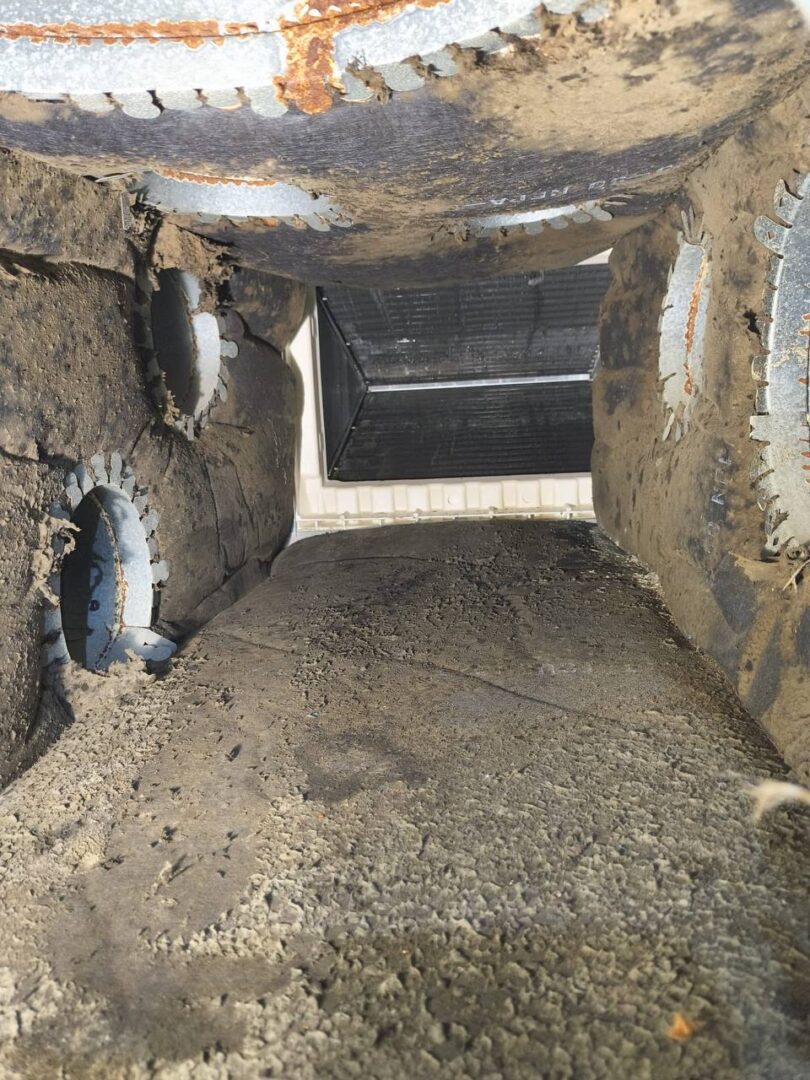
Meta Description: Crawl space ductwork in Louisiana homes is among the highest-risk environments for mold growth. Learn why, where it fails, and what complete remediation requires.
“`json
{
“@context”: “https://schema.org”,
“@graph”: [
{
“@type”: “Article”,
“headline”: “Crawl Space Ductwork and Mold in Louisiana: A Complete Guide”,
“description”: “Crawl space ductwork in Louisiana homes is among the highest-risk environments for mold growth. Learn why, where it fails, and what complete remediation requires.”,
“author”: {
“@type”: “Organization”,
“name”: “AH-CHOO! Indoor Air Quality”
},
“publisher”: {
“@type”: “Organization”,
“name”: “AH-CHOO! Indoor Air Quality”,
“url”: “https://ahchooindoorair.com”
},
“mainEntityOfPage”: “https://ahchooindoorair.com/blog/crawl-space-ductwork-mold-louisiana”
},
{
“@type”: “FAQPage”,
“mainEntity”: [
{
“@type”: “Question”,
“name”: “Why is crawl space ductwork especially prone to mold in Louisiana?”,
“acceptedAnswer”: {
“@type”: “Answer”,
“text”: “Louisiana crawl spaces are among the most extreme moisture environments in American residential construction. High water tables, frequent flooding, year-round warm temperatures, and ambient humidity routinely exceeding 80% create conditions where crawl space relative humidity often reaches 90–100%. Ductwork in this environment is in constant contact with near-saturated air, making mold growth virtually inevitable without aggressive moisture control measures.”
}
},
{
“@type”: “Question”,
“name”: “How do I know if my crawl space ducts have mold?”,
“acceptedAnswer”: {
“@type”: “Answer”,
“text”: “Signs include musty or earthy odors from floor registers (which supply air from below the floor), health symptoms that worsen at home and improve elsewhere, visible moisture damage on floors or subfloor materials above the crawl space, and visible mold on accessible crawl space structures or ductwork. A professional inspection with appropriate access to the crawl space is the definitive assessment.”
}
},
{
“@type”: “Question”,
“name”: “Should crawl space ducts be replaced or cleaned when mold is found?”,
“acceptedAnswer”: {
“@type”: “Answer”,
“text”: “This depends on the extent and type of contamination, the duct material, and the condition of the duct insulation. Flex duct with saturated insulation and significant internal mold growth often requires replacement rather than cleaning, as the insulation retains moisture and mold that cannot be adequately removed. Metal ductwork in crawl spaces may be cleanable if the contamination is primarily surface growth without structural damage.”
}
},
{
“@type”: “Question”,
“name”: “Is crawl space encapsulation necessary for mold prevention?”,
“acceptedAnswer”: {
“@type”: “Answer”,
“text”: “In Louisiana, crawl space encapsulation — sealing the crawl space with a heavy-duty vapor barrier and often conditioning the space — is one of the most effective long-term solutions for preventing duct mold in pier-and-beam homes. It transforms the crawl space from an uncontrolled high-humidity environment into a managed space, dramatically reducing the moisture exposure of ductwork below the floor.”
}
},
{
“@type”: “Question”,
“name”: “What happens to crawl space ductwork after Louisiana flooding?”,
“acceptedAnswer”: {
“@type”: “Answer”,
“text”: “Flooding in Louisiana crawl spaces — which can occur from groundwater rise, rainfall accumulation, or storm surge — directly contacts and often submerges crawl space ductwork. Flood-contacted ductwork requires assessment that goes beyond standard inspection: the contamination from floodwater (soil bacteria, sewage, organic material) creates mold growth conditions significantly more aggressive than normal moisture exposure. Post-flood remediation often requires duct replacement in affected sections.”
}
}
]
}
]
}
“`
Louisiana has more pier-and-beam homes than almost any other state in the country. The architectural tradition developed for good reason: in a state where flooding is a near-certainty for low-lying properties, elevating the structure above grade on piers provides a measure of protection. The trade-off is a crawl space — often several feet deep — running beneath the entire home, and in many cases, ductwork running through that crawl space to serve floor registers throughout the house.
It is one of the most problematic duct environments in North American residential construction.
Louisiana crawl spaces are dark, humid, poorly ventilated, and in constant contact with ground moisture. Relative humidity in crawl spaces routinely reaches 90–100%. They flood periodically — sometimes catastrophically. They provide no temperature regulation, exposing ductwork to Louisiana’s warm, moisture-saturated ambient conditions year-round.
After 38 years of serving Gulf Coast markets including Louisiana, our NADCA-certified team has inspected and remediated crawl space ductwork across the state. Here is everything Louisiana homeowners need to understand about this specific and serious problem.
The Louisiana Crawl Space: An Extreme Moisture Environment
To understand why crawl space ductwork molds so readily in Louisiana, you need to understand the environment it’s operating in.
High Water Table and Ground Moisture
Large portions of Louisiana — particularly in the southern half of the state — have water tables that sit within a few feet of the surface. In some areas, the water table rises seasonally to within inches of grade. The soil beneath a Louisiana home is rarely truly dry; it maintains a moisture content that drives constant evaporation into the crawl space air above it.
A crawl space with a bare soil floor in Louisiana is effectively a humidity generator. Water evaporates from the soil continuously, raising crawl space relative humidity to extreme levels. Standard ventilation — even when functioning correctly — provides inadequate dilution of this moisture load.
Temperature: Never Cold Enough to Interrupt Mold Growth
One of the factors that provides seasonal relief from mold pressure in northern states is winter cold. When soil temperatures drop below 40°F, mold growth slows dramatically. Louisiana’s winters don’t provide this. Even in the coldest Louisiana months, crawl space temperatures rarely drop below 55°F — well above the threshold for active mold growth.
This means mold in Louisiana crawl spaces grows year-round. There is no dormant season, no winter die-off. A mold colony established in the crawl space in June will still be actively growing in December.
Flooding: The Accelerating Event
Louisiana’s geography and rainfall patterns mean that crawl space flooding — ranging from minor groundwater rise to catastrophic storm surge — is a recurring reality for many homes, not a remote possibility. Each flooding event:
- Introduces large volumes of water directly to ductwork and insulation
- Adds organic material and bacteria to crawl space surfaces
- Creates an extended high-moisture-contact period for all ductwork
- Provides a step-change increase in available moisture and nutrients for mold growth
After significant flooding events, mold remediation needs in Louisiana crawl space ductwork are not hypothetical — they’re virtually certain.
How Crawl Space Conditions Destroy Ductwork
The effects of Louisiana crawl space conditions on ductwork follow a predictable progression:
Flex Duct Insulation Saturation
Flex duct — the common silver-wrapped duct material used in residential construction — consists of an inner metal spiral liner, a flexible inner liner, a fiberglass insulation layer, and an outer vapor barrier. In Louisiana crawl space conditions, this construction is under continuous attack:
The outer vapor barrier, designed to prevent moisture from reaching the insulation, degrades over time — particularly in the warm, humid conditions of a Louisiana crawl space. Small punctures, tears at connection points, and UV degradation (in crawl spaces with some light penetration) all compromise the barrier.
Once the vapor barrier is compromised, the fiberglass insulation layer absorbs crawl space humidity rapidly. Saturated fiberglass insulation loses its thermal resistance and becomes a moisture reservoir that stays wet indefinitely in Louisiana’s conditions.
Moisture from the insulation migrates to the inner duct liner, creating persistent wet conditions on duct interior surfaces — exactly the conditions mold requires.
Mold at Connection Points
Duct connections in crawl spaces — where flex duct attaches to supply plenums, hard duct transitions, and floor boot connections — are particularly vulnerable. Connections experience mechanical stress from the weight of flex duct, temperature cycling, and the occasional physical contact from crawl space maintenance activity.
Failed connections allow high-humidity crawl space air to enter the duct interior directly. When this humid air contacts the cooler interior surfaces of the duct (cooled by conditioned air flow), condensation forms immediately. This localized condensation creates highly concentrated mold growth at connection points.
Ground Contact and Direct Flooding
In crawl spaces where ductwork runs low to the ground — or where supports have failed — flex duct can contact or nearly contact the crawl space floor. Ground contact exposes the outer duct surface to direct soil moisture and, during flooding events, direct water immersion.
Ground-contact ductwork in Louisiana is almost always contaminated if it has been in place for more than a few years. The contamination level after direct flooding contact with Louisiana floodwater — which carries soil bacteria, sewage, and organic debris — typically requires duct replacement rather than cleaning.
How Crawl Space Mold Affects Your Living Space
The floor registers in pier-and-beam Louisiana homes deliver conditioned air from directly below the floor. Supply air traveling through contaminated crawl space ductwork carries mold spores upward into the living space through every floor register — depositing them on floors, furniture, and surfaces throughout the home.
Because floor registers deliver air at ground level (rather than ceiling level, as in attic-duct homes), spore deposition is particularly concentrated in areas where household members spend time: living areas, bedrooms, and anywhere children play on the floor.
Return air grilles that pull air from rooms back toward the air handler create suction that draws crawl space air through any unsealed penetrations in the floor. If the crawl space is highly contaminated, this pathway delivers crawl space air quality directly to the living space even when the HVAC isn’t actively running.
Professional Remediation for Crawl Space Ductwork
Remediating crawl space ductwork in Louisiana requires both the technical approach of NADCA-standard [duct cleaning](/residential-duct-cleaning) and the physical reality of working in crawl space conditions. Our NADCA-certified team approaches these jobs with:
Full crawl space access and inspection: Camera-assisted inspection of all accessible crawl space ductwork documents contamination, connection failures, and insulation condition. This assessment drives the remediation scope.
Contamination level determination: Flooding-contaminated ductwork requires more extensive protocols than standard high-humidity contamination. Our team distinguishes between these scenarios and scopes the work accordingly.
Mechanical cleaning with HEPA extraction under negative pressure: Standard NADCA cleaning methodology — with additional complexity for crawl space access.
Replacement assessment: For severely contaminated flex duct or ductwork with compromised insulation, replacement is often more effective than cleaning. Our assessment identifies which sections require replacement.
[Mold remediation](/mold-remediation) for broader contamination: If the crawl space structure (joists, subfloor, vapor barrier) has mold beyond just the ductwork, a full crawl space remediation may be needed in conjunction with duct work.
Post-work recommendations for long-term moisture control: Crawl space encapsulation, dehumidification systems, and ground moisture barriers are discussed as appropriate for each home’s situation.
Louisiana Homeowners: Don’t Let the Crawl Space Stay Unknown
The crawl space beneath your Louisiana home is one of the most important and most neglected components of your home’s environment. What happens down there — particularly in and around your ductwork — directly affects what you breathe upstairs.
[Book your free inspection at crm.ahchooindoorair.com/book](https://crm.ahchooindoorair.com/book)
Our NADCA-certified team will access and inspect your crawl space ductwork, assess contamination levels, and provide a clear picture of what your home needs. 38 years of Gulf Coast experience includes extensive work in Louisiana markets — we understand what these crawl spaces do to ductwork, and we know exactly what it takes to fix it.
Frequently Asked Questions
Why is crawl space ductwork especially prone to mold in Louisiana?
Louisiana crawl spaces are among the most extreme moisture environments in American residential construction. High water tables, frequent flooding, year-round warm temperatures, and ambient humidity routinely exceeding 80% create conditions where crawl space relative humidity often reaches 90–100%. Ductwork in this environment is in constant contact with near-saturated air, making mold growth virtually inevitable without aggressive moisture control measures.
How do I know if my crawl space ducts have mold?
Signs include musty or earthy odors from floor registers (which supply air from below the floor), health symptoms that worsen at home and improve elsewhere, visible moisture damage on floors or subfloor materials above the crawl space, and visible mold on accessible crawl space structures or ductwork. A professional inspection with appropriate access to the crawl space is the definitive assessment.
Should crawl space ducts be replaced or cleaned when mold is found?
This depends on the extent and type of contamination, the duct material, and the condition of the duct insulation. Flex duct with saturated insulation and significant internal mold growth often requires replacement rather than cleaning, as the insulation retains moisture and mold that cannot be adequately removed. Metal ductwork in crawl spaces may be cleanable if the contamination is primarily surface growth without structural damage.
Is crawl space encapsulation necessary for mold prevention?
In Louisiana, crawl space encapsulation — sealing the crawl space with a heavy-duty vapor barrier and often conditioning the space — is one of the most effective long-term solutions for preventing duct mold in pier-and-beam homes. It transforms the crawl space from an uncontrolled high-humidity environment into a managed space, dramatically reducing the moisture exposure of ductwork below the floor.
What happens to crawl space ductwork after Louisiana flooding?
Flooding in Louisiana crawl spaces — which can occur from groundwater rise, rainfall accumulation, or storm surge — directly contacts and often submerges crawl space ductwork. Flood-contacted ductwork requires assessment that goes beyond standard inspection: the contamination from floodwater (soil bacteria, sewage, organic material) creates mold growth conditions significantly more aggressive than normal moisture exposure. Post-flood remediation often requires duct replacement in affected sections.
Related AH-CHOO resources: South Louisiana air duct cleaning; schedule a free inspection.