Meta Description: Should you test for mold in air ducts before cleaning, or clean first? The answer depends on your situation. A Houston HVAC expert breaks down when each approach is right.
“`json
{
“@context”: “https://schema.org”,
“@graph”: [
{
“@type”: “Article”,
“headline”: “Air Duct Mold Testing vs. Cleaning: Which Comes First?”,
“description”: “Should you test for mold in air ducts before cleaning, or clean first? The answer depends on your situation. A Houston HVAC expert breaks down when each approach is right.”,
“author”: {
“@type”: “Organization”,
“name”: “AH-CHOO! Indoor Air Quality”
},
“publisher”: {
“@type”: “Organization”,
“name”: “AH-CHOO! Indoor Air Quality”,
“url”: “https://ahchooindoorair.com”
},
“mainEntityOfPage”: “https://ahchooindoorair.com/blog/air-duct-mold-testing-vs-cleaning”
},
{
“@type”: “FAQPage”,
“mainEntity”: [
{
“@type”: “Question”,
“name”: “Do I need to test for mold before having my ducts cleaned?”,
“acceptedAnswer”: {
“@type”: “Answer”,
“text”: “In most residential situations, pre-cleaning mold testing is not required. If visible mold growth is present in the duct system, that’s sufficient justification to proceed with professional remediation. Testing is most valuable when you need documentation for insurance purposes, when a real estate transaction requires it, or when you need to identify specific mold species for health management reasons.”
}
},
{
“@type”: “Question”,
“name”: “What does mold testing for air ducts actually involve?”,
“acceptedAnswer”: {
“@type”: “Answer”,
“text”: “Duct mold testing typically involves air sampling inside the duct system (or at supply vents), surface swab or tape-lift samples from duct interior surfaces, and laboratory analysis to identify mold species and quantify spore counts. Results are compared to outdoor baseline samples to determine whether indoor mold levels are elevated.”
}
},
{
“@type”: “Question”,
“name”: “Can you test for mold in ducts without professional help?”,
“acceptedAnswer”: {
“@type”: “Answer”,
“text”: “Consumer mold test kits are available, but they are not reliable for duct-specific assessment. They measure surface or air mold in accessible areas — not inside ductwork. Additionally, interpreting results requires professional context. For an accurate assessment of your duct system, a professional inspection with appropriate sampling is the only reliable approach.”
}
},
{
“@type”: “Question”,
“name”: “When should I test for mold after duct cleaning?”,
“acceptedAnswer”: {
“@type”: “Answer”,
“text”: “Post-remediation testing — sometimes called clearance testing — is recommended when the pre-cleaning assessment found extensive mold growth, when a real estate transaction or insurance claim requires documentation of successful remediation, or when occupants have significant health sensitivities and need verification of air quality restoration.”
}
},
{
“@type”: “Question”,
“name”: “How do I know if the testing company is recommending testing I don’t actually need?”,
“acceptedAnswer”: {
“@type”: “Answer”,
“text”: “A key red flag: any company that recommends extensive testing before doing any visual inspection has a financial incentive to test, not to solve your problem. Legitimate professionals conduct a thorough visual inspection first. Testing is ordered when the visual inspection doesn’t provide sufficient information to proceed — not as a default first step.”
}
}
]
}
]
}
“`
When Houston homeowners suspect mold in their air ducts, they often encounter two competing recommendations. Some professionals say: “Let’s test first to see what we’re dealing with.” Others say: “You clearly have mold — let’s clean it.” The disconnect can be confusing and frustrating, especially when each path carries different time and cost implications.
The reality is that both approaches are correct in different situations — and knowing which applies to your specific case can save you from either unnecessary testing or insufficient remediation.
After 38 years of conducting duct inspections and mold remediations in Houston and the surrounding Gulf Coast region, our NADCA-certified team has developed a clear framework for this decision. Here’s how it actually works.
What Mold Testing for Ducts Actually Is
Before getting into the testing-vs-cleaning question, it’s worth understanding what mold testing actually involves — because the term is often used loosely.
Air Sampling
Air sampling involves collecting air samples from inside the duct system (or at supply registers as a proxy for duct air quality) and having them analyzed in a laboratory. The lab counts and identifies mold spores by type, producing a spore count per cubic meter of air. This is compared to outdoor air baseline samples and to established thresholds.
Air sampling is useful for quantifying overall mold spore concentration and establishing a baseline for comparison after remediation. It does not pinpoint the location of mold colonies within the duct system.
Surface Sampling
Surface sampling — typically tape-lift samples or swab samples — collects physical material from duct interior surfaces for laboratory identification. This is useful when you need to know the specific mold species present (which matters in certain insurance or health contexts) or when you need documentation that a specific surface was contaminated.
Visual Inspection with Documentation
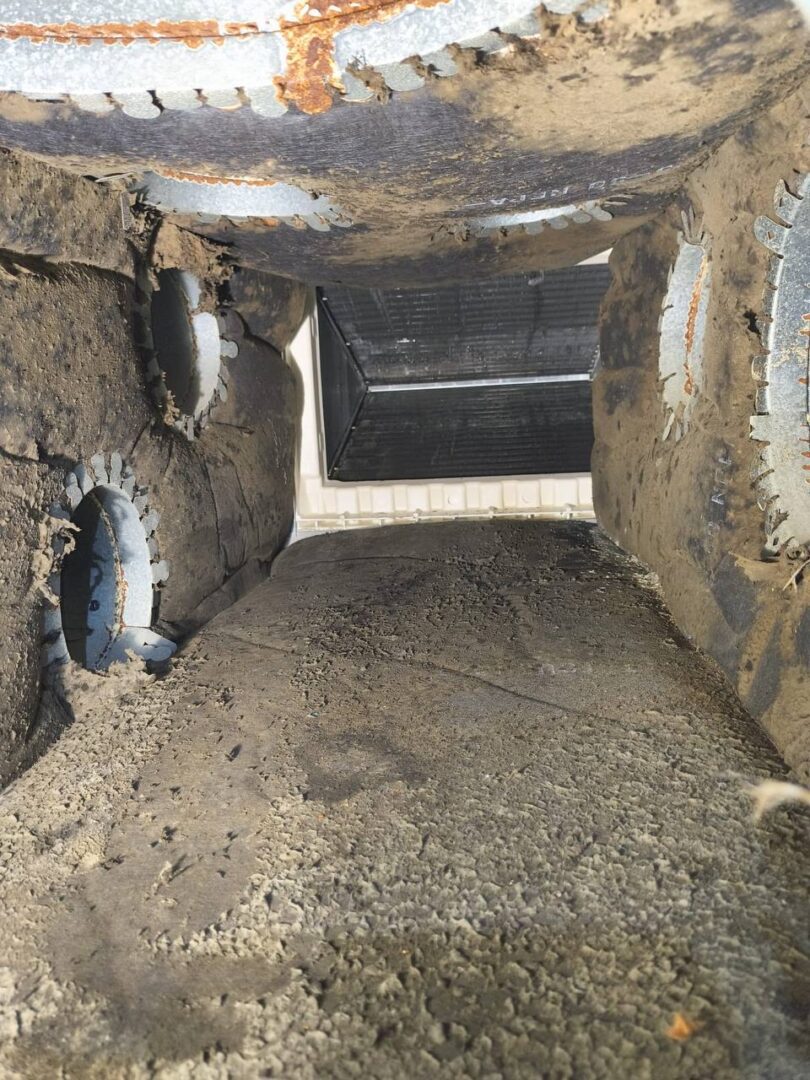
Often the most practically valuable “assessment” step isn’t laboratory testing at all — it’s a thorough visual inspection using camera equipment, combined with moisture readings and professional judgment. This identifies visible mold growth, moisture sources, and conditions that favor continued growth. For most residential situations, this is sufficient to determine that remediation is needed and to scope the work appropriately.
When Testing Is the Right First Step
Pre-cleaning mold testing is genuinely valuable in specific circumstances:
Real Estate Transactions
When a home is being bought or sold and mold in the duct system is suspected or has been disclosed, formal testing provides documented evidence of the problem’s presence and extent. This protects buyers, supports negotiations, and provides a baseline for post-remediation clearance testing that verifies the job was completed successfully.
Insurance Claims
Insurance claims for mold damage often require documented evidence of contamination and the cause. Pre-remediation testing establishes the record of what was present before any work was done. Your insurer may require this documentation before approving a claim.
Identifying Specific Species for Health Management
In households where occupants have been experiencing significant health symptoms — particularly when a physician is involved in investigating potential mold exposure — species identification may be clinically relevant. Knowing whether the mold present is Aspergillus, Cladosporium, or Stachybotrys can inform a physician’s management approach.
Establishing Baseline for Disputed Situations
In rental properties, commercial spaces, or any situation where there’s a dispute about mold responsibility or remediation quality, formal testing creates a documented, third-party record that protects all parties.
When Testing Is Unnecessary — and Cleaning Should Come First
In the majority of residential duct mold situations, pre-cleaning testing is not required and may simply delay addressing a problem that’s already clearly identifiable.
Visible Mold Is Already Present
If a professional inspection reveals visible mold growth inside ductwork, on the evaporator coil, or in the drain pan, you already have confirmation that a problem exists. Laboratory testing of visible mold adds species identification — which is useful in specific circumstances — but doesn’t change the fundamental conclusion: the mold needs to be professionally remediated.
Spending time and money on testing to confirm what visual inspection has already established delays the remediation and continues exposure.
You Have Clear Symptoms Without an Insurance or Legal Context
If your primary concern is addressing a health impact and there’s no insurance claim, real estate transaction, or legal dispute involved, proceeding directly to professional remediation — informed by a thorough inspection — is the most efficient path to resolving the problem.
Post-Cleaning Testing Is More Valuable Than Pre-Cleaning Testing
For many homeowners, the most useful testing is post-remediation clearance testing — sampling done after the cleaning is complete to verify that the mold has been successfully removed and air quality has been restored. This is the test that tells you the job was actually done right.
The Decision Framework
Here’s how our NADCA-certified team approaches this decision with every new client:
Start with a thorough professional inspection. Camera-assisted visual inspection of accessible ductwork, moisture readings, and assessment of system conditions provides the information needed to make a good decision.
If visible mold is present and there’s no insurance/legal/real estate context: Proceed to [professional mold remediation](/mold-remediation) informed by the inspection findings. Pre-cleaning testing is optional.
If no visible mold is present but symptoms or conditions suggest contamination: Air sampling may be valuable to confirm whether elevated spore counts are present before committing to a full remediation protocol.
If there’s a real estate, insurance, or legal context: Conduct formal pre-cleaning testing to establish documented baseline, followed by remediation, followed by post-remediation clearance testing.
If occupants have significant health concerns: Consult with a physician about whether species identification is clinically relevant before proceeding.
The Red Flag to Watch For
Be cautious of any company that recommends extensive laboratory testing before conducting any visual inspection. A professional who wants to test extensively before even looking inside your duct system has a financial incentive to sell testing — not to solve your problem efficiently.
Legitimate professionals inspect first, recommend testing when the inspection supports it, and explain clearly why testing adds value in your specific situation. Testing that’s ordered reflexively without diagnostic purpose wastes time and money while the underlying problem continues.
After Cleaning: Documentation That Matters
Whether pre-cleaning testing was conducted or not, post-remediation documentation is important for any significant mold situation:
- Cleaning scope documentation (what was cleaned, methods used, dates)
- Post-remediation clearance testing if the pre-cleaning assessment found extensive growth
- Recommendations for conditions to address to prevent recurrence
- Equipment certifications of the professionals who performed the work
Our NADCA-certified team provides full documentation with every [residential duct cleaning](/residential-duct-cleaning) and remediation job. When the work is done, you should know exactly what was done and have evidence it was done correctly.
Get the Assessment Right From the Start
The testing vs. cleaning question starts with a thorough inspection. Until you know what’s actually in your duct system — from a professional with camera equipment and the experience to interpret what they find — you’re making decisions without information.
[Book your free inspection at crm.ahchooindoorair.com/book](https://crm.ahchooindoorair.com/book)
Our NADCA-certified technicians will conduct a thorough assessment of your duct system, give you a clear picture of what’s present, and make a transparent recommendation for the right next step in your specific situation. 38 years of Houston-area experience means we understand the difference between selling services and solving problems.
Frequently Asked Questions
Do I need to test for mold before having my ducts cleaned?
In most residential situations, pre-cleaning mold testing is not required. If visible mold growth is present in the duct system, that’s sufficient justification to proceed with professional remediation. Testing is most valuable when you need documentation for insurance purposes, when a real estate transaction requires it, or when you need to identify specific mold species for health management reasons.
What does mold testing for air ducts actually involve?
Duct mold testing typically involves air sampling inside the duct system (or at supply vents), surface swab or tape-lift samples from duct interior surfaces, and laboratory analysis to identify mold species and quantify spore counts. Results are compared to outdoor baseline samples to determine whether indoor mold levels are elevated.
Can you test for mold in ducts without professional help?
Consumer mold test kits are available, but they are not reliable for duct-specific assessment. They measure surface or air mold in accessible areas — not inside ductwork. Additionally, interpreting results requires professional context. For an accurate assessment of your duct system, a professional inspection with appropriate sampling is the only reliable approach.
When should I test for mold after duct cleaning?
Post-remediation testing — sometimes called clearance testing — is recommended when the pre-cleaning assessment found extensive mold growth, when a real estate transaction or insurance claim requires documentation of successful remediation, or when occupants have significant health sensitivities and need verification of air quality restoration.
How do I know if the testing company is recommending testing I don’t actually need?
A key red flag: any company that recommends extensive testing before doing any visual inspection has a financial incentive to test, not to solve your problem. Legitimate professionals conduct a thorough visual inspection first. Testing is ordered when the visual inspection doesn’t provide sufficient information to proceed — not as a default first step.
Learn more about professional mold remediation services.