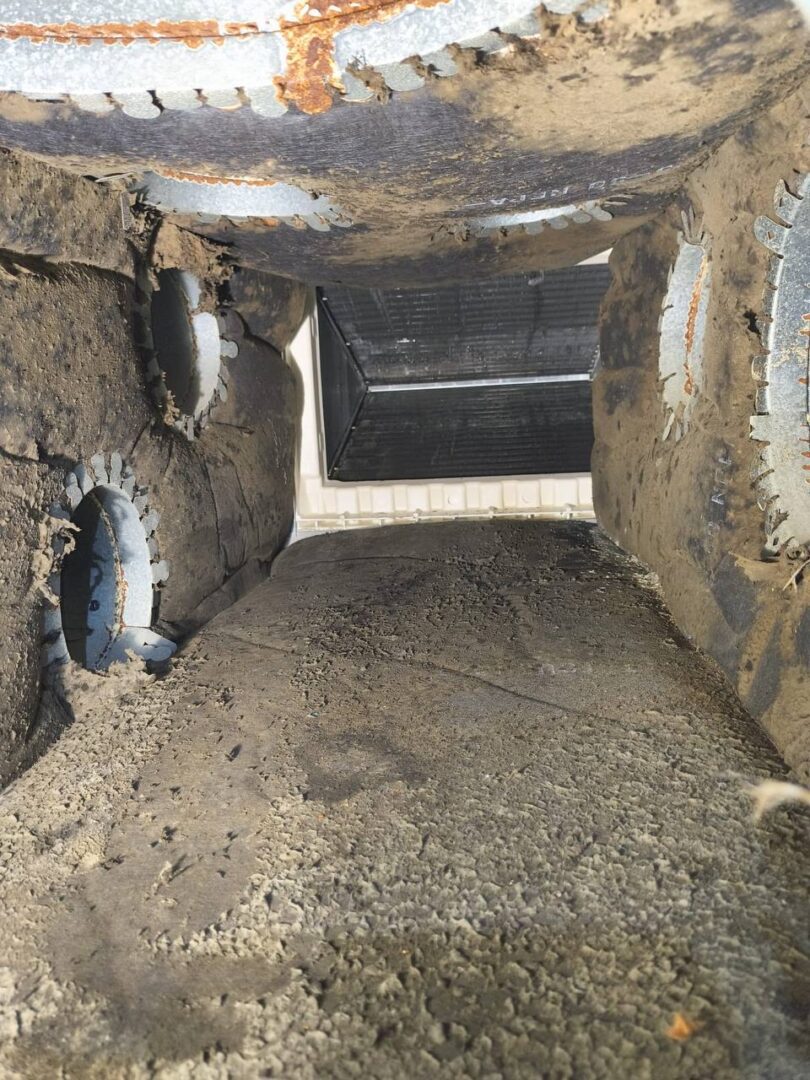
Oak pollen season in Austin TX is harder on your air ducts than cedar fever — and right now, in mid-March, it is just getting started. Oak pollen particles are finer than cedar pollen, penetrate deeper into ductwork and evaporator coils, and linger inside your HVAC system long after the season ends. If your ducts collected cedar pollen this winter, they are now loading a second wave on top of it.
Cedar Fever Ends. The Harder Season Begins.
Austin’s allergy reputation is built on cedar fever. Every December through February, mountain cedar blankets the Hill Country and Central Texas homeowners brace for the wave. Then mid-February arrives, cedar counts drop, and the relief feels earned.
But for your air ducts — and for the roughly half of Austin allergy sufferers who are also sensitized to oak — the relief is short-lived.
According to KXAN’s Austin allergy tracker and the Austin American-Statesman’s 2026 allergy calendar, oak pollen peaks between late March and early April and runs from mid-February through mid-May. The Statesman describes it plainly: “Oak pollen is the tree pollen that lingers in spring the longest.”
Before oak even peaks, elm, ash, and poplar are already contributing. After oak, pecan and grass carry tree pollen through May. For residents sensitized to both cedar and oak — a common combination in Central Texas — the allergy season in Austin runs nearly without interruption from December through May.
Your ducts are collecting all of it.
Why Is Oak Pollen Air Ducts Austin TX Owners Fear More Than Cedar?
Most homeowners assume cedar fever is the worst Austin has to offer. The science of pollen particle size tells a different story.
Cedar pollen particles measure roughly 20–40 microns — large enough that many settle out of the air before reaching deep into your duct system. Oak pollen is different. Oak pollen particles measure approximately 10–15 microns, making them:
- Small enough to travel further into supply ducts and branch lines
- More likely to reach and coat evaporator coil surfaces
- Harder to capture with standard 1-inch fiberglass filters
- Capable of remaining suspended in airflow for longer periods
When oak pollen loads your ductwork, it is physically depositing into areas that a standard filter change alone cannot address. The fine particles work their way past registers, into plenums, and onto coil surfaces where moisture from summer humidity gives mold something to feed on.
The Pollen Reservoir: Why You’re Still Sneezing in July
Here is what no competitor content explains — and what every Austin homeowner dealing with summer indoor allergies needs to understand:
Pollen that enters your ductwork during spring does not leave when the season ends.
It accumulates on duct walls, in 90-degree bends, around register boots, and on the blower wheel. When your air conditioning runs in June, July, and August, that stored pollen recirculates through your home — months after the last oak tree finished releasing.
This is the pollen reservoir effect. It explains why many Austin homeowners experience elevated indoor allergy symptoms well into summer even after outdoor pollen counts have dropped. The source is not the outdoors. The source is last spring’s pollen load sitting inside their ducts.
Right now — mid-March — your ducts may still hold the cedar pollen that accumulated from December through February. Oak is loading on top of that. Without a professional cleaning, that combined reservoir carries forward into your summer AC season.
What a Full-System Cleaning Removes From Austin Ducts in Spring
AH-CHOO! Indoor Air Quality is NADCA certified and has performed full-system duct cleaning in Texas for 38 years. A full cleaning — which takes approximately 7 hours for a complete residential system — addresses every component where pollen accumulates:
- Supply and return ducts — the main pathways where oak and cedar particles settle on interior surfaces
- Branch lines — individual runs to each room, where fine particles collect in bends and joints
- Blower wheel and blower compartment — a primary pollen accumulation point; fine particles mat onto fan blades and reduce airflow efficiency
- Evaporator coil housing — where moisture and pollen combine to create conditions favorable to mold
- Registers and grilles — cleaned and reseated individually
We complete one job per day — no rush scheduling, no half-measures. The full system, start to finish, in a single visit.
When Is the Right Time to Clean Austin Ducts for Spring Allergies?
Austin’s pollen calendar creates two legitimate cleaning windows, and both are valid:
Window 1 — Mid-March (right now): Clean before oak peak. Your ducts hold the cedar load from winter. Removing it now means the system enters the heaviest oak pollen window with a clean baseline, limiting how much accumulates before summer.
Window 2 — Late April to early May: Clean after the oak and pecan peaks have passed. This removes the full spring pollen load before the summer AC season begins and that pollen can recirculate for five months indoors.
If you missed the first window, the second window is not a consolation — it may actually be the more comprehensive choice, capturing the entire spring season’s accumulation in one cleaning.
Not sure which applies to your home? A free inspection lets us assess current duct conditions and recommend the right timing for your system.
Frequently Asked Questions
When does oak pollen season end in Austin, TX?
According to KXAN and the Austin American-Statesman, oak pollen peaks between late March and early April, with the season running from mid-February through mid-May. Pecan and grass pollen extend the overall tree pollen window into late May, meaning Central Texas homeowners face continuous pollen loading from December through May.
Does duct cleaning actually help with spring allergies in Austin?
Yes — with an important distinction. Duct cleaning does not prevent pollen from entering your home, and it is not a substitute for medical allergy treatment. What it does is remove the accumulated pollen reservoir that built up inside your system over the previous season, reducing the source of recirculated allergens that your HVAC redistributes every time it runs. NADCA-certified cleaning, which addresses the full system including the blower wheel and coil housing, provides the most complete removal.
How long does pollen stay inside air ducts if not cleaned?
There is no fixed timeline — pollen that settles in ductwork does not degrade quickly in a controlled environment. Fine oak pollen particles can adhere to duct surfaces and remain there indefinitely until mechanically removed. Homeowners in Austin who have not had a professional cleaning in several years are likely recirculating accumulated pollen from multiple prior seasons.
Is oak pollen or cedar pollen worse for HVAC systems?
Both accumulate in ductwork, but oak pollen’s smaller particle size (approximately 10–15 microns vs. cedar’s 20–40 microns) allows it to penetrate further into the duct system and reach components like evaporator coils and blower wheels. Cedar pollen, while notorious for its allergy impact, is slightly easier to capture with quality filters. Oak requires a more thorough mechanical cleaning to fully remove from deep inside the system.
Should I clean my ducts every spring in Austin?
The NADCA standard recommendation for routine duct cleaning is every 3–5 years for most homes, with more frequent cleaning warranted in homes with allergy sufferers, pets, recent renovation, or documented mold. Austin’s unique year-round pollen cycle — cedar in winter, oak and pecan in spring, ragweed in fall — makes it one of the few U.S. markets where annual or biennial cleaning is a reasonable consideration for households with active allergy symptoms.
Start Spring with a Clean System
Austin’s cedar fever season is over. Oak pollen season is at its door. If your ducts are carrying last winter’s cedar load into this spring, every run cycle is building the pollen reservoir that will follow you into summer.
AH-CHOO! Indoor Air Quality is NADCA certified, has served Texas for 38 years, and offers free inspections with no obligation. We complete one full-system cleaning per day — your home gets the full 7-hour job, not a rushed partial service.
Learn more about how long a professional air duct cleaning takes and what the process covers — or read our guide to air duct cleaning and cedar fever season in Austin for the full picture of Central Texas’s allergy year.
Schedule your free inspection →
AH-CHOO! Indoor Air Quality | NADCA Certified | Serving Austin, Cedar Park, Round Rock, Georgetown, and the Greater Central Texas Area
Learn more about Austin air duct cleaning services.
Related AH-CHOO resources: Houston air duct cleaning; schedule a free inspection.