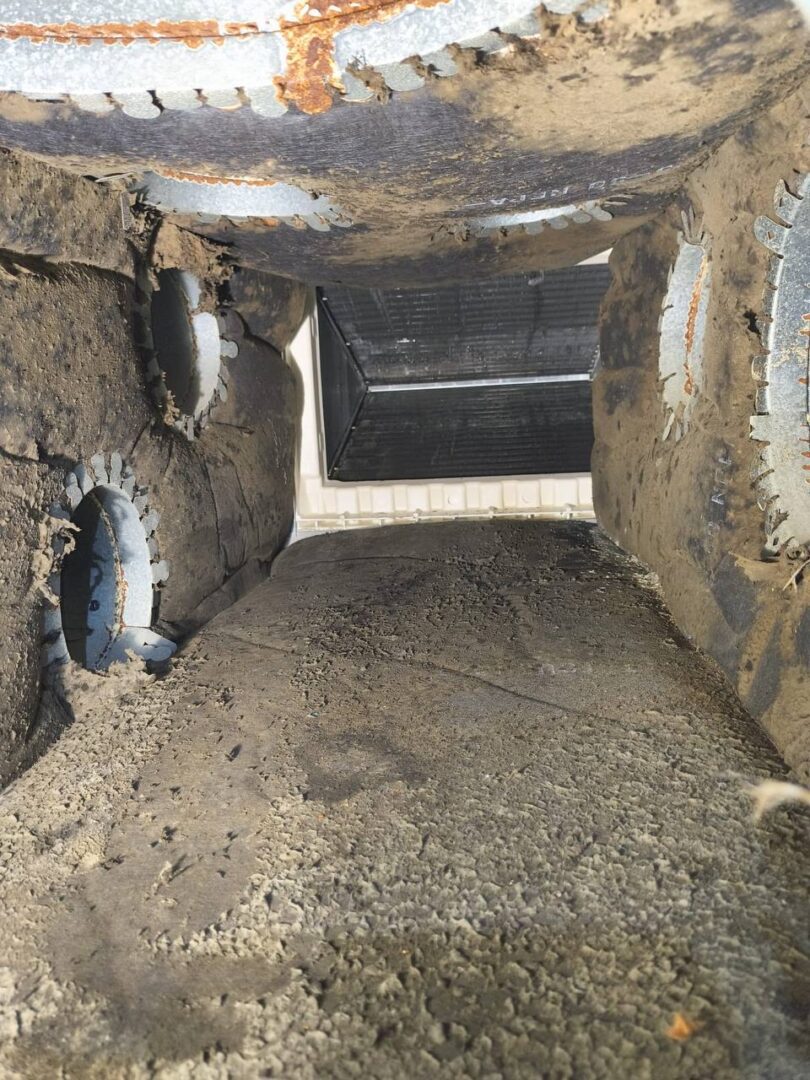
If you’ve noticed higher energy bills, reduced cooling output, or ice forming on your AC lines, the issue might not be your air ducts — it could be your evaporator coil. In Houston’s humid Gulf Coast climate, evaporator coils collect moisture, dust, and mold more aggressively than in drier regions, making regular inspection and cleaning an important part of HVAC maintenance.
What Is an Evaporator Coil and Why Does It Matter?
The evaporator coil is the indoor component of your air conditioning system where refrigerant absorbs heat from your home’s air. Located inside the air handler unit — usually in the attic, closet, or garage — the coil contains cold refrigerant that air passes over before being circulated through your ductwork.
As warm Houston air hits the cold coil surface, moisture condenses — exactly like a glass of iced tea on a summer day. That condensation is normal and designed to drain away. But when dust, pet dander, pollen, and other airborne particles also land on the wet coil surface, they create an environment where mold and bacteria can grow.
Why Houston Homes Are Prone to Evaporator Coil Mold
Houston’s climate creates specific conditions that make evaporator coil maintenance especially important:
- 8+ months of high humidity: Houston averages over 75% humidity from April through October. Your AC runs longer and harder, meaning the coil stays wet for extended periods — the perfect conditions for microbial growth.
- Pollen and outdoor particulates: Cedar, oak, grass, and ragweed pollen loads are among the highest in the nation. These organic particles land on the wet coil and provide nutrients for mold.
- Fine clay dust: Houston’s soil produces fine particulate that bypasses standard filters and accumulates on coil fins, restricting airflow and reducing heat exchange efficiency.
- Extended cooling season: Most Houston homes run AC from March through November. The evaporator coil is in active use for 9 months, accumulating debris far faster than in northern climates.
Signs Your Evaporator Coil May Need Cleaning
Not every HVAC issue points to evaporator coil problems, but these signs are common indicators:
- Reduced cooling capacity: Your AC runs longer but doesn’t cool as effectively. A dirty coil can’t transfer heat efficiently.
- Higher energy bills: The system works harder to achieve the same temperature, consuming more electricity.
- Ice or frost on refrigerant lines: Restricted airflow across the coil causes the condensation to freeze, which can damage the compressor over time.
- Musty odors when the AC runs: Mold or bacteria on the coil produces a distinctive smell — often described as dirty socks or mildew.
- Warm air from vents: In severe cases, airflow is so restricted that the air coming out of registers feels warmer than expected.
- Visible debris at the air handler: If you can access the unit and see dust buildup on coil fins, cleaning is overdue.
Evaporator Coil Cleaning vs. Air Duct Cleaning: What’s the Difference?
These two services are often confused but address different parts of your HVAC system:
Air duct cleaning focuses on the network of supply and return ducts that distribute air throughout your home. It addresses debris, dust, and contaminants inside the ductwork itself — the pathways, not the equipment.
Evaporator coil cleaning targets the coil surface inside the air handler. This is a more delicate process that requires access to the HVAC equipment, careful application of approved coil cleaners, and proper rinsing to avoid damage to electrical components.
Some Houston homes need both services — especially if the ducts are dirty AND the coil shows signs of microbial growth. A professional inspection identifies which services are genuinely needed.
What Does Professional Evaporator Coil Cleaning Involve?
NADCA-certified technicians follow specific procedures for evaporator coil cleaning:
- System shutdown and isolation: The HVAC system is turned off at the breaker to ensure safety. The area around the air handler is protected with drop cloths.
- Access panel removal: The technician removes the air handler access panels to expose the evaporator coil.
- Dry vacuuming: Loose debris is removed with a HEPA-filtered vacuum before any moisture is introduced.
- Coil cleaning application: An EPA-registered coil cleaner is applied according to manufacturer specifications. The cleaner is allowed to dwell for the prescribed time to break down microbial growth and mineral deposits.
- Gentle rinsing: The coil is rinsed with low-pressure water or a condensation-safe method. Oversaturation is avoided to prevent damage to insulation and electrical components.
- Drain line check: The condensate drain line is verified to be clear so water flows properly after cleaning.
- Post-cleaning verification: The technician checks airflow, temperature drop across the coil, and visual cleanliness before reassembly.
When Should Houston Homeowners Schedule Coil Cleaning?
NADCA recommends inspecting the evaporator coil annually during routine HVAC maintenance. In Houston’s climate, mid-spring (before peak cooling season) and early fall (after summer’s heavy use) are ideal times to check coil condition.
Consider scheduling a coil inspection if:
- You’ve noticed any of the signs listed above
- Your HVAC system is more than 5 years old and hasn’t had coil service
- You’ve recently completed home renovations (drywall dust can coat coils)
- You’re already scheduling air duct cleaning — the technician can assess both at once
Frequently Asked Questions
Q: Can I clean my evaporator coil myself?
A: DIY coil cleaning is not recommended. Evaporator coils are fragile — the aluminum fins bend easily — and improper cleaning can damage the coil, electrical components, or insulation. Professional NADCA-certified technicians have the right tools, cleaners, and training.
Q: How often should evaporator coils be cleaned in Houston?
A: Annual inspection is the standard recommendation. In Houston’s humid climate, homes with pets, smokers, or high dust loads may benefit from more frequent checks — typically before the heavy cooling season (April-May) and after peak summer (September-October).
Q: Will cleaning the evaporator coil lower my electric bill?
A: A clean coil can improve HVAC efficiency — because the system doesn’t have to work as hard to transfer heat. However, actual savings depend on your system’s condition, home insulation, and usage patterns.
Q: Does AH-CHOO offer evaporator coil cleaning in Houston?
A: Yes. AH-CHOO’s NADCA-certified technicians can inspect and clean evaporator coils as part of a comprehensive HVAC assessment. We start with a free inspection to determine what services your system actually needs.
Q: What areas of Houston do you serve?
A: AH-CHOO serves the entire Greater Houston area including The Woodlands, Katy, Sugar Land, Pearland, Cypress, Spring, Humble, Kingwood, and all Houston neighborhoods within the 610 Loop and Beltway 8.
Note: This article discusses evaporator coil maintenance for informational purposes. Always consult a licensed HVAC professional for assessment of your specific system.
Related AH-CHOO resources: Houston air duct cleaning; schedule a free inspection.