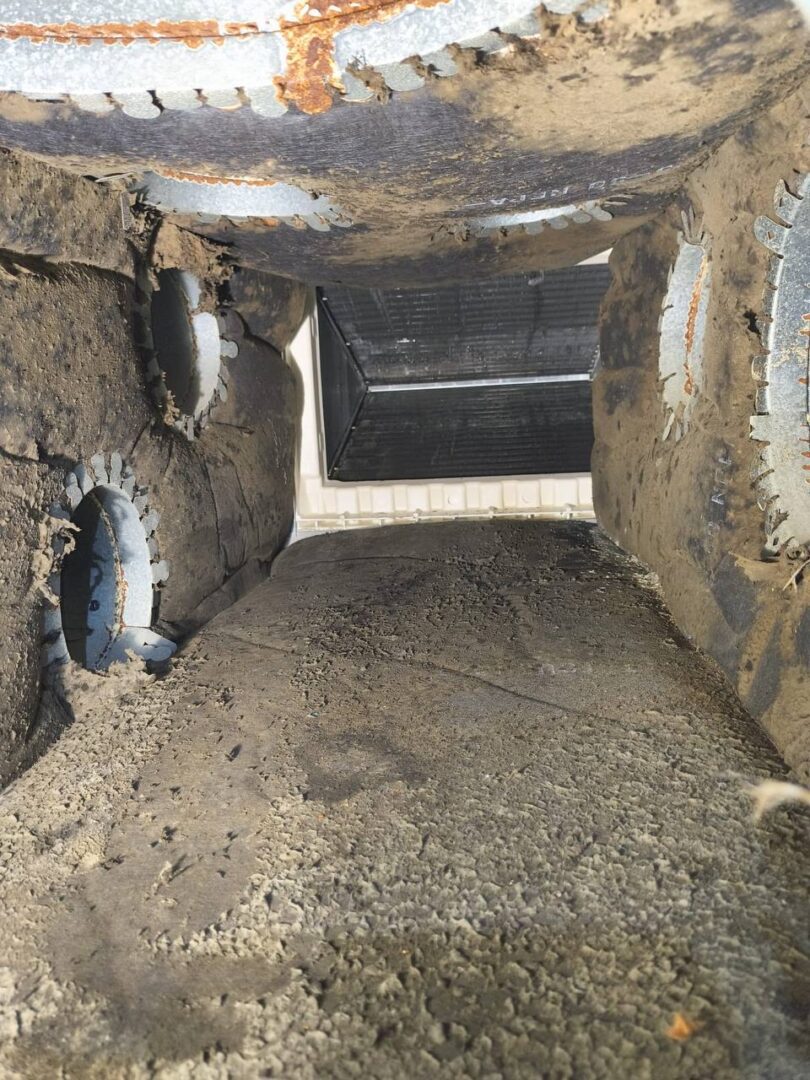
If you work in the petrochemical industry along Houston’s Ship Channel — in Pasadena, Baytown, Texas City, or La Porte — you already know the work is demanding. What you might not realize is that microscopic industrial particulates can travel home with you, settling into your home’s HVAC system and affecting your family’s indoor air quality.
How Industrial Particulates Travel Home
Petrochemical plants, refineries, and chemical manufacturing facilities generate fine particulate matter — including catalyst dust, coke fines, metal oxides, and combustion byproducts. These particles are small enough to adhere to clothing, skin, hair, and personal items. When you arrive home after a shift, these particulates can:
- Settle into carpet and upholstery — then become airborne when people walk through the room
- Enter HVAC return registers — fine particles are pulled into the duct system and recirculated throughout the home
- Accumulate in ductwork over time — creating a reservoir of industrial dust that re-entrains every time the system runs
- Bypass standard HVAC filters — many industrial particulates are sub-micron sized, passing through MERV 4-8 filters
Houston’s Industrial Corridor: By the Numbers
The Houston-Galveston-Brazoria area is home to one of the largest petrochemical complexes in the world. According to the Texas Commission on Environmental Quality (TCEQ), the Houston Ship Channel area hosts over 400 chemical and refining facilities. Communities in Pasadena, Baytown, Deer Park, Texas City, and La Porte have some of the highest concentrations of industrial facilities in North America.
For workers in these facilities, the issue isn’t just ambient air quality during the workday — it’s what comes home. A 2023 study from the University of Texas found that “take-home” exposure from industrial workplaces is a significant and understudied pathway for community exposure to industrial byproducts.
Signs That Industrial Dust May Be Affecting Your Home HVAC
- Gray or dark dust around supply registers — different from the typical light gray household dust; industrial dust often has a darker, greasier appearance
- Unusual HVAC odors during the first heat or cool cycle after returning from work — industrial particulates can off-gas when heated by the furnace
- Visible dust recirculating shortly after cleaning — if fine dark dust reappears on surfaces within hours of dusting, the duct system may be the source
- Family members experiencing irritation — eye, nose, or throat discomfort that seems worse when the HVAC runs, especially in homes near petrochemical zones
What You Can Do
At the Job Site
- Change out of work clothes before entering your vehicle — if a clean-change facility is available, use it
- Bag work clothes separately — store them in a sealed plastic bag or container for transport
- Shower before entering living spaces — wash off particulates that may have settled on skin and hair
At Home
- Upgrade to MERV 11 or higher filters — change them monthly; consider HEPA-grade portable air filters in bedrooms
- Seal laundry area — if work clothes are washed at home, ensure the laundry room is well-vented and sealed from the main living area during wash cycles
- Schedule a professional duct inspection — a visual and camera inspection can reveal whether industrial dust has accumulated in your duct system
- Consider NADCA-certified duct cleaning if inspection reveals significant particulate buildup — source removal with HEPA vacuum is the only effective method
When to Consider Duct Cleaning
NADCA standards recommend cleaning when visible debris exceeds one quarter inch in depth on any accessible duct surface, or when microbial growth, pest contamination, or significant particulate accumulation is documented. For petrochemical workers, an honest inspection can determine whether your dust-loading is normal household accumulation or industrial-grade buildup that warrants professional source removal.
A reputable provider will document findings with photographs, explain what each observation means, and recommend cleaning only if the evidence supports it. If your ducts are clean, they should tell you that too.
Frequently Asked Questions
Q: Can industrial dust from petrochemical work damage my HVAC system?
A: Yes. Fine particulates can accumulate on blower wheels, evaporator coils, and in duct runs, reducing system efficiency and potentially causing premature wear on moving components.
Q: Does homeowners insurance cover duct cleaning for industrial dust?
A: Coverage varies. Some policies may cover cleaning if particulate contamination is documented and affecting the HVAC system’s operation. Check with your provider and ask for a written determination.
Q: How often should petrochemical workers have their ducts inspected?
A: An annual inspection is recommended — or sooner if you notice visible dust near registers, unexplained odors when the HVAC runs, or if family members report irritation symptoms that correlate with system operation.
Q: Does AH-CHOO serve Pasadena, Baytown, and Texas City?
A: Yes — AH-CHOO serves all Houston metro area communities, including the industrial corridor. We offer professional duct inspections and NADCA-certified cleaning for homes in Pasadena, Baytown, Deer Park, La Porte, Texas City, and the surrounding areas.
Work in Houston’s petrochemical industry and concerned about your home air quality? Contact AH-CHOO to schedule a free duct inspection. We’ll check your system for industrial particulate buildup and provide an honest assessment — no pressure, no upselling.
Learn more about Houston air duct cleaning and how regular maintenance helps homes near industrial areas. For commercial facilities, we also offer commercial HVAC inspection services.