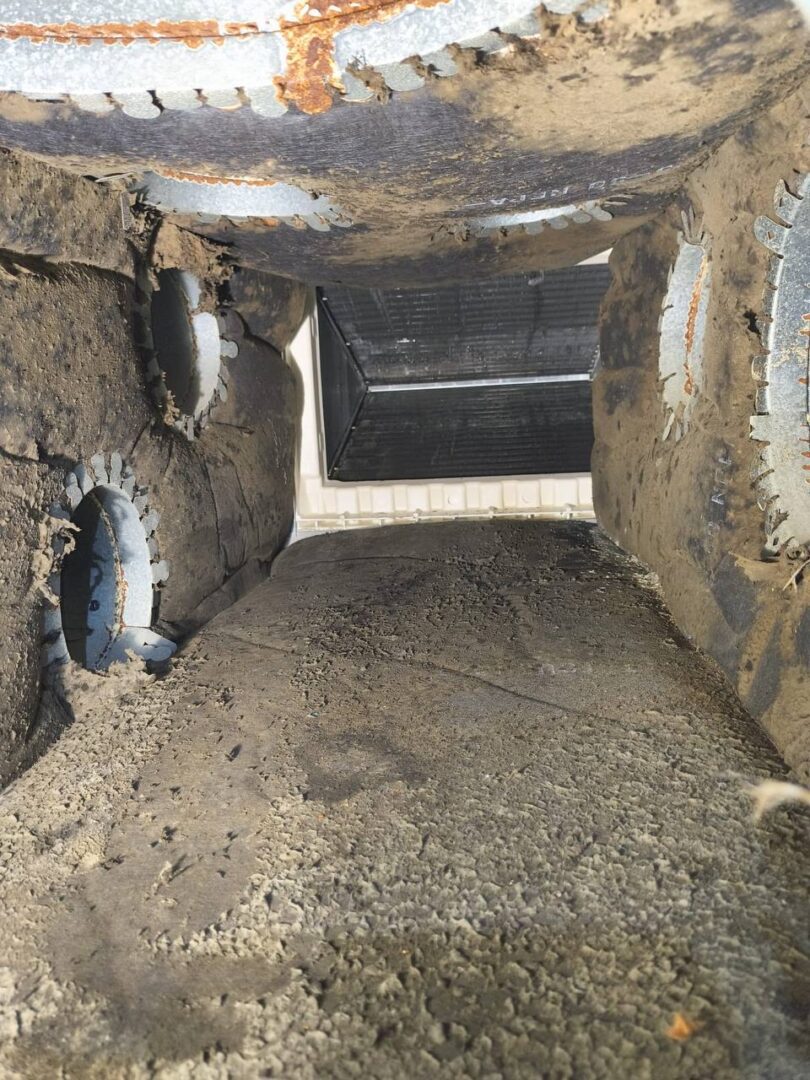
When Houston homeowners find mold inside their HVAC system, it often comes as a genuine surprise. The ducts are hidden behind walls and ceilings, completely out of sight. But in Houston, mold growth inside residential HVAC systems is not unusual — it is a predictable consequence of how our extreme climate interacts with your home.
The Three Conditions Mold Requires
Scientifically, mold needs exactly three conditions to establish and spread: moisture, organic food source, and moderate temperatures. Houston provides all three continuously inside your HVAC system.
**Moisture:** Your evaporator coil condenses water every time the A/C runs. This happens eight months or more per year in Houston. When the system cycles off, residual moisture persists on the coil surface for hours. Condensate drain pan overflow and high ambient humidity add additional moisture.
**Food source:** Dust, pollen, pet dander, and outdoor particulates all pass through your return vents and settle on interior duct surfaces. These organic materials combined with moisture create a nutrient-rich environment that mold colonies use as fuel.
**Temperature:** Houston indoor temperatures fall comfortably within the ideal range for mold growth — between 40 and 100 degrees Fahrenheit. The microclimate inside your air handler housing, with warm exterior surfaces surrounding cool internal components, is particularly conducive to biological colonization.
Where Mold Establishes First
The evaporator coil is the most common site because all three conditions converge there most intensely. The plenum box is second — it is where air from every room converges, containing the highest concentration of accumulated particles in the entire system. Interior duct surfaces develop mold as spores from the coil and plenum box spread downstream.
Why Houston Is Worse
Most US cities have a heating season that provides natural drying periods when the HVAC system warms and dries interior duct surfaces. Houston’s mild winters mean the heating season is just a few weeks. The evaporator coil spends most of the year in a cool, damp state without extended dry periods.
What You Can Do
Replace your air filter every 30 to 60 days. Control indoor humidity between 40 and 60 percent with a dehumidifier. Keep condensate drain lines clear. Schedule professional cleaning every 2 to 3 years to remove the organic material that mold needs as fuel.
[Book a Free Inspection](https://crm.ahchooindoorair.com/book)
AH-CHOO! Indoor Air Quality serves Houston, Austin, San Antonio, and South Louisiana. NADCA certified. Average job time: 7 hours. 8 components cleaned every service. 38 years of experience.
Related AH-CHOO resources: Houston air duct cleaning; schedule a free inspection.