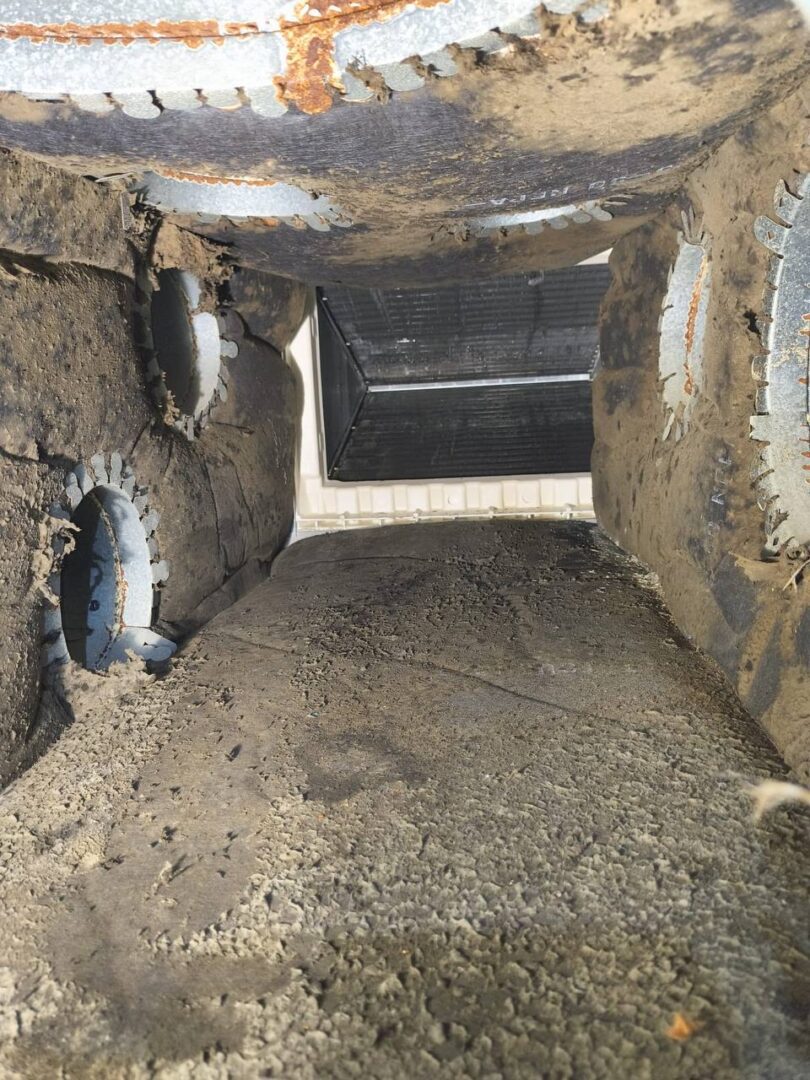
Houston ranks as one of the most humid major cities in the United States. With average annual relative humidity hovering around 75 percent and summer levels frequently exceeding 90 percent, every residential HVAC system in the Houston metropolitan area faces conditions that make mold growth inside ductwork not just possible — but expected without proper maintenance.
How Houston Humidity Enters Your HVAC System
Your HVAC system pulls in outdoor air for heat exchange and processes the ambient humidity in that air. During Houston’s extended cooling season of eight months or more, your system runs continuously, pulling humid air through your ductwork and across the evaporator coil.
The evaporator coil’s primary job is to cool and dehumidify incoming air. As warm, humid indoor air passes across the cold coil surface, moisture condenses and drains away. But between operating cycles, residual surface moisture remains on the coil and inside the plenum box, creating damp conditions that persist for hours before the next cycle begins.
The Mold Equation: Moisture Plus Organic Material
Mold spores are always present in Houston’s outdoor and indoor air. A spore needs three conditions to germinate and establish a colony: moisture, warmth, and an organic food source. The evaporator coil inside your HVAC system provides all three continuously.
Moisture from condensation during cooling cycles. Organic food from dust, pollen, pet dander, and other airborne particles that settle on the coil surface. Warm temperatures from the Houston climate and surrounding air handler housing create ideal thermal conditions.
When these three factors persist for weeks without interruption — which they do for eight-plus months during Houston cooling season — mold colonies establish, grow, and spread from the evaporator coil into plenum box and supply ductwork.
How to Address the Humidity-Mold Connection
Replace your HVAC air filter every 30 to 60 days during humid months. Consider a whole-house dehumidifier to reduce indoor humidity to the 45 to 50 percent range where mold struggles to establish colonies. Schedule professional duct cleaning every 2 to 3 years in Houston’s climate. Ensure condensate drain lines remain clear and the drain pan is functioning correctly.
If you suspect mold growth inside your HVAC system, our NADCA-certified technicians perform comprehensive source removal cleaning that addresses all 8 components — eliminating the organic material that mold colonies feed on and the moisture-retaining debris that allows colonies to spread.
[Book a Free Inspection](https://crm.ahchooindoorair.com/book)
AH-CHOO! Indoor Air Quality serves Houston, Austin, San Antonio, and South Louisiana. NADCA certified. Average job time: 7 hours. 8 components cleaned every service. 38 years of experience.
Related AH-CHOO resources: Houston air duct cleaning; schedule a free inspection.