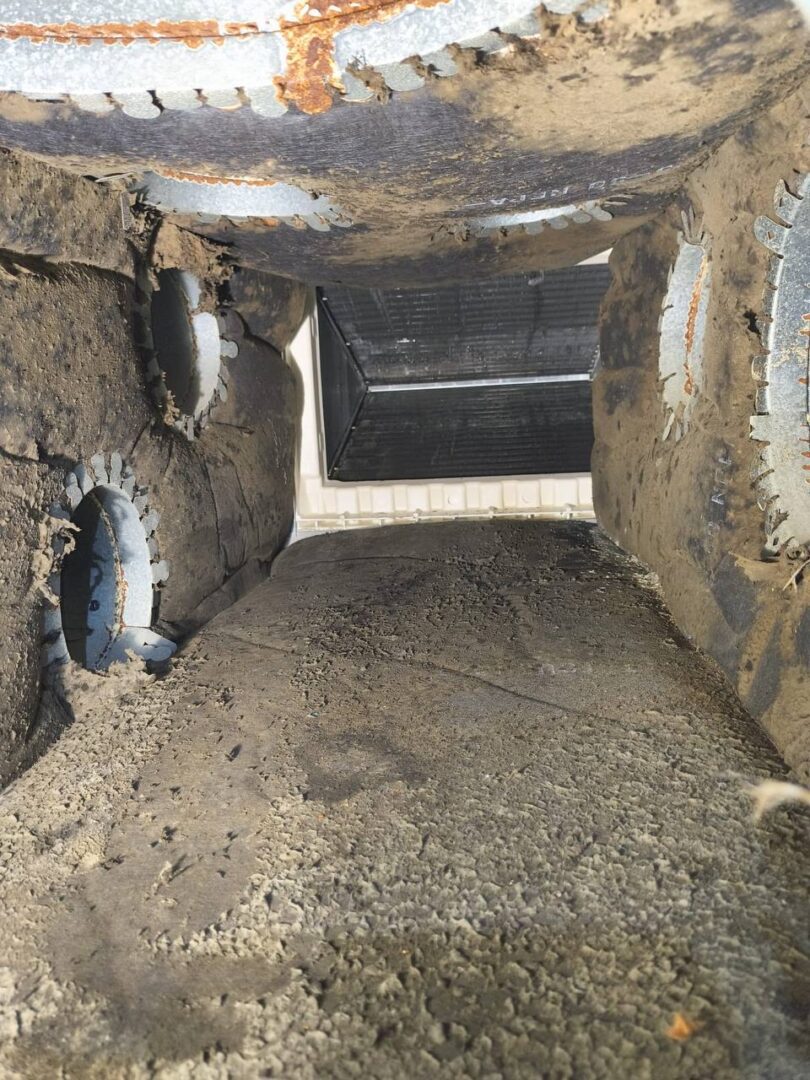
If your Houston home recently underwent a renovation — whether it was a full remodel, a kitchen update, a bathroom renovation, or even drywall repair in a single room — fine construction dust has almost certainly entered your HVAC system and settled on interior surfaces where it is continuously redistributed into your living spaces every time the system operates.
Why Construction Dust Is Different from Normal Household Dust
Construction dust contains particles that are significantly sharper and smaller than everyday household dust. Drywall sanding alone produces microscopic gypsum particles that remain suspended in indoor air for hours and penetrate deep into duct branches where they adhere to surfaces far more stubbornly than regular dust.
Concrete dust, wood dust, insulation fibers, and paint particulates from your renovation all enter your HVAC system through return vents and settle on the evaporator coil, inside the plenum box, and along interior duct surfaces. These particles are not captured by your air filter because they are smaller than standard filter ratings and accumulate in areas that normal airflow does not disturb.
What Happens When Construction Dust Remains Inside Your System
Drywall dust is hygroscopic, meaning it absorbs moisture from the air. Inside your HVAC system where moisture from the evaporator coil is constantly present, drywall dust creates a paste-like residue that clogs duct branches, reduces airflow, and accelerates the accumulation of biological contamination on surfaces that were previously clean.
Wood dust and organic construction debris provide a food source for mold spores that are always present in Houston’s humid indoor environment. When these particles settle on the damp surface of your evaporator coil, mold colonies establish more quickly and aggressively than they would on a clean surface.
Construction dust on your blower fan adds weight that unbalances the assembly, leading to increased vibration, reduced efficiency, higher energy consumption, and premature bearing failure.
When to Schedule Post-Renovation HVAC Cleaning
The optimal time is after all construction work is complete, the final construction cleanup has been performed, and before your family resumes normal full-time occupancy of the renovated space. This ensures the first air your family breathes in the newly renovated home circulates through a clean HVAC system rather than one loaded with construction debris.
For larger renovation projects, we recommend a second inspection and follow-up cleaning pass 30 to 60 days after the initial cleaning to address any residual particles that settled into the duct system after the first treatment.
Post-Renovation Cleaning Covers All 8 Components
Our NADCA-certified technicians inspect the entire system for construction debris in every accessible duct branch and component. The evaporator coil receives extended attention because construction dust is particularly difficult to remove from delicate fin surfaces. Additional cleaning passes may be required to completely eliminate construction debris from all 8 HVAC components: return ducts, evaporator coils, blower fan, heating chamber, plenum box, supply ducts, register boxes, and grills.
[Book a Free Inspection](https://crm.ahchooindoorair.com/book)
AH-CHOO! Indoor Air Quality serves Houston, Austin, San Antonio, and South Louisiana. NADCA certified. Average job time: 7 hours. 8 components cleaned every service. 38 years of experience.
Quick answers about Post Construction
Why do renovated Houston homes need post-construction duct cleaning?
Renovation creates drywall dust, sawdust, insulation particles, and chemical fumes that settle inside ductwork. Without cleaning, these contaminants circulate through your home every time the HVAC runs.
How soon after renovation should I clean my ducts?
As soon as the renovation is complete and the space is sealed. Running the HVAC during renovation spreads debris through the entire duct network. Post-construction cleaning should happen before you reoccupy the space.
Can post-construction debris damage my HVAC system?
Yes. Drywall dust and fine particles can clog filters rapidly, coat the blower wheel, and accumulate on the evaporator coil, reducing efficiency and potentially causing premature component failure.
What does post-construction duct cleaning include?
Full inspection of the duct network, removal of construction debris using negative pressure and HEPA vacuum, cleaning of all registers and grilles, and a final verification that the system is free of particulate contamination.
Schedule a free AH-CHOO inspection.
Related AH-CHOO resources: Houston air duct cleaning.