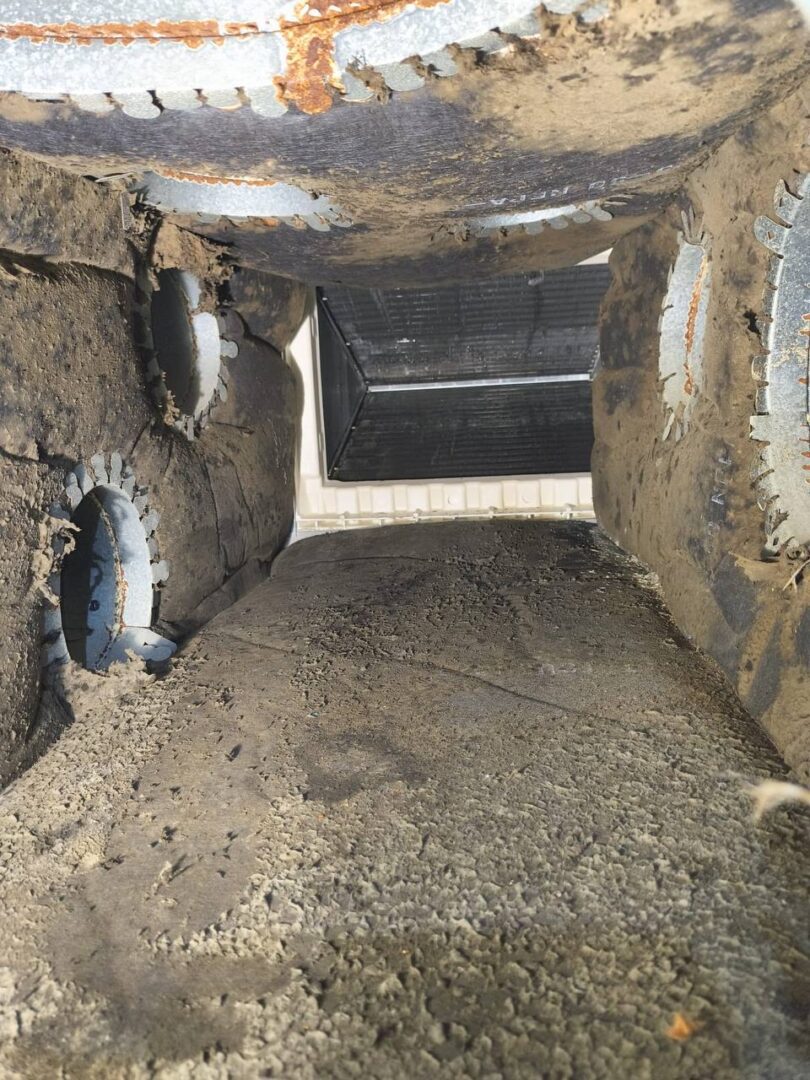
Mold growing inside your HVAC ductwork is invisible to most homeowners until the problem becomes severe enough to produce noticeable symptoms. By then, contamination has typically spread to multiple components of your system and affected the air quality throughout your home. Learning to recognize the early signs gives you the opportunity to intervene before mold colonies become established and difficult to remove.
The Most Common Early Warning Signs
Musty or earthy odors that appear or intensify when your HVAC system cycles on is the most frequently reported indicator. This smell originates from microbial volatile organic compounds — chemical byproducts produced by active mold colonies — and it travels through your ductwork into every room connected to the system.
Visible dark deposits on or around vent registers and grills. Mold growth on interior duct surfaces produces dark spore masses that get blown out through supply vents and accumulate on vent covers, walls, and nearby surfaces. If you wipe the deposit away and it returns within days, especially after the system runs, mold inside the ductwork is the likely source.
Allergy or respiratory symptoms that improve when you leave your home. When mold inside your HVAC system continuously releases spores and microbial fragments into your living spaces, household members experience persistent indoor symptoms — sneezing, coughing, itchy eyes, sinus congestion — that noticeably improve or disappear when away from the property.
Houston-Specific Risk Factors That Accelerate Mold Growth
Houston climate creates conditions that make mold growth inside HVAC systems more likely here than in most other American cities. Average summer humidity consistently above 80 percent provides constant moisture availability. Warm indoor temperatures from extended A/C operation create favorable thermal conditions. Organic particles from dust, pollen, and outdoor debris provide nutrient sources for mold colonies. Extended eight-plus-month cooling season means the evaporator coil and surrounding components remain damp for most of the year, never having the extended dry periods that would naturally inhibit mold establishment.
Visible Signs to Check Right Now
Remove a vent register cover and shine a flashlight into the duct opening. Look for dark, speckled, or fuzzy growth on interior duct surfaces. Check the area around your air handler and evaporator coil access panel for visible growth. These areas are nearest to the primary moisture source and are the most common sites for initial colonization.
If you find visible mold, do not attempt to clean it yourself. Disturbing mold colonies without proper containment equipment releases concentrated spore masses into your living spaces. Professional source removal cleaning by NADCA-certified technicians eliminates the contamination safely and thoroughly.
Book Your Free Inspection
Schedule your free inspection today. Our NADCA-certified technicians will assess all 8 HVAC components, identify any mold growth or contamination, and recommend the appropriate treatment plan.
[Book a Free Inspection](https://crm.ahchooindoorair.com/book)
AH-CHOO! Indoor Air Quality serves Houston, Austin, San Antonio, and South Louisiana. NADCA certified. Average job time: 7 hours. 8 components cleaned every service. 38 years of experience.
Related AH-CHOO resources: Houston air duct cleaning; schedule a free inspection.