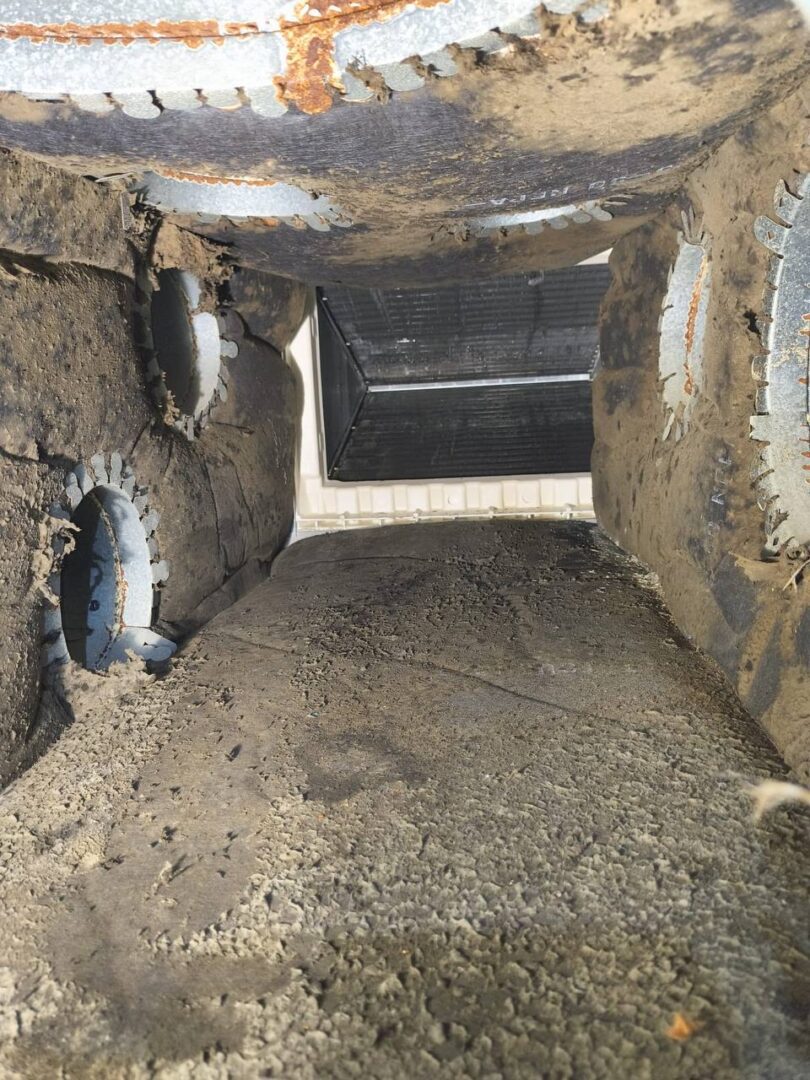
Houston ranks as one of the most humid cities in the United States. With average annual relative humidity hovering around 75 percent and summer humidity levels frequently exceeding 90 percent, every home in the Houston metropolitan area faces a persistent challenge that most homeowners do not fully understand until they discover mold growing inside their HVAC system.
How Houston Humidity Enters Your HVAC System
Every time your outdoor unit draws in air for heat exchange, the system also processes the ambient humidity in that air. During Houston’s extended cooling season — eight months of the year or more — your HVAC system runs continuously, pulling humid air through your ductwork and across the evaporator coil.
The evaporator coil’s primary job is to cool and dehumidify incoming air. As warm, humid indoor air passes across the cold coil surface, moisture condenses and drains away. This is how your system removes humidity from your home. But the coil and surrounding components spend most of their operating time in a damp state, with surface moisture that does not fully evaporate between operating cycles.
Why Moisture on the Evaporator Coil Leads to Mold
Mold spores are present in the air outside and inside your home constantly. A spore needs three things to germinate and establish a colony: moisture, a food source, and a warm temperature range. The evaporator coil in your Houston HVAC system provides all three conditions continuously:
Moisture from condensation that forms during every cooling cycle. Organic food source from dust, pollen, pet dander, and other airborne particles that settle on the coil surface. Warm temperatures created by the surrounding air handler housing and Houston’s ambient heat.
When these conditions persist for weeks without interruption — which they do during Houston’s cooling season — mold colonies establish, grow, and spread from the evaporator coil into adjacent components like the plenum box and the first several feet of supply ductwork.
Why Houston Makes This Problem Worse
Most United States cities have a heating season that provides natural drying periods when the HVAC system operates in heating mode, warming and drying interior duct surfaces. Houston’s mild winters mean the heating season is short — sometimes just a few weeks — and the evaporator coil and surrounding components spend the vast majority of the year in a cool, damp state.
This extended dampness, combined with continuous airborne particle accumulation, makes Houston HVAC systems uniquely prone to biological growth compared to systems in drier climates with distinct seasonal heating and cooling cycles.
How to Address the Humidity-Mold Connection
Replace your HVAC air filter every 30 to 60 days. Consider a whole-house dehumidifier integrated with your HVAC system to reduce indoor humidity to the 45 to 50 percent range. Schedule professional duct cleaning every 2 to 3 years in Houston’s climate — more frequently if your household has pets, allergies, or visible mold concerns. Ensure condensate drain lines are clear and the drain pan is functioning correctly.
[Book a Free Inspection](https://crm.ahchooindoorair.com/book)
AH-CHOO! Indoor Air Quality serves Houston, Austin, San Antonio, and South Louisiana. NADCA certified. Average job time: 7 hours. 8 components cleaned every service. 38 years of experience.
Related AH-CHOO resources: Houston air duct cleaning; schedule a free inspection.