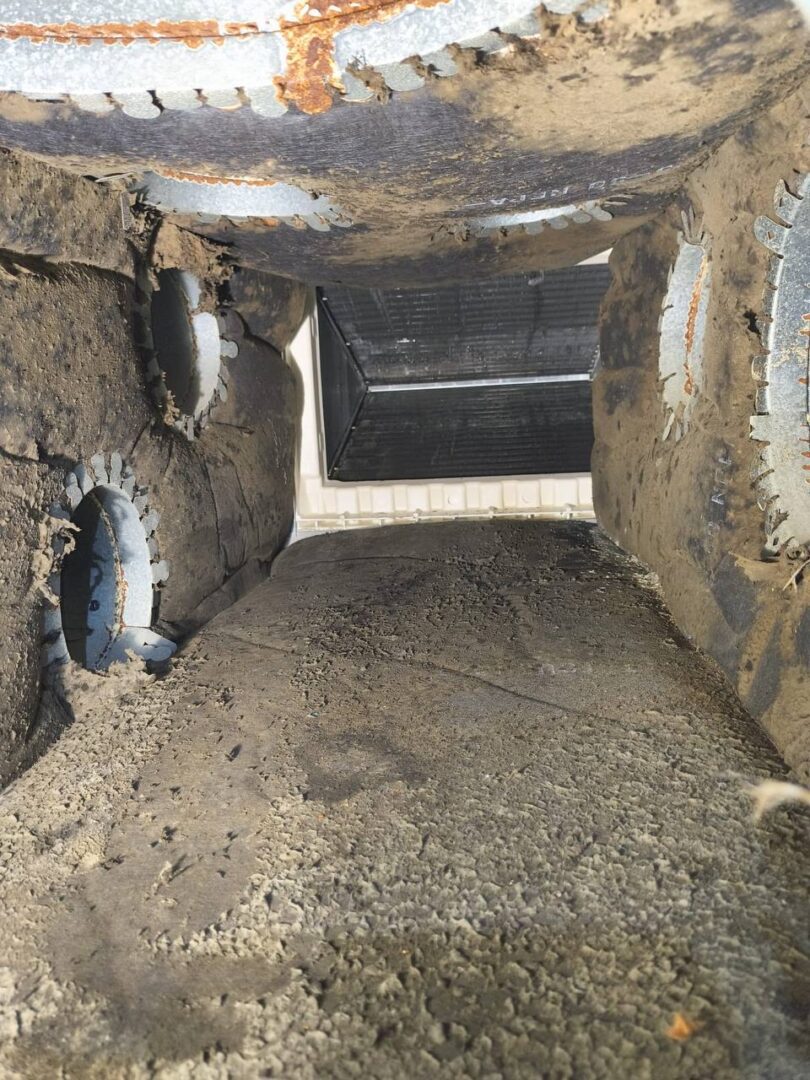
When Houston homeowners discover mold inside their HVAC system, it often comes as a surprise. The ducts are hidden behind walls and ceilings, out of sight and out of mind. But in Houston specifically, mold growth inside residential HVAC systems is not an unusual occurrence — it is an expected consequence of how our extreme climate interacts with the components of your home.
The Three Ingredients of Mold Growth
Mold requires three conditions to thrive inside your ductwork: moisture, warmth, and an organic food source. Houston provides all three continuously:
**Moisture.** Houston ranks among the most humid cities in the continental United States. The humidity does not disappear once it enters your HVAC system. The evaporator coil, which cools and dehumidifies incoming air, is the primary moisture source inside your system. When the system cycles off and the coil warms, residual surface moisture remains — creating an ideal environment for spore germination.
**Warmth.** Houston eight-plus-month cooling season means your HVAC system maintains a warm-to-moderate operating temperature range that is ideal for mold growth on interior duct surfaces.
**Food.** Dust, pet dander, pollen, and other airborne particles that settle on interior duct surfaces provide organic matter that mold colonies use as fuel.
Where Mold Grows Inside Your HVAC System
The evaporator coil is the most frequently affected component. Moisture condenses on the coil during normal cooling operation, and when the system cycles off, residual surface moisture combined with accumulated dust and organic matter creates ideal conditions for mold colonization.
The plenum box — the central distribution chamber where conditioned air is routed to supply ducts — is another hotspot. This is the area nearest the evaporator coil where moisture, warmth, and accumulated particulates converge.
Interior duct surfaces, particularly return ducts and sections of supply ductwork with poor insulation that allow condensation to form, are common sites for biological growth that is not visible at vent registers.
Signs You May Have Mold in Your Duct System
Musty or earthy odors that appear or intensify when the HVAC system cycles on are the most commonly reported sign. Dark, speckled deposits visible on or near vent registers warrant professional inspection. Worsening allergy or respiratory symptoms inside the home that improve when you leave the property are consistent with airborne mold spores being redistributed through your living spaces.
Prevention and Professional Intervention
Replacing your air filter every 30 to 90 days, ensuring your condensate drain is clear and functioning, and scheduling professional cleaning every 3 to 5 years are the most effective prevention strategies available to Houston homeowners.
If you suspect mold growth inside your HVAC system, our NADCA-certified technicians perform a comprehensive source removal cleaning that addresses every accessible component of your system — all 8 of them — eliminating the moisture-retaining debris and organic matter that allow mold colonies to establish and spread.
[Book a Free Inspection](https://crm.ahchooindoorair.com/book)
AH-CHOO! Indoor Air Quality serves Houston, Austin, San Antonio, and South Louisiana. NADCA certified. Average job time: 7 hours. 8 components cleaned every service. 38 years of experience.
Related AH-CHOO resources: Houston air duct cleaning; schedule a free inspection.