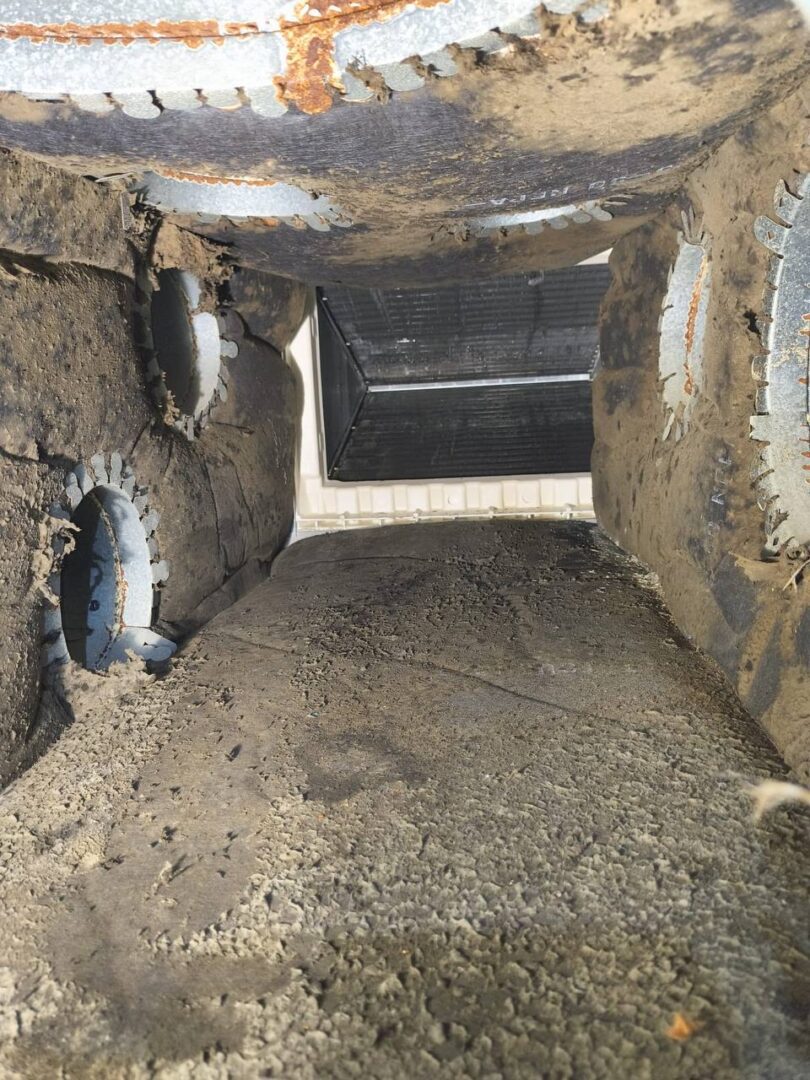
If you have ever had a professional air duct cleaning and your technician told you that the evaporator coil was contaminated, you may not have fully understood how serious that finding is. The evaporator coil is the single most critical component in your entire HVAC system — and when it is dirty, the consequences extend far beyond reduced cooling efficiency.
What the Evaporator Coil Does
The evaporator coil is where the actual cooling happens. As warm air from your home passes over the cold surface of the coil, heat is transferred from the air into the refrigerant, and the cooled air is then distributed through your supply ducts to every room in your home. This heat exchange process is the fundamental mechanism that makes air conditioning possible.
The coil consists of thin metal fins designed to maximize surface area for heat transfer. These same fins make it an effective collection surface for airborne contaminants — and in Houston’s environment, those contaminants accumulate rapidly.
Why Houston Coils Get Dirty Faster
**Pollen and organic debris.** Houston extended cooling season means your coil is processing contaminated air for 8 or more months per year. Cedar, oak, grass, and ragweed pollen, pet dander, and dust mite debris all settle on coil surfaces and build up into a thick insulating layer.
**High humidity and biological growth.** Houston average humidity of 60 to 70 percent creates conditions where the combination of organic debris and condensate moisture on the coil surface becomes an ideal environment for mold and bacterial colonization.
**Construction particulates and road dust.** Houston ongoing development generates fine particulate matter that enters the HVAC system and deposits on the coil alongside standard household contamination.
What Happens When the Coil Gets Dirty
**Reduced cooling efficiency.** A dirty coil acts as an insulator that blocks heat transfer between the indoor air and the refrigerant. The system must run longer and work harder to achieve the same cooling output. Studies show that a heavily contaminated coil can reduce cooling efficiency by 15 to 25 percent or more.
**Higher energy bills.** The increased runtime required to overcome the reduced heat transfer translates directly to higher electricity consumption. For a typical Houston home running A/C for 8 or more months per year, the energy cost impact of a dirty coil can amount to hundreds of dollars per season.
**Accelerated compressor wear.** When the system runs longer to compensate for reduced coil performance, the compressor experiences more cumulative operating hours and more thermal stress, which accelerates wear and can lead to premature compressor failure.
**Mold and bacterial contamination.** A dirty, moist coil surface provides ideal conditions for mold and bacterial colonization. When mold establishes on the evaporator coil, every spore it releases is carried directly into the airstream that is distributed to every room in your home every time the system operates.
What Professional Coil Cleaning Accomplishes
Our NADCA-certified service includes thorough evaporator coil cleaning as part of our comprehensive 8-component air duct cleaning service. The coil is cleaned using specialized methods that remove accumulated contamination without damaging the delicate fin structure. After cleaning, the coil surface is restored to maximum heat transfer efficiency, and the biological contamination that was contributing to your family’s indoor air quality degradation has been eliminated.
[Book a Free Inspection](https://crm.ahchooindoorair.com/book)
AH-CHOO! Indoor Air Quality serves Houston, Austin, San Antonio, and South Louisiana. NADCA certified. Average job time: 7 hours. 8 components cleaned every service. 38 years of experience.
Related AH-CHOO resources: Houston air duct cleaning; schedule a free inspection.