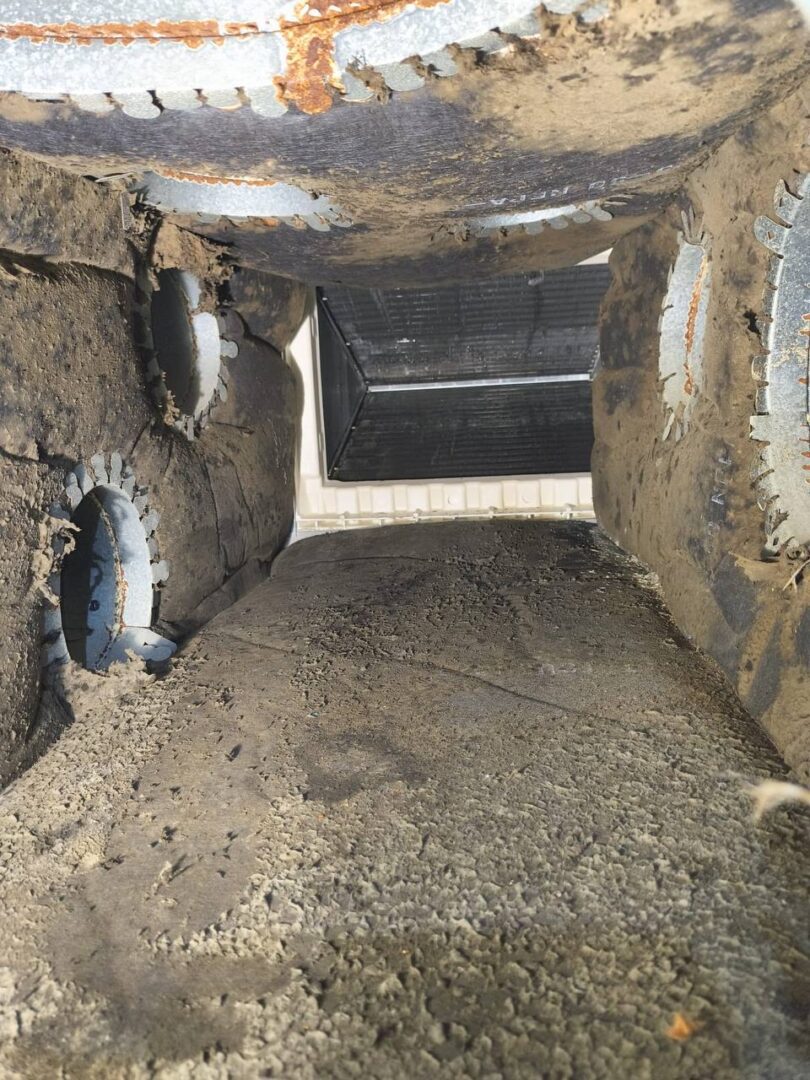
Mold in air ducts is one of the most frustrating indoor air quality problems a Houston homeowner can face. You clean visible surfaces, replace your air filter, and even run a dehumidifier, but the musty odor keeps coming back every time the HVAC system cycles on.
Understanding exactly how mold establishes and grows inside your air duct system — and what you can do to prevent it — requires a clear picture of the three conditions mold needs to thrive and how your HVAC system in Houston routinely provides all three simultaneously.
The Three Conditions Mold Needs to Grow
Mold requires three things to establish a colony: moisture, a food source, and appropriate temperatures. Let’s break down each one and how it manifests inside your HVAC system.
**Moisture** comes from condensation on the evaporator coil during normal cooling operation, from condensate drain backups or clogs, from roof leaks or water intrusion near the air handler, and from elevated indoor humidity that reaches interior duct surfaces in unconditioned spaces. In Houston, moisture is not a seasonal phenomenon. It is a year-round presence.
**A food source** is any organic material that settles on the interior surfaces of your HVAC system and remains there long enough to serve as nourishment for mold spores. This includes pollen from cedar, oak, pine, and grass; pet dander and skin cells; construction dust that enters the ductwork from building activity; and general household dust that is pulled into return vents during normal system operation.
**Appropriate temperatures** inside an operating HVAC system range from cool on the evaporator coil surface to warm in the plenum box and ductwork — all of which fall well within the temperature range where mold grows actively in Houston’s climate.
When your HVAC system provides all three conditions simultaneously — which it does routinely during Houston’s eight-month cooling season — mold colonies can establish within 24 to 48 hours of initial moisture exposure and reach a mature, spore-producing state within a week to ten days.
Where Mold Grows Inside Your HVAC System
**The evaporator coil is the most common and most consequential site for mold growth.** The coil surface accumulates both condensation from normal cooling operation and organic debris from the air stream. The combination creates ideal conditions for mold colonization. When mold grows on the evaporator coil, every spore it releases is carried directly into the airstream that is distributed to every room in your home.
**The plenum box is the second most critical site.** As the central distribution point where all ductwork meets the air handler, the plenum box experiences the most dramatic temperature and humidity fluctuations and collects debris from every connected duct branch. Organic debris that settles on moist plenum surfaces becomes a food source for mold colonies.
**Interior surfaces of return ducts** are where the bulk of outdoor contaminants first enter your system. Return ducts pull air from your living spaces and deposit debris on their interior surfaces where it can support mold growth whenever moisture is present.
What Causes Excess Moisture Inside Your HVAC System
**Clogged condensate drain line.** The condensate drain line carries water from the evaporator coil drain pan to the exterior of your home. When this line becomes clogged with algae, debris, or mineral deposits, water backs up into the drain pan and eventually overflows into the plenum box and the duct system. This is one of the most common causes of excess moisture inside Houston area HVAC systems.
**Water intrusion from roof leaks or flooding.** Any water intrusion event — even one that is too minor to cause visible damage to your living spaces — can introduce significant moisture into the attic, crawlspace, or closet where your air handler is located.
**Inadequate attic ventilation and insulation.** In Houston area construction, the air handler and evaporator coil are frequently located in the attic. Poor attic ventilation and inadequate insulation create conditions where the temperature differential between the equipment and the surrounding air generates condensation on exterior surfaces of the ductwork and plenum box.
What You Can Do to Prevent Mold in Your Air Ducts
**Keep your condensate drain line clear.** Inspect and clear the drain line at least twice per year. Many homeowners do this during their twice-yearly HVAC system inspection.
**Maintain indoor humidity below 55 percent.** Use a whole-home dehumidifier if necessary, and address any water intrusion or plumbing leaks promptly.
**Replace your air filter on schedule.** For Houston homes, replace standard filters every 30 to 60 days. This prevents excessive organic debris from reaching the evaporator coil.
**Schedule professional duct cleaning every 3 to 5 years.** Professional source removal cleaning eliminates the organic debris layer on interior surfaces that mold feeds on. Without a food source, mold growth cannot sustain even when moisture is present.
Book Your Free Inspection
If you want a thorough assessment of mold risk in your HVAC system, schedule a free inspection today. Our NADCA-certified technicians will document the condition of all 8 components and provide an honest evaluation of what your system needs based on what we find.
[Book a Free Inspection](https://crm.ahchooindoorair.com/book)
AH-CHOO! Indoor Air Quality serves Houston, Austin, San Antonio, and South Louisiana. NADCA certified. Average job time: 7 hours. 8 components cleaned every service. 38 years of experience.
Related AH-CHOO resources: Houston air duct cleaning; schedule a free inspection.