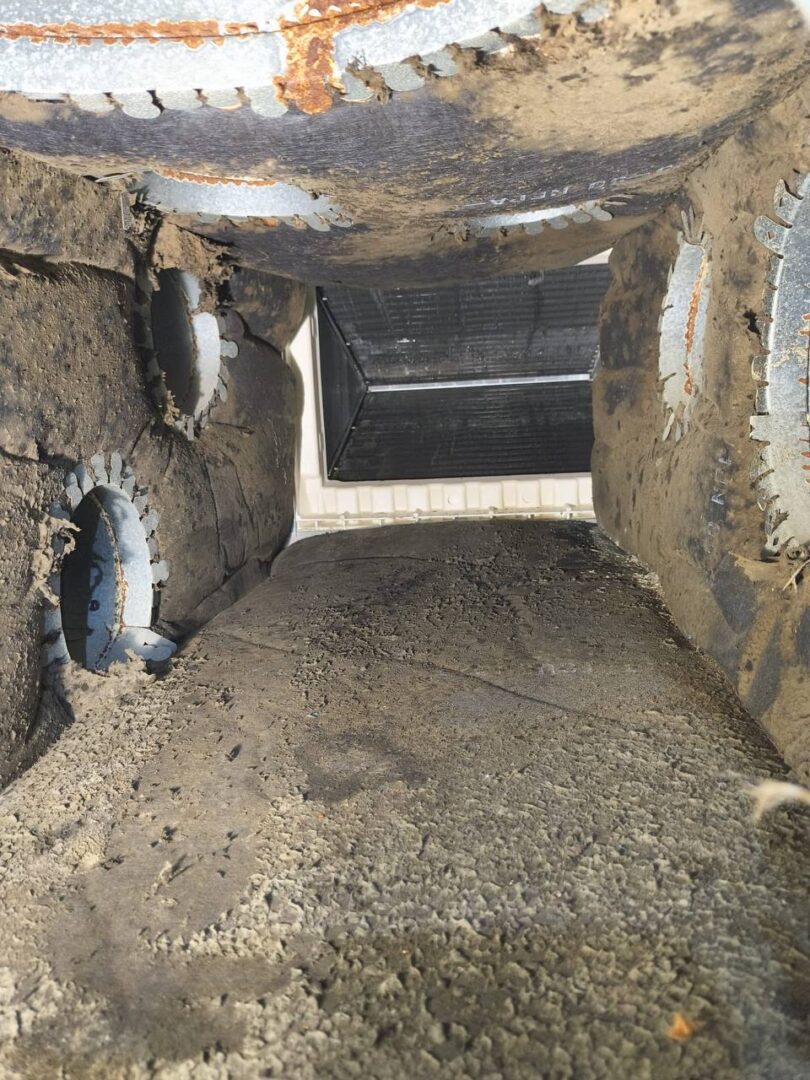
When you move into a newly built or recently renovated home in Houston, the excitement of fresh paint, new fixtures, and the smell of a clean house can distract you from one of the most important indoor air quality considerations: the condition of the HVAC system inside your new home’s walls and ceiling.
What Happens to HVAC Systems During Construction
During the construction or renovation process, your HVAC system is exposed to enormous quantities of fine particulate matter that would never be present in a finished, occupied home:
**Drywall dust.** Drywall sanding generates microscopic gypsum particles that are drawn directly into the ductwork through return vents and are deposited on every interior surface of the system. Gypsum dust is particularly problematic because it adheres stubbornly to interior duct surfaces and serves as a long-term food source for mold spores whenever moisture is present.
**Paint particles and VOCs.** Paints, primers, stains, and sealants release volatile organic compounds (VOCs) into the indoor air during application and curing. These chemical compounds are drawn into the HVAC system and settle on interior surfaces of ductwork, the evaporator coil, and the plenum box, where they contribute to the chemical contamination profile that will be distributed into your living spaces every time the system operates.
**Wood dust and sawdust.** Framing, flooring, trim work, and cabinet installation all generate wood dust that enters the HVAC system and settles on interior surfaces. Wood dust from treated lumber can also contain chemical preservatives that are irritating to the respiratory system.
**Insulation fibers.** Fiberglass and other insulation materials used in new construction release fine fibers into the air that are drawn into the HVAC system, where they can accumulate on the evaporator coil and in the plenum box.
**Metal shavings and construction debris.** Metal cutting, plumbing work, and electrical installation all contribute fine metallic particles and general construction debris that enter the HVAC system during the building process.
Why Builder Final Cleaning Doesn’t Address HVAC Contamination
Builders and general contractors perform a final cleaning before handing over a new home to the buyer. This cleaning focuses on visible surfaces in living spaces — floors, countertops, bathrooms, and windows. It does not include the interior of the HVAC system, which has already been sealed and is typically operating during the final stages of construction.
The debris accumulated inside your HVAC system during construction remains inside the system indefinitely unless it is addressed by professional source removal cleaning. This debris is invisible from the living spaces and would not be identified during a standard home inspection.
Signs Your New Home’s HVAC System Needs Post-Construction Cleaning
**Visible dust around vent registers.** Dark or grayish deposits on or around supply and return vent covers — particularly within the first few weeks of occupancy — indicate that construction debris is being distributed from the interior of your duct system into your living spaces.
**Dust that returns rapidly after surface cleaning.** If you notice that dust accumulates on furniture, floors, and countertops at a much faster rate than you would expect for a new home, it is likely because construction debris inside the HVAC system is being continuously redistributed through the supply ducts.
**Musty or chemical odors when the HVAC system is running.** Chemical odors from paint, adhesives, and sealants that persist inside your new home more than a few weeks after move-in often originate from contamination inside the HVAC system that is continuously distributing these compounds into your living spaces.
**Allergy or respiratory symptoms that were not present before moving in.** If you or family members begin experiencing allergy symptoms, respiratory irritation, or headaches after moving into a new home, construction-related contamination inside the HVAC system is a likely contributing factor.
What Post-Construction HVAC Cleaning Covers
Our NADCA-certified post-construction cleaning service addresses all 8 HVAC components using source removal methods that physically eliminate every accessible layer of construction dust, chemical residue, and debris from the interior surfaces of your system. Given the substantially higher contamination load in new construction HVAC systems compared to systems that have accumulated only normal household debris, post-construction cleaning typically requires more intensive treatment of the evaporator coil and plenum box.
The average service takes approximately 7 hours because we treat each component individually and thoroughly. We include a free pre-service inspection so you can see the actual condition of your system before making any commitment.
When to Schedule Post-Construction Cleaning
We recommend scheduling post-construction HVAC cleaning after all construction work is complete but before you have moved furniture, belongings, and family members into the home. This timing ensures that the first air your family breathes in the new home is coming from a clean system rather than one contaminated with construction debris.
If you have already moved in and are beginning to notice any of the signs described above, schedule cleaning as soon as possible. The longer construction debris remains inside your system, the more likely it is to support biological growth in Houston’s humid climate.
Book Your Free Post-Construction Inspection
If you have recently completed construction or renovation work on your Houston-area home and want to understand the condition of your HVAC system before moving in permanently, schedule a free inspection today. Our NADCA-certified technicians will document the condition of all 8 components and provide an honest assessment.
[Book a Free Inspection](https://crm.ahchooindoorair.com/book)
AH-CHOO! Indoor Air Quality serves Houston, Austin, San Antonio, and South Louisiana. NADCA certified. Average job time: 7 hours. 8 components cleaned every service. 38 years of experience.
Related AH-CHOO resources: Houston air duct cleaning; schedule a free inspection.